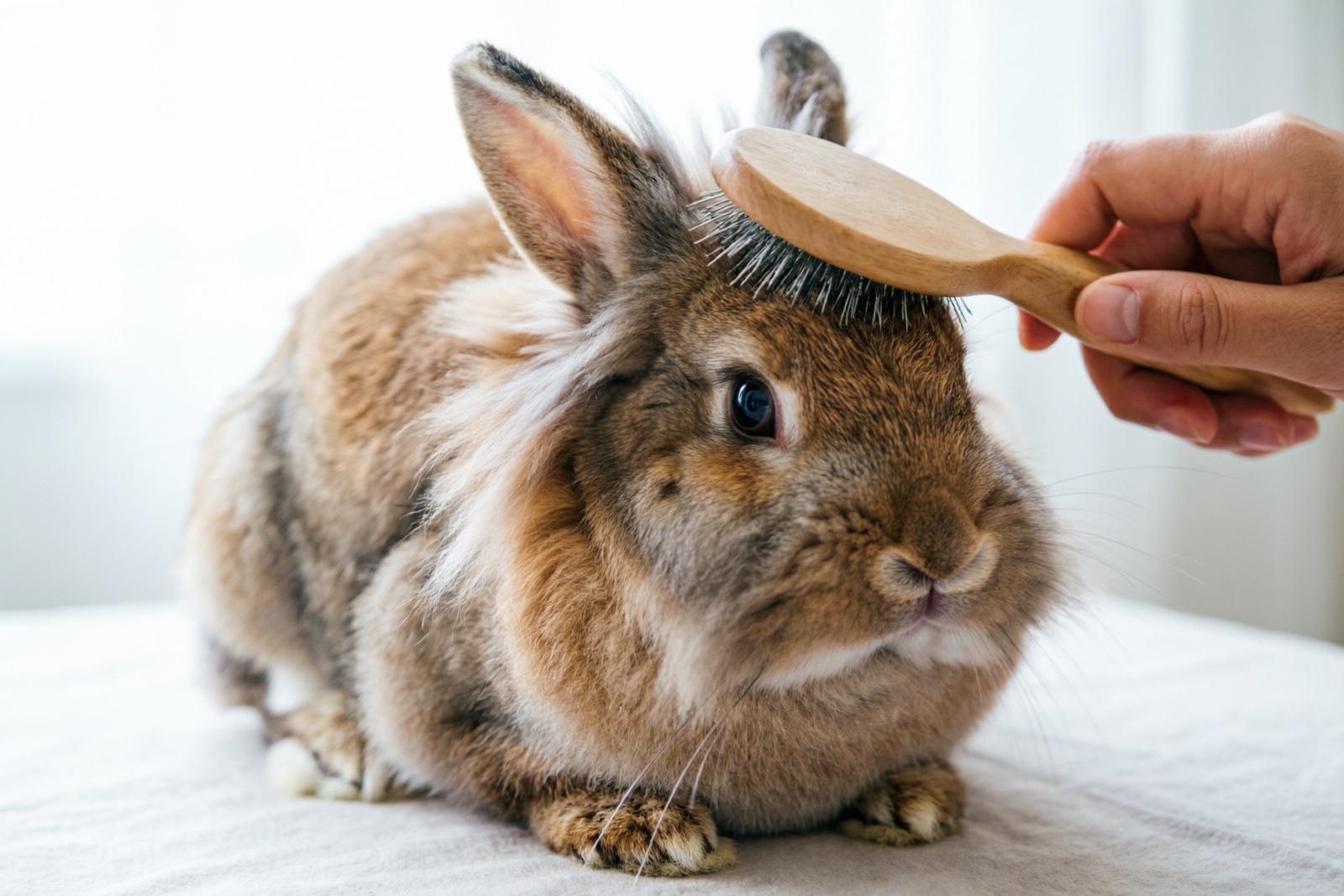
Grooming is essential for rabbit health, not just aesthetics. Regular grooming prevents dangerous wool block, catches health problems early, and strengthens your bond with your rabbit. This guide covers everything you need to know about rabbit grooming, from daily brushing to nail trimming and beyond.
Why Grooming Is Critical for Rabbit Health
Unique Rabbit Coat
Rabbit fur is different from other pets:
- Rabbits shed continuously (not seasonally like dogs/cats)
- Can’t vomit (can’t bring up hairballs)
- Ingested fur passes through digestive system
- Too much ingested fur = GI stasis (life-threatening)
GI Stasis Risk:
- Rabbit stops eating and pooping
- Digestive system shuts down
- Fatal if untreated within 24-48 hours
- Prevention = regular grooming
Critical: Unlike cats, rabbits cannot vomit. Ingested hair must pass through the entire digestive system. Excessive hair ingestion causes blockages and GI stasis. Daily brushing during shedding saves lives.
Benefits of Regular Grooming
Health Benefits:
- ✅ Prevents GI stasis (removes loose fur before ingestion)
- ✅ Early problem detection (lumps, wounds, parasites)
- ✅ Prevents matting (painful, can cause skin infections)
- ✅ Nail health (overgrown nails cause injury)
- ✅ Dental monitoring (check teeth during handling)
Bonding Benefits:
- ✅ Builds trust (positive touch experience)
- ✅ Social behavior (mutual grooming is natural)
- ✅ Relaxation (many rabbits enjoy brushing)
How Often to Groom
| Grooming Task | Short-Haired Rabbits | Long-Haired Rabbits |
|---|---|---|
| Brushing | 1-2x/week (daily during shed) | Daily (2x daily during shed) |
| Nail Trimming | Every 4-6 weeks | Every 4-6 weeks |
| Ear Cleaning | Monthly (check weekly) | Monthly (check weekly) |
| Scent Gland Cleaning | Monthly (check weekly) | Monthly (check weekly) |
| Full Health Check | Weekly | Weekly |
Shedding periods: Rabbits have heavy sheds 2-4 times per year (coat changes). During these times, brush daily or twice daily regardless of fur length.
Brushing Your Rabbit
Brush Types
For Short-Haired Rabbits (Rex, Dutch, Mini Rex):
- Soft bristle brush: For daily/weekly brushing
- Rubber grooming mitt/glove: Removes loose fur gently
- Fine-toothed comb: For removing loose undercoat
For Long-Haired Rabbits (Angora, Jersey Wooly, Lionhead):
- Slicker brush: For daily brushing, removes tangles
- Wide-toothed comb: For detangling
- Mat splitter (if needed): Carefully cuts through mats
- Scissors (rounded tips): For trimming long fur
Recommended Brushes
- Slicker Brush (Small size)
- Price: $8-15
- Best for: All rabbits, especially long-haired
- Buy on Amazon - $6.62
- Rubber Grooming Mitt
- Price: $5-10
- Best for: Short-haired rabbits, rabbits nervous about brushes
- Buy on Amazon - $7.99
- Stainless Steel Comb (Fine/Wide tooth)
- Price: $6-12
- Best for: Removing loose undercoat, checking for mats
- Buy on Amazon - $6.99
Brushing Technique
Short-Haired Rabbits
Weekly Brushing (5-10 minutes):
- Place rabbit on non-slip surface (towel on table, or your lap)
- Start at head, brush toward tail
- Use gentle strokes in direction of fur growth
- Brush entire body: back, sides, chest, hindquarters
- Check for: Lumps, wounds, parasites, mats
- Offer treats and praise throughout
During Heavy Shed (Daily):
- Use rubber mitt or soft brush
- Brush more thoroughly
- Wet hands and stroke rabbit (loose fur sticks to damp hands)
- Repeat several times
Pro Tip: Dampen hands slightly and stroke rabbit from head to tail. Loose fur sticks to your hands. Repeat until no more fur comes off.
Long-Haired Rabbits
Daily Brushing (10-20 minutes):
- Start young: Get rabbit used to handling and brushing early
- Gently detangle with fingers first
- Use wide-toothed comb to remove tangles
- Follow with slicker brush
- Check armpits, behind ears, under chin, hindquarters (mat-prone areas)
- Trim long fur around anus if needed (hygiene)
Preventing Mats:
- Brush daily (no exceptions)
- Check mat-prone areas daily
- Don’t cut mats out unless you can see skin clearly (risk of cutting skin)
- If severely matted → see groomer or vet
Safety: Never cut close to skin. Rabbit skin is thin and tears easily. If in doubt, see a professional.
Angora/Wool Breeds:
- Require daily thorough brushing
- May need professional grooming every 2-3 months
- Some owners keep fur trimmed shorter for easier maintenance
- Full coat = 1-2 hours of brushing per week
Dealing with Mats
Small Mats:
- Gently try to separate with fingers
- Use wide-toothed comb, start at edge of mat
- Work from outer edge inward
- Be patient—don’t pull hard (painful!)
Large/Tight Mats:
- Don’t cut out unless you can see skin clearly
- Risk: Cutting rabbit’s skin (very thin, tears easily)
- Best option: See vet or professional groomer
- They have proper tools and experience
Warning: Rabbit skin is paper-thin and tears easily. Never cut mats if you can’t clearly see where skin is. Professional help is safer.
Nail Trimming
Why Nail Trimming Matters
Overgrown nails cause:
- Snagging on carpet, bedding, cage wires
- Broken/torn nails (painful, bleeds)
- Abnormal foot posture (sore hocks)
- Difficulty walking
- Nails curling into foot pad (severe)
Ideal nail length:
- Nails shouldn’t curl significantly
- Rabbit walks flat-footed
- Nails don’t click loudly on hard surfaces
How Often
Every 4-6 weeks for most rabbits
- Check weekly
- Some rabbits wear nails down naturally (lots of digging, hard surfaces)
- Some need more frequent trims (soft surfaces, less active)
Supplies Needed
- Nail clippers: Small animal clippers or human nail clippers (for small rabbits)
- Styptic powder (or cornstarch): Stops bleeding if you cut too short
- Towel: To wrap rabbit if needed
- Treats: For positive reinforcement
- Good lighting: To see the quick
Recommended Nail Clippers
- Small Animal Nail Clippers (Scissor style)
- Price: $8-12
- Best for: Most rabbits
- Buy on Amazon - $4.89
- Human Nail Clippers (Large size)
- Price: $3-6
- Best for: Small rabbits, dwarf breeds
- Buy on Amazon
Identifying the Quick
The quick = blood vessel and nerve inside nail
- Cutting the quick = pain + bleeding
- In light nails: Quick is visible as pink area inside nail
- In dark nails: Quick is not visible (shine light through nail, guess conservatively)
Rule: Cut 2mm before where you think the quick ends
Nail Trimming Technique
Preparation
- Gather supplies (clippers, styptic powder, towel, treats)
- Good lighting (essential to see quick)
- Calm rabbit (handle gently, offer treats)
- Position rabbit comfortably (lap, table, or wrapped in towel)
Step-by-Step Trimming
Method 1: Rabbit on Lap
- Sit on floor or chair, rabbit on your lap
- Gently take one paw
- Isolate one nail
- Look for quick (pink area in light nails)
- Position clippers 2mm before quick
- Cut quickly and decisively (don’t squeeze slowly—this hurts)
- If nail bleeds, apply styptic powder immediately
- Offer treat after each paw (not each nail—too many treats!)
- Repeat for all nails
Method 2: Rabbit in Towel Wrap (Bunny Burrito)
For rabbits who struggle:
- Lay towel flat
- Place rabbit in center
- Wrap towel around body (like burrito), leaving one paw out
- Trim nails on exposed paw
- Unwrap slightly, expose next paw
- Continue until all nails trimmed
Tip: Wrap rabbits gently—not tight. Goal is to restrict movement slightly, not squeeze.
What If You Cut the Quick?
Don’t panic! It happens.
- Apply styptic powder or cornstarch immediately
- Press gently with clean cloth
- Hold pressure for 30-60 seconds
- Bleeding should stop
- If bleeding persists > 5 minutes → see vet
- Comfort rabbit, offer treats
Prepared: Have styptic powder ready before you start. Accidents happen even with experienced trimmers.
Getting Help
If you’re uncomfortable trimming nails:
- Ask vet to show you (schedule nail trim appointment)
- Professional groomer experienced with rabbits
- Rabbit-savvy friend to help
- Some vet clinics trim nails for free or small fee
Don’t skip nail trims because you’re nervous. Get help if needed.
Ear Cleaning
Why Check Ears
Rabbit ears can develop:
- Wax buildup (normal in small amounts)
- Ear mites (common, causes crusty debris)
- Infections (bacterial, fungal)
- Foreign objects (grass seeds, bedding)
How to Check
Weekly visual check:
- Look into ear canal
- Normal: Clean, pale pink, small amount of wax
- Abnormal: Redness, discharge, crusty buildup, bad odor, excessive wax
Cleaning Ears
Monthly cleaning (or as needed):
- Use rabbit-safe ear cleaner (ask vet for recommendation)
- Apply a few drops into ear
- Gently massage base of ear
- Let rabbit shake head (brings debris up)
- Wipe outer ear with cotton ball or soft cloth
- Don’t use cotton swabs (pushes debris deeper, risks injury)
Warning: Never insert anything deep into ear canal. You can damage eardrum. Clean only outer ear.
When to See Vet
🚨 Red, inflamed ears 🚨 Dark, crusty debris (ear mites) 🚨 Bad odor 🚨 Rabbit scratching ears frequently 🚨 Head shaking 🚨 Discharge
Ear mites require veterinary treatment (prescription medication).
Scent Gland Cleaning
What Are Scent Glands?
Location: Around anus (two small pockets on either side) Purpose: Rabbits use scent to mark territory and communicate Problem: Can accumulate debris, waxy buildup, become infected
How Often to Check
Check weekly, clean if needed (usually monthly)
Cleaning Technique
- Turn rabbit over gently (support back)
- Locate scent glands (small pockets on either side of anus)
- Check for debris: Dark waxy buildup, poop, dried material
- Clean with: Damp cotton ball, Q-tip, or soft cloth
- Gently remove debris (don’t dig deep)
- Wipe area clean
What’s Normal:
- Small amount of light-colored wax
- No strong odor
- Not inflamed
What’s NOT Normal: 🚨 Excessive buildup 🚨 Strong odor 🚨 Redness or swelling 🚨 Pus or discharge
If abnormal: See vet. Infected scent glands are painful and require treatment.
Other Grooming Tasks
Eye Care
Check eyes weekly:
- Normal: Clear, bright, no discharge
- Abnormal: Discharge, crustiness, redness, cloudiness, squinting
Cleaning:
- Damp cotton ball
- Wipe from inner to outer eye
- Use fresh cotton ball for each eye
See vet if discharge is colored (yellow/green), excessive, or if rabbit is squinting.
Dental Check
During grooming, check teeth:
- Incisors: Should be aligned, not overgrown
- Look for: Uneven wear, overgrowth, broken teeth
Signs of dental problems:
- Dropping food
- Eating slowly
- Weight loss
- Drooling
- Bad breath
Rabbit teeth grow continuously. Dental problems are common. See vet if you notice any signs.
Checking for Parasites
During grooming, check for:
Fleas:
- Small brown insects moving through fur
- Flea dirt (black specks that turn red when wet)
- Excessive scratching
Mites:
- Ear mites: Crusty debris in ears
- Fur mites: Dandruff-like flakes, hair loss, itching
- Mange mites: Scaly skin, hair loss
Lice:
- Visible nits (eggs) attached to hair shafts
- Itching
Treatment: All parasites require veterinary diagnosis and prescription medication. Don’t use dog/cat flea products—many are toxic to rabbits.
Grooming Different Coat Types
Short-Haired Breeds
Breeds: Rex, Mini Rex, Dutch, Polish, Havana
Grooming Needs:
- Minimal brushing (1-2x weekly)
- Low matting risk
- Easy maintenance
Tips:
- Rubber grooming mitt works great
- During shed, use damp hands to remove loose fur
- Overall, very low maintenance
Medium-Length Coats
Breeds: Holland Lop, French Lop, New Zealand, Californian
Grooming Needs:
- Regular brushing (2-3x weekly)
- Check for mats behind ears, under chin
- Moderate maintenance
Tips:
- Soft bristle brush + fine comb
- Check mat-prone areas weekly
- Daily brushing during shed
Long-Haired Breeds
Breeds: Angora, Jersey Wooly, Lionhead, American Fuzzy Lop
Grooming Needs:
- Daily brushing (non-negotiable)
- High matting risk
- Professional grooming sometimes needed
- High maintenance
Tips:
- Slicker brush + wide-toothed comb
- Check entire body for mats daily
- Keep fur around anus trimmed (hygiene)
- Consider keeping coat shorter for easier care
- Angora: May need shearing 2-3x per year
Warning: Long-haired rabbits require significant time commitment (30+ minutes daily). If you can’t commit to daily grooming, choose a short-haired breed.
Special Grooming Situations
Senior Rabbits
Considerations:
- Arthritis makes positioning difficult (be gentle)
- May not groom themselves as well
- Check for mats more frequently
- Softer brushing (fragile skin)
- Shorter sessions
Tips:
- Support joints during handling
- Be patient
- Check for health issues during grooming
- See vet more frequently
Overweight Rabbits
Considerations:
- Can’t reach hindquarters to groom
- Check for urine scald (urine on fur from inability to position)
- Check for fecal matter stuck to fur
- May need sanitary trim (trim fur around anus)
Tips:
- Address weight issue (diet, exercise)
- Daily checks for cleanliness
- Trim soiled fur if needed
- Gentle cleaning of soiled areas
Disabled/Special Needs Rabbits
Considerations:
- Can’t groom themselves properly
- Need more frequent checks
- May need sanitary trims
- Pressure sores (check skin)
Tips:
- Daily gentle grooming
- Keep fur clean and dry
- Check skin for sores
- Use soft bedding
Creating a Positive Grooming Experience
Desensitization (For Nervous Rabbits)
If rabbit hates grooming:
- Start slow: Just touch with brush, no brushing
- Pair with treats: Offer favorite treats during touch
- Short sessions: 1-2 minutes initially
- Gradually increase: Brushing one stroke, then two
- End on positive note: Always finish before rabbit gets too stressed
Goal: Associate grooming with good things (treats, calm attention)
During Grooming
DO:
- ✅ Use calm, slow movements
- ✅ Talk softly
- ✅ Offer treats frequently
- ✅ Keep sessions short (5-15 minutes)
- ✅ Stop if rabbit is too stressed
- ✅ Be patient
DON’T:
- ❌ Restrain tightly
- ❌ Force continued grooming if stressed
- ❌ Make loud noises
- ❌ Rush
Frequency Consistency
Establish routine:
- Same time each week (e.g., Saturday morning)
- Same location
- Same process (nails → brush → check ears → treats)
Rabbits appreciate routine and will come to expect and accept grooming.
Grooming Checklist
Weekly Tasks
- Brush coat (daily during shed)
- Check eyes (clear, no discharge)
- Check ears (clean, no debris)
- Check nose (no discharge)
- Check teeth (incisors aligned)
- Check scent glands
- Feel for lumps or wounds
- Check for parasites
Every 4-6 Weeks
- Trim nails
- Clean ears (if needed)
- Clean scent glands (if needed)
- Sanitary trim (long-haired or overweight)
During Heavy Shed
- Brush daily or twice daily
- Use damp hands to remove loose fur
- Increase fiber (more hay) to help pass ingested fur
Summary: Grooming Schedule
| Task | Frequency | Time Required |
|---|---|---|
| Brush (short hair) | 1-2x/week | 5-10 min |
| Brush (long hair) | Daily | 10-20 min |
| Brush (during shed) | Daily | 10-15 min |
| Nail trim | Every 4-6 weeks | 10-15 min |
| Ear check | Weekly | 2 min |
| Ear clean | Monthly | 5 min |
| Scent gland check | Weekly | 1 min |
| Scent gland clean | Monthly | 3-5 min |
| Full health check | Weekly | 5-10 min |
Frequently Asked Questions (FAQ)
1. How often should I brush my rabbit?
Short-haired: 1-2x weekly. Long-haired: Daily. During shed: Daily for all rabbits.
2. Can I use dog/cat flea products on my rabbit?
NO! Many dog/cat flea products are toxic to rabbits and can cause seizures and death. Always use rabbit-safe products prescribed by a vet.
3. Why is my rabbit shedding so much?
Rabbits shed continuously and have heavy sheds 2-4 times per year. This is normal. Increase brushing during heavy sheds.
4. What if I cut the quick?
Don’t panic. Apply styptic powder or cornstarch. Hold pressure. Bleeding should stop in 1-2 minutes. If it doesn’t, see vet.
5. How do I know if my rabbit has ear mites?
Signs: Dark, crusty debris in ears, scratching ears, head shaking. See vet for diagnosis and prescription treatment.
6. Can I give my rabbit a bath?
Generally no. Baths are stressful and rabbits can go into shock. Spot-clean soiled areas with damp cloth. Only bathe if absolutely necessary and under vet guidance.
7. My rabbit hates being groomed. What do I do?
Desensitize slowly: Start with just touching with brush + treats. Short sessions. Gradually increase. Be patient. Some rabbits never love it but learn to tolerate it.
8. Do I need to trim my rabbit’s fur?
Only for long-haired breeds (hygiene trim around anus) or if fur is matted. Don’t cut mats unless you can clearly see skin.
9. How do I clean scent glands?
Gently: Turn rabbit over, locate glands (pockets near anus), use damp cotton ball or Q-tip to remove debris. Don’t dig deep.
10. What are signs of dental problems?
Signs: Dropping food, eating slowly, weight loss, drooling, bad breath. Rabbit teeth grow continuously. See vet if you notice these signs.