Maximum Hermit Crab Size
Most land hermit crabs kept as pets grow to 2-6 inches in body length, a range that surprises many new keepers, not including legs or shell.
The Caribbean or Purple Pincher (Coenobita clypeatus) is the largest at 4-6 inches at full maturity (Smithsonian NMNH — Coenobita clypeatus species account). The Ecuadorian (Coenobita compressus) tops out at 2.5-4 inches (Animal Diversity Web — Coenobita compressus).
Hermit crabs grow throughout their lives, but growth slows significantly after maturity. Each growth spurt happens during a molt (ecdysis), when the crab sheds its exoskeleton and emerges larger (Merck Veterinary Manual — crustacean molting and ecdysis). Without successful molts, no growth occurs.
Coconut Crab (Birgus latro): The largest terrestrial arthropod, reaching up to 3.3 feet and 9 lbs. Juvenile coconut crabs use shells like true hermit crabs (Coenobita species), but adults develop a hardened calcified abdomen and no longer require shell protection. They are in the same family (Coenobitidae) but belong to a separate genus and are protected under IUCN Red List status (IUCN Red List — Birgus latro; Smithsonian NMNH — Coenobitidae family classification). Coconut crabs are NOT true hermit crabs. Search results often mention a “3.3-foot hermit crab” — this is the coconut crab (Birgus latro), a close relative in the same family (Coenobitidae).
Juvenile coconut crabs use shells like other hermit crabs, but adults develop a hardened abdomen and no longer need shell protection (IUCN Red List — Birgus latro). Coconut crabs are not kept as pets and are a protected species in most countries. For another small pet size guide, see our corn snake size article.
Wild marine hermit crabs show even more size variation. See our axolotl size guide for another pet size reference. Small intertidal species measure under 1 inch, while giant deep-water species reach 12 inches.
The Monterey Bay Aquarium lists common marine hermit crabs at 0.75 inches, while Mote Marine Laboratory documents giant marine hermit crabs exceeding 12 inches. UF IFAS Extension notes that Caribbean hermit crabs in Florida reach 4-6 inches in the wild (UF IFAS — land hermit crab fact sheet).
New keepers are often surprised by how small pet store hermit crabs are. Those quarter-inch crabs in chain stores are juveniles with years of growth ahead of them (Hermit Crab Association — pet store crab sizing guide).
Species Comparison
FMR Hermit Crab Food is a quality option worth considering for your setup.
Body size varies considerably across the eight species commonly encountered in the pet trade, and size expectations should always be species-specific. The difference between the smallest and largest is extraordinary — size varies by a factor of 10 across the most common species.
Hermit crab size chart — species comparison:
| Species | Scientific Name | Adult Size (Body) | Shell Opening | Pet Popularity | Temperament | Native Range |
|---|---|---|---|---|---|---|
| Caribbean (Purple Pincher) | Coenobita clypeatus | 4-6 inches | 1.5-2 inches | Most common | Docile, hardy | Caribbean, Florida |
| Ecuadorian (E) | Coenobita compressus | 2.5-4 inches | 1-1.25 inches | Very common | Active, fast | Pacific coast |
| Strawberry | Coenobita perlatus | 5-6+ inches | 1.75-2.5+ inches | Uncommon | Sensitive | Indo-Pacific |
| Indonesian (Indo) | Coenobita brevimanus | 3-5 inches | 1.25-1.75 inches | Moderate | Calm | East Africa, Indonesia |
| Rugosus (Ruggie) | Coenobita rugosus | 2.5-4 inches | 1-1.25 inches | Moderate | Similar to E | Indo-Pacific |
| Viola | Coenobita violascens | 3-4 inches | 1-1.25 inches | Rare | Docile | Indo-Pacific |
| Cavipes | Coenobita cavipes | 2.5-3.5 inches | 1-1.25 inches | Rare | Nocturnal | Indo-Pacific, Japan |
| Coconut Crab* | Birgus latro | Up to 3.3 feet | N/A | Not a pet | Aggressive | Indo-Pacific islands |
*Coconut crab is NOT a true hermit crab. Juveniles use shells, but adults develop hardened abdomens and no longer need shells.
Caribbean Purple Pincher is the largest common pet species at 4-6 inches and the most widely available in US pet stores (Smithsonian NMNH — Coenobita clypeatus). They are also the hardiest, making them the best choice for first-time keepers (VCA Hospitals — hermit crab husbandry). For species-specific care details, see our hermit crab care guide.
Strawberry hermit crabs are the largest but hardest to keep. Full grown hermit crab size for Strawberries reaches 5-6+ inches (Coenobita perlatus, Animal Diversity Web) but require marine-sourced calcium in their diet and very strict humidity control. Most Strawberry crabs in captivity die within the first year without expert care (Hermit Crab Association — Strawberry hermit crab care).
Ecuadorian hermit crabs are the smallest common species at 2.5-4 inches but compensate with extreme activity.
They are fast climbers and constant explorers — more entertaining to watch but harder to handle. Provide climbing enrichment for their active nature. Shell opening diameter is roughly 60-70% of body width (NOAA Ocean Explorer — hermit crab shell selection behavior). This ratio is useful when selecting new shells — measure the crab’s largest claw width and look for shells with openings slightly larger than that measurement. For detailed shell selection by crab size, see our shell guide.
Hermit Crab Growth Stages and Size Chart
Many owners find that Gargeer Complete Diet works well for their pet’s needs.
Indeterminate Growth: Unlike mammals with determinate growth, crustaceans grow throughout their entire lives through successive molts (ecdysis). Each molt sheds the rigid exoskeleton and produces a new, larger one. Growth rate decreases with age but never reaches zero — even 10-year-old hermit crabs continue molting and growing, albeit at a reduced pace (Merck Veterinary Manual — crustacean growth biology; Animal Diversity Web — Coenobita life history). Hermit crabs progress through distinct growth stages, each requiring appropriately sized shells and enclosure conditions. Understanding these stages helps you anticipate size changes and adjust their habitat accordingly.
Hermit crab size chart — growth stages:
| Growth Stage | Body Size | Shell Opening | Age Estimate | Molt Count | Notes |
|---|---|---|---|---|---|
| Hatchling | 0.25-0.5 inch | 3-5mm | 0-3 months | 1-2 | Very fragile, hides constantly. Common pet store size |
| Small | 0.5-1 inch | 5-10mm | 3-12 months | 2-4 | Active, exploring. First shell changes begin |
| Medium | 1-2 inches | 10-16mm | 1-3 years | 4-8 | Most common pet size. Multiple shell options available |
| Large | 2-3 inches | 16-22mm | 3-6 years | 8-15 | Needs larger enclosure. More visible personality |
| Jumbo | 3-4+ inches | 22-30mm | 6-10 years | 15-25 | Harder to find shells. Requires 40+ gallon tank |
| Super Jumbo | 5-6+ inches | 30-40mm | 10+ years | 25+ | Rare in captivity. Strawberry and PP specimens only |
Molting is the only growth mechanism. Hermit crabs cannot grow without molting — each successful molt produces a size increase of roughly 10-20% in body volume (Merck Veterinary Manual — crustacean ecdysis; VCA Hospitals — hermit crab molting).
If a crab cannot molt successfully, growth stops entirely and the crab’s health declines rapidly (VCA Hospitals — molting failure complications).
Size does not equal age. A well-fed, frequently-molting crab can reach “large” size much faster than a poorly-kept older crab.
A 2-inch crab could be 2 years old with excellent care or 5+ years with poor conditions. The Hermit Crab Association community notes that neglected crabs may take twice as long to reach the same size as well-maintained ones (Hermit Crab Association — growth rate factors).
Pet store crabs are almost always juveniles. The 0.5-1 inch crabs sold in chain stores are 3-12 months old.
They have 3-10+ years of growth ahead — do not judge their potential by their current size.
The Hermit Crab Association community classifies jumbo crabs as those with a shell opening of 1 inch (25mm) or larger.
Super jumbo crabs have shell openings of 1.5 inches (38mm) or more. These classifications help keepers select appropriate shells and tank sizes.
Growth Rate Factors
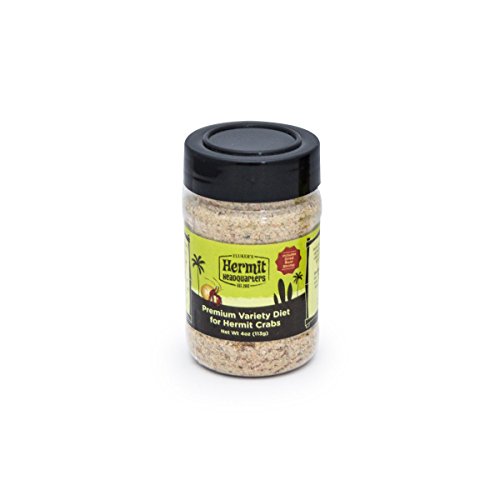
For this purpose, Fluker’s Premium Variety Diet is a popular choice among pet owners.

Growth rate depends on six environmental factors, each directly influencing final body size. Get these right and your crab will grow steadily. Get them wrong and growth stalls for months or years.
Six factors that control growth rate:
Temperature. The optimal range is 75-85°F (Merck Veterinary Manual — hermit crab temperature requirements).
Below 70 degrees F, metabolic activity slows and molting becomes infrequent. Above 85 degrees F, stress and dehydration risk increase. Use an under-tank heater with a thermostat to maintain stable temperatures. For tank sizing by crab size, see our tank guide.
Humidity. A range of 70-80% is essential for gill function.
Below 60%, gills sustain damage (branchiostegal lungs require moisture for gas exchange — NOAA Ocean Explorer) and the crab diverts energy to survival instead of growth. This is the number one growth limiter for beginners — most homes have humidity far below 60% (Hermit Crab Association — humidity requirements). A quality humidifier helps maintain proper levels.
Diet quality. High-calcium foods support faster, healthier molts.
Cuttlebone, calcium-fortified pellets, and shrimp-based proteins build strong new exoskeletons. Poor diet produces thin shells and small size increases per molt. See our food guide for calcium-rich recommendations.
Molting frequency. Healthy juveniles molt every 4-8 weeks, while adults molt every 1-3 months (VCA Hospitals — hermit crab molting cycles; Merck Veterinary Manual — crustacean molting frequency).
Each molt produces a 10-20% size increase. Skipping molts due to stress means zero growth during that period.
Substrate depth. The substrate must be at least 3x the crab’s body height for successful burrowing and underground molting.
Shallow substrate forces dangerous surface molts that often prove fatal (ReptiFiles — hermit crab substrate requirements; VCA Hospitals — molting complications from inadequate substrate). See our substrate guide for depth recommendations.
Social environment. Hermit crabs in groups molt more readily than solitary crabs (Animal Diversity Web — Coenobita social behavior; Hermit Crab Association — colony housing). Reduced stress and natural behavioral stimulation from group living encourage more frequent molting cycles.
Hermit crab growth rate varies by life stage, which directly affects how quickly your crab reaches its maximum potential. Small to medium takes roughly 1-2 years with proper care. Medium to large takes 2-3 years.
Large to jumbo takes 3-5 years. The fastest hermit crab growth rates are found in Caribbean crabs under optimal conditions — they can reach 4 inches in 3-4 years. Strawberry crabs grow large but take longer due to their slower metabolism.
When Do Hermit Crabs Stop Growing?
Hermit crabs never fully stop growing — hermit crab size continues increasing throughout their entire lives. Unlike mammals, crustaceans grow throughout their lives through a process called indeterminate growth (Merck Veterinary Manual — crustacean growth biology). However, the rate of growth slows dramatically with age.
Growth slows after maturity, and the size gain per molt drops from 10-20% to under 5%. Most species reach maturity at roughly 2-3 years, when they attain 60-70% of their maximum size.
After maturity, molting frequency drops from every 4-8 weeks to every 2-4 months, then every 4-6 months in old age (VCA Hospitals — hermit crab molting frequency by age; Merck Veterinary Manual — crustacean senescence).
Maximum size is species-limited. A Caribbean hermit crab will not exceed 6 inches regardless of how long it lives or how well it is kept.
Genetics and species set the ceiling (Smithsonian NMNH — Coenobita species maximum sizes) — Ecuadorians will not reach 6 inches even under perfect conditions.
Wild crabs often grow larger. Natural seasonal cycles trigger more frequent molting, and diverse foraging diets support robust growth. Natural seasonal cycles trigger more frequent molting, and diverse foraging diets support continued development.
Captive crabs frequently max out 15-20% smaller than their wild counterparts due to suboptimal humidity, limited diet variety, and less frequent molting opportunities.
A well-maintained Caribbean crab will reliably reach 4-5 inches in captivity (Hermit Crab Association — captive growth expectations), but a neglected one may never exceed 3 inches. Keeping a growth log with photos after each molt helps track whether your hermit crab is growing normally.
Lifespan and growth are connected. Caribbean hermit crabs can live 10-15+ years Caribbean hermit crabs can live 10-15+ years in captivity with proper care (UF IFAS Extension — hermit crab lifespan; Smithsonian NMNH — Coenobita longevity data).
The largest captive specimens are typically 8-12 years old. Growth is directly tied to molting — see our molting guide for what to expect during each molt cycle.
Hermit Crab Shell Sizing Guide
Shell-Size Mismatch Risk: A shell that is too small compresses the soft abdomen, restricting growth and causing physical damage to the pleopods. A shell that is too large leaves the crab unable to fully retract and defend itself. Both scenarios cause chronic stress that suppresses immune function and molting frequency — creating a vicious cycle where poor shell fit leads to stunted growth (VCA Hospitals — shell-fit complications; NOAA Ocean Explorer — hermit crab shell selection behavior). Matching the correct shell size to your crab’s body size is critical for health — proper body-to-shell ratio prevents injury and ensures comfort. A shell that is too small restricts growth and damages the abdomen (VCA Hospitals — shell-fit complications). A shell that is too large leaves the crab vulnerable and unable to carry the weight (NOAA Ocean Explorer — hermit crab shell selection; Hermit Crab Association — shell sizing guidelines).
Shell size to body size reference:
| Crab Body Size | Shell Opening Diameter | Common Shell Types | How to Check Fit |
|---|---|---|---|
| 0.25-0.5 inch (hatchling) | 3-5mm | Baby turbos, nerites | Crab fits fully inside with claws tucked |
| 0.5-1 inch (small) | 5-10mm | Small turbos, babylonia | Opening equals width of largest claw |
| 1-2 inches (medium) | 10-16mm | Turbo, muricidae | Crab can retract fully. Opening allows claw extension |
| 2-3 inches (large) | 16-22mm | Turbo, magpie, murex | Snug fit with gap between body and wall no more than 2mm |
| 3-4+ inches (jumbo) | 22-30mm | Large turbo, tapestry | Shell weight must remain manageable for constant carrying |
| 5-6+ inches (super jumbo) | 30-40mm | Jumbo turbo, conch | Very limited availability. Many keepers custom-order |
Signs your hermit crab shell size needs an upgrade:
Hanging out of shell. The rear end or abdomen becomes visible — a clear sign the crab has outgrown its current shell and the abdomen is visible outside the shell opening during normal activity. This means the shell is too small to accommodate the crab’s current body (VCA Hospitals — shell-fit problems; Hermit Crab Association — shell change indicators).
Resisting shell exploration. When you offer new shells, the crab shows no interest. This often indicates the current shell is a poor fit but the crab is too stressed to change — a dangerous situation.
Claw dragging. The large claw catches on the shell opening during movement. This restricts mobility and can cause injury over time.
Frequent shell switching. The crab moves between multiple shells without settling on one. This “shopping” behavior means no current shell fits properly.
Exposed soft abdomen. The soft abdomen is visible through the shell opening when the crab retracts. This leaves the most vulnerable body part exposed to predators and injury (Merck Veterinary Manual — crustacean abdomen protection; VCA Hospitals — shell-related injuries).
Always offer 3-5 shells in various sizes for each crab. Hermit crab shell size determines the opening range you need, so measure your crab before buying. For specific recommendations by size, see our shell guide.
Hermit Crab Size Health Checklist

Before evaluating whether your hermit crab is growing properly, verify these environmental conditions:
What a Healthy Growing Crab Needs
- Temperature at 75-85°F — use a thermostat-controlled heater and verify with a digital probe, not an analog dial (Merck Veterinary Manual)
- Temperature at 75-85°F — use a thermostat-controlled heater and verify with a digital probe, not an analog dial (Merck Veterinary Manual)
- Humidity at 70-80% — invest in a quality hygrometer; most homes run at 30-50%, which stalls growth within weeks (NOAA Ocean Explorer; Hermit Crab Association)
- Humidity at 70-80% — invest in a quality hygrometer; most homes run at 30-50%, which stalls growth within weeks (NOAA Ocean Explorer; Hermit Crab Association)
- Substrate depth at least 3× crab height — playsand/coconut fiber mix allows safe underground molting (ReptiFiles; VCA Hospitals)
- Substrate depth at least 3× crab height — playsand/coconut fiber mix allows safe underground molting (ReptiFiles; VCA Hospitals)
- 3-5 spare shells per crab in sizes slightly larger than current — measure the largest claw width and match to shell opening (Hermit Crab Association)
- 3-5 spare shells per crab in sizes slightly larger than current — measure the largest claw width and match to shell opening (Hermit Crab Association)
- Calcium-rich diet daily — cuttlebone, shrimp, calcium-fortified pellets support exoskeleton growth per molt (Merck Veterinary Manual; VCA Hospitals)
- Calcium-rich diet daily — cuttlebone, shrimp, calcium-fortified pellets support exoskeleton growth per molt (Merck Veterinary Manual; VCA Hospitals)
- Group housing (3+ crabs) — social environment reduces stress and increases molting frequency (Animal Diversity Web)
- Group housing (3+ crabs) — social environment reduces stress and increases molting frequency (Animal Diversity Web)
- No handling during molt — wait until the crab surfaces and eats before disturbing (VCA Hospitals)
- No handling during molt — wait until the crab surfaces and eats before disturbing (VCA Hospitals)
What Stunts Growth
- Temperature below 70°F — metabolic slowdown halts molting cycles entirely (Merck Veterinary Manual)
- Humidity below 60% — gill damage redirects energy from growth to survival (NOAA Ocean Explorer)
- Substrate shallower than 3× crab height — forces dangerous surface molts that often prove fatal (ReptiFiles)
- Only 1 shell option — crab cannot change shells when growing, abdomen becomes compressed (Hermit Crab Association)
- Seed-based diet only — lacks calcium for exoskeleton development; molts produce thin, fragile shells (Merck Veterinary Manual)
- Solitary housing — increases stress hormones that suppress molting triggers (Animal Diversity Web)
- Handling a molting crab — physical disturbance can cause molt failure and death (VCA Hospitals)
- Painted shells — chipped paint is ingested during grooming, causing internal damage (Smithsonian NMNH; Hermit Crab Association)
- Tap water without dechlorinator — chlorine damages gill tissue and impedes oxygen absorption (VCA Hospitals)
Hermit Crab Size FAQ
What is the maximum size of a pet hermit crab?
Most pet hermit crabs grow to 2-6 inches. Caribbean Purple Pinchers reach 4-6 inches, Ecuadorians reach 2.5-4 inches, and Strawberry crabs can exceed 6 inches. Growth happens through molting at roughly 10-20% per molt.
How fast do hermit crabs grow?
Healthy juveniles grow roughly 1 inch per year, tied to molting frequency. Temperature 75-85°F, humidity 70-80%, calcium-rich diet, and substrate depth of at least 3x crab height most directly affect growth speed.
Can you tell a hermit crab’s age by its size?
No — size is unreliable. A 2-inch crab could be 2 years old with optimal care or 5+ years with poor care. Growth depends on diet, temperature, humidity, molting frequency, and genetics.
Is a 20 gallon tank big enough for 3 hermit crabs?
Yes for 3 medium crabs (1-2 inches) — the rule is 10 gallons minimum plus 5 per additional crab. For 3 jumbos at 3+ inches, upgrade to a 40-gallon tank. Substrate depth must be at least 3x the largest crab’s height.
Do all hermit crabs get big?
No — maximum size depends entirely on species. Caribbean crabs reach 4-6 inches, Ecuadorians max out at 2.5-4 inches, and dwarf species stay under 2 inches. Captive crabs often grow 15-20% smaller than wild counterparts due to suboptimal conditions.