What Is Hermit Crab Molting?
Hermit crab molting (also called ecdysis) is the biological process where a hermit crab sheds its rigid exoskeleton to grow, regenerate lost limbs, and repair physical damage (Merck Veterinary Manual — Crustaceans).
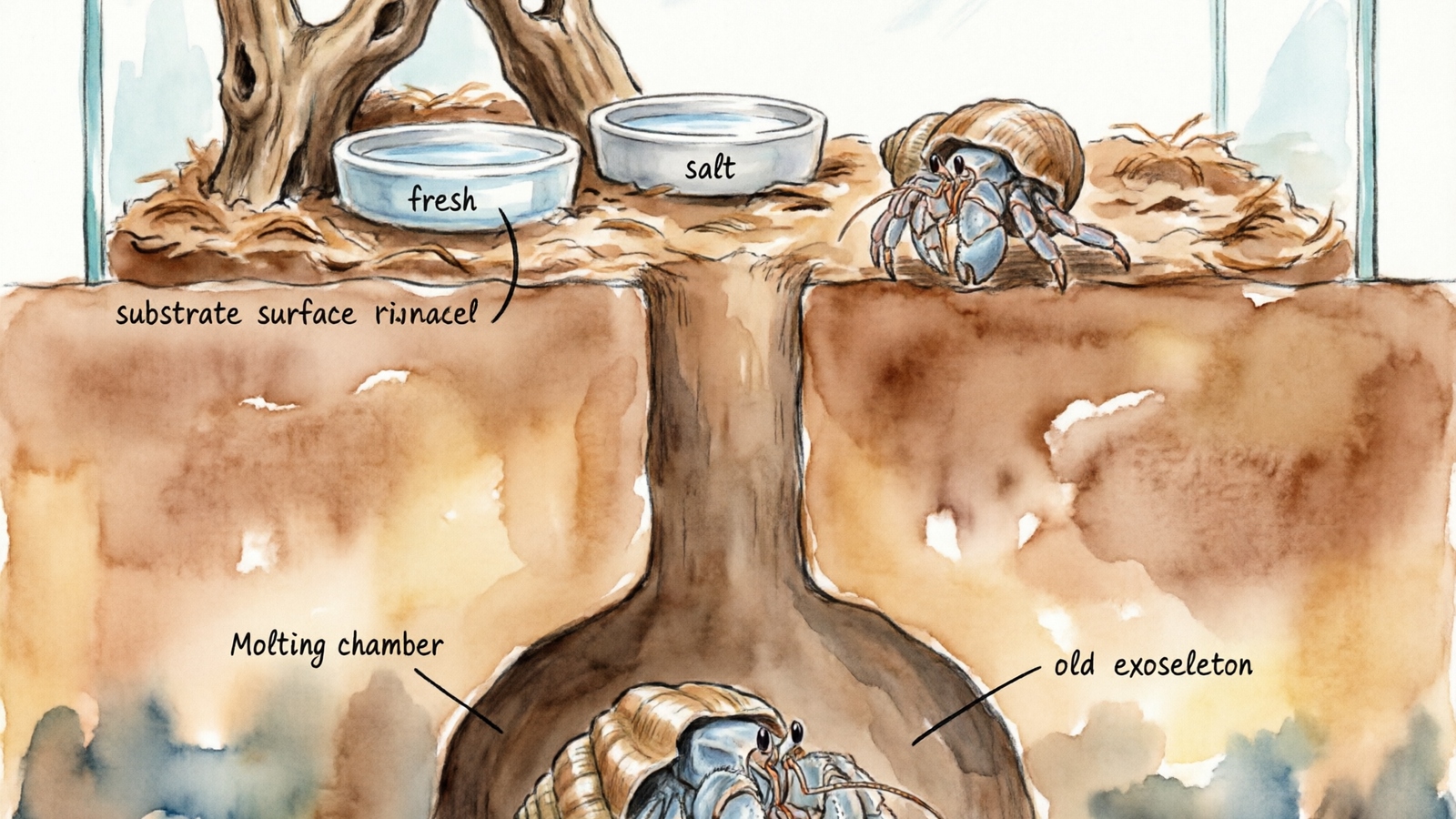
Unlike snakes that shed their skin continuously in one piece, hermit crabs form a molt sac — a membranous sac filled with fluid called hemolymph that separates the old exoskeleton from the new one forming underneath (Merck Veterinary Manual). The crab extracts itself from the old shell and exoskeleton, consumes the shed exoskeleton for calcium recovery, and waits underground for the new exoskeleton to harden.
Molting is the only way hermit crabs grow. They cannot increase in size without it.
The process also regenerates lost limbs, antennae, and eye stalks (Smithsonian NMNH — Crustacean Biology). Hormones triggered by environmental cues control when molting begins.
Average molting frequency is every 12-18 months for adults and more often for juveniles (ReptiFiles — Hermit Crab Molting). The entire cycle from pre-molt behavior changes to full post-molt recovery can span weeks to months depending on the crab’s size.
A common misconception is that hermit crabs leave their shell during molting. They do not (VCA Hospitals — Hermit Crab Care). The crab burrows underground while still inside its shell, sheds the exoskeleton inside the shell, and emerges weeks or months later — often in a larger shell.
Molting is one of the most critical aspects of hermit crab care. For a complete care overview including habitat setup and diet, see our hermit crab care guide.
Signs Your Hermit Crab Is About to Molt
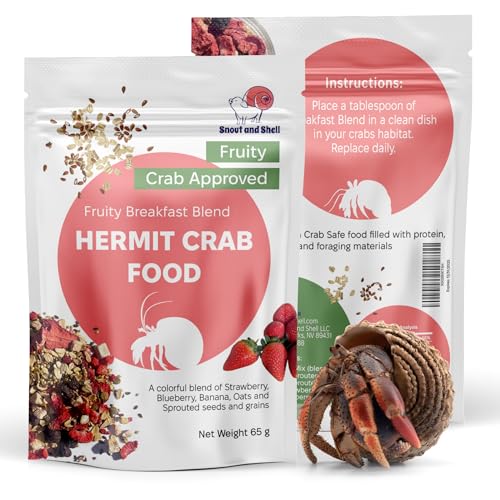
Snout and Shell Natural Food is a quality option worth considering for your setup.
Recognizing pre-molt hermit crab molting signs gives keepers time to prepare the proper environment. Most signs appear two to four weeks before the actual molt begins (VCA Hospitals). Not every crab shows every sign, but certain combinations are strong indicators.
Pre-molt signs checklist:
Increased burrowing or digging — the most reliable sign. Crabs prepare an underground molt chamber by excavating substrate
Lethargy and hiding — less active during normal nighttime hours, spending more time in hides or buried
Reduced appetite — may stop eating one to two weeks before molt as the body prepares for the shed
Excessive water intake — drinking and soaking more than usual to build up hemolymph pressure beneath the old exoskeleton
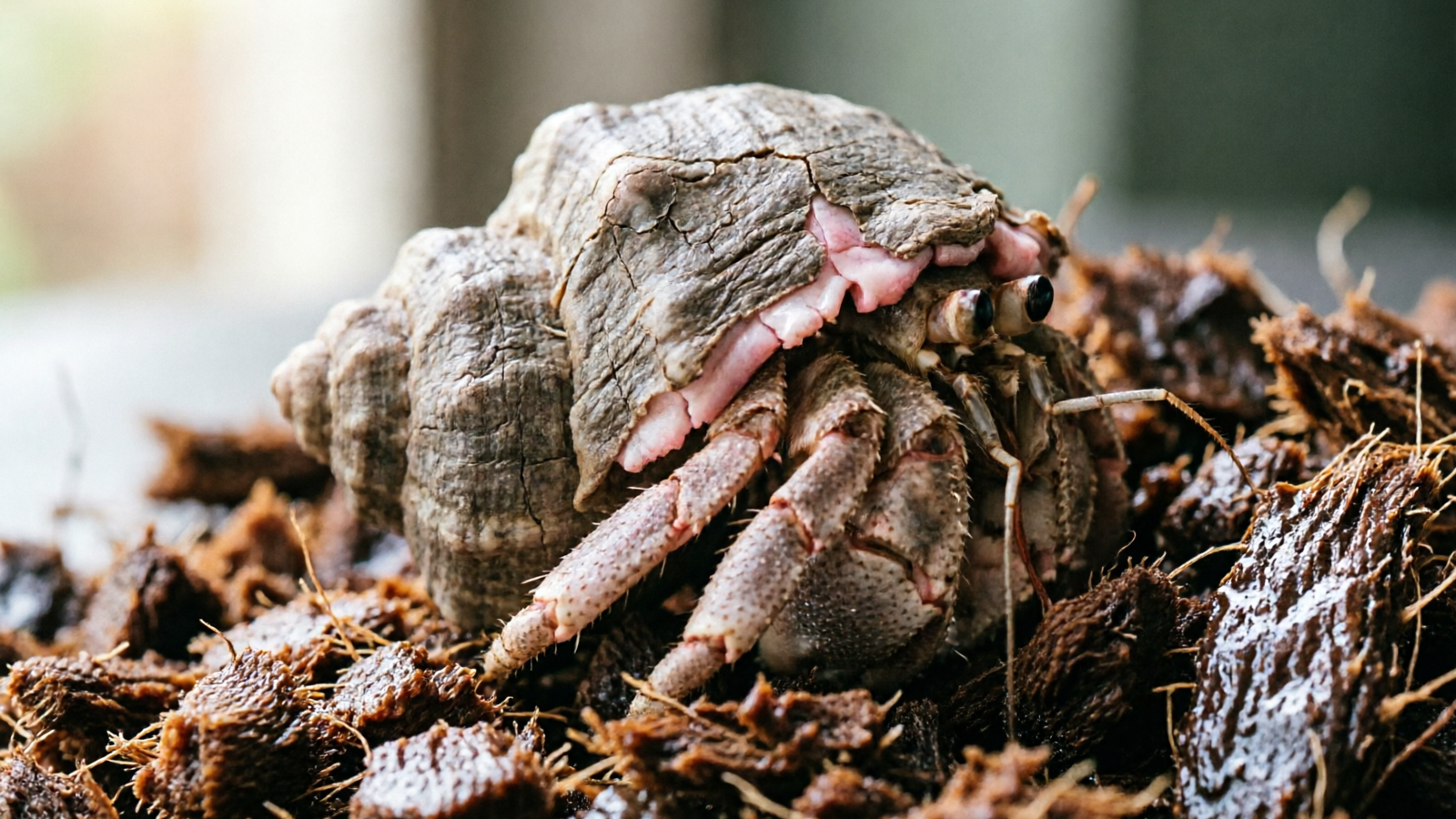
Cloudy or dull eyes — eyes lose their usual glossy clarity and appear milky
Ashy or dull coloration — exoskeleton appears pale or washed out as the new layer separates underneath
Antenna dragging — antennae appear heavy or droopy rather than alert and upright
Frequent soaking in water dishes — longer and more frequent soaks than the crab’s normal routine
Glazed or inactive large cheliped — the main claw appears less responsive or hangs loosely
Burrowing combined with reduced appetite is the strongest indicator that molting is imminent (ReptiFiles). If a crab that normally comes out every night suddenly stays buried for several consecutive nights, preparation should begin immediately.
Proper substrate depth is essential for hermit crab molting — crabs need at least six inches of sand or coconut fiber to burrow (ReptiFiles). See our substrate guide for recommendations.
How to Set Up a Molt Camp
Many owners find that FMR Hermit Crab Food works well for their pet’s needs.
When a hermit crab starts showing pre-molt signs in a tank with multiple crabs, many keepers ask what to do when a hermit crab molts.
Setting up a separate molt camp prevents cannibalism and reduces stress (Animal Diversity Web — Coenobitidae Social Behavior). The concept comes from experienced keepers who isolate molting crabs to give them undisturbed conditions underground.
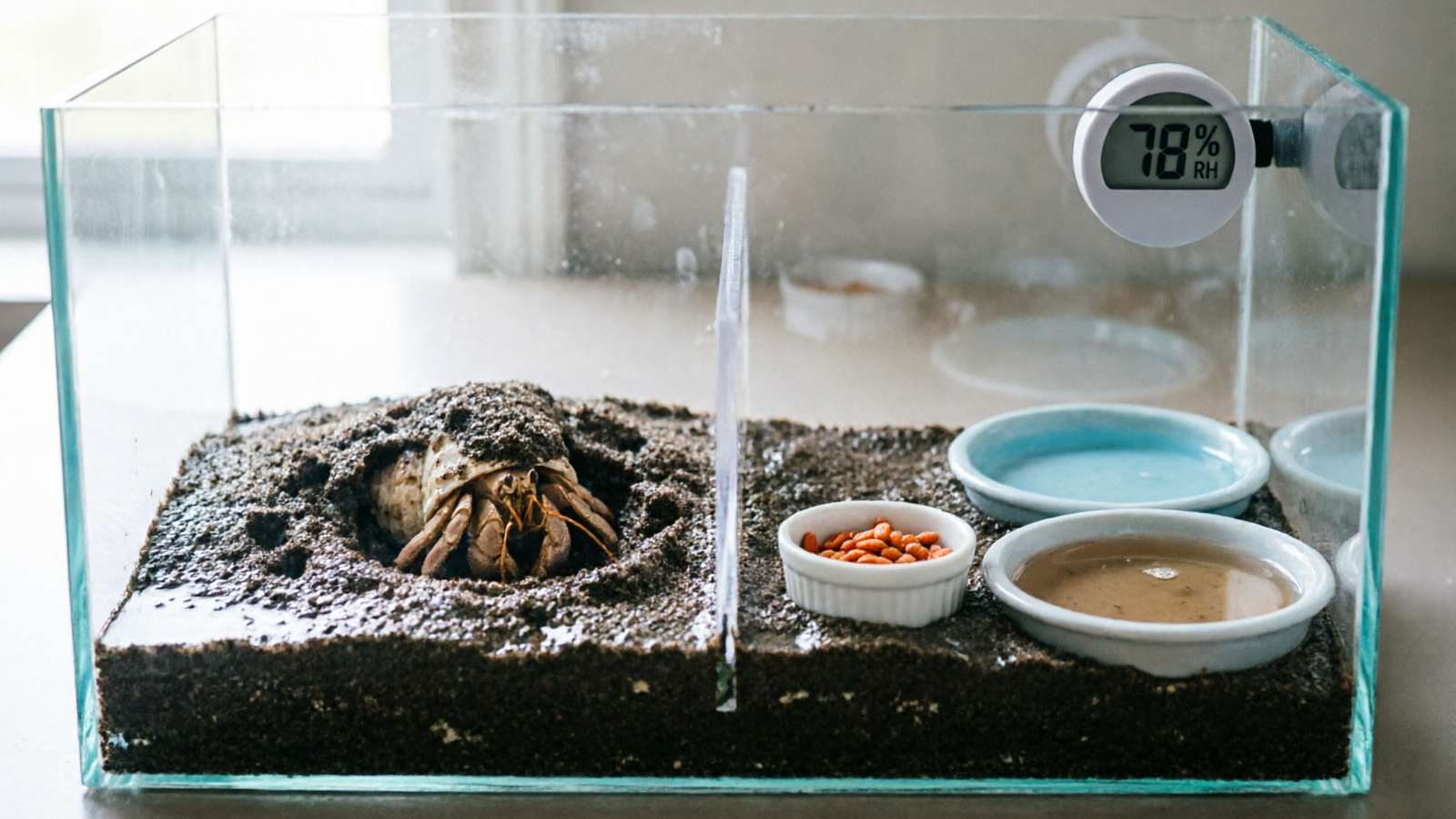
Molt camp setup — step by step:
- Prepare a separate container — use a 5-10 gallon tank or large plastic critter keeper with a secure ventilated lid
- Add substrate — six to eight inches deep, moistened play sand or coconut fiber at sandcastle consistency. It should hold shape when squeezed but no water drips out
- Set up water dishes — both fresh and saltwater dishes, shallow enough to prevent drowning. Use bottle caps or sea shells as dishes for smaller crabs
- Add hiding spots — half-log hides, cork bark, or plastic caves for crabs that prefer surface molting instead of burrowing
- Maintain temperature — 75-85°F using an under-tank heater on one side only, creating a warm-to-cool gradient (Merck Veterinary Manual)
- Maintain humidity — 70-80% relative humidity. Add moist sphagnum moss in corners if the enclosure runs dry (VCA Hospitals)
- Place food — small amount of pellet food and a calcium source such as cuttlebone or crushed eggshell
- Add extra shells — three to five shells slightly larger than the crab’s current size for the post-molt shell change
- Transfer the crab carefully — if the crab is in pre-molt, gently move it. If already buried, do NOT dig it up
- Cover and wait — place the tank in a quiet, dark location. Do not open or check for at least two weeks
When to use a molt camp vs. main tank molting:
Use a molt camp when keeping multiple crabs together (cannibalism risk during vulnerability) or when the main tank substrate is too shallow for proper burrowing.
The main tank is fine for a single crab in a large enclosure with six or more inches of substrate. The crab will self-isolate by burrowing deep underground.
Humidity is critical during hermit crab molting — low humidity can cause the new exoskeleton to harden incorrectly, leading to deformities. See our humidifier recommendations.
The Molting Process — What Happens Underground
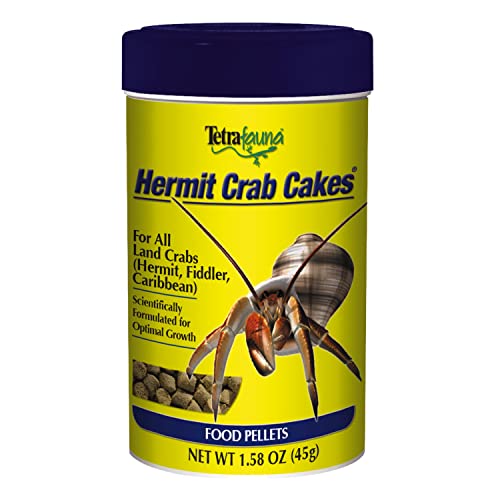
For this purpose, TetraFauna Hermit Crab Cakes is a popular choice among pet owners.
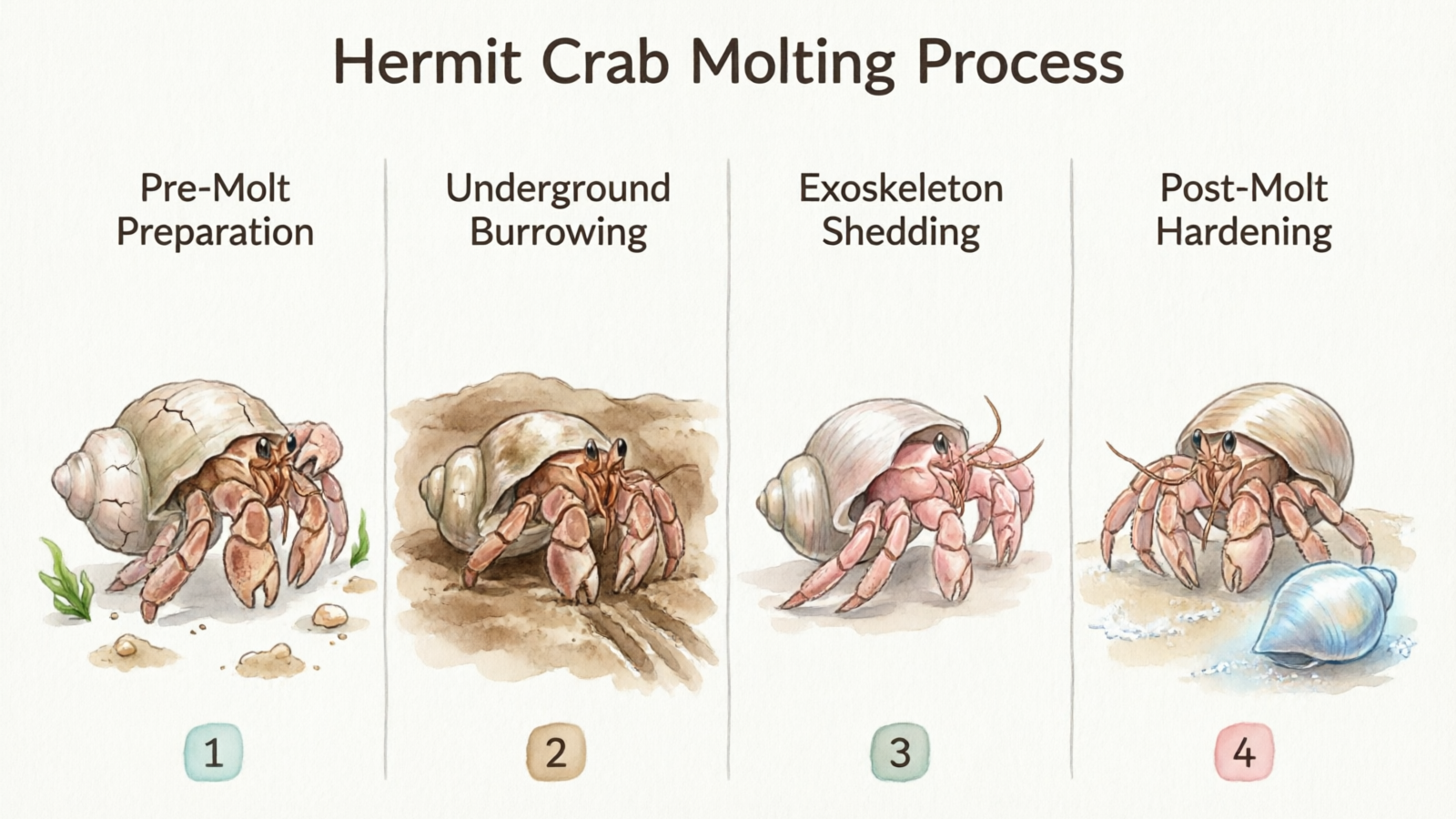
The hermit crab molting process follows a predictable series of biological stages once the crab is safely underground. Understanding these hermit crab molting stages helps keepers know what to expect and when.
Molting timeline by crab size:
| Crab Size | Molt Duration | Frequency | Notes |
|---|---|---|---|
| Micro (dime-sized) | 2-3 weeks | Every 1-3 months | Most frequent molters, highest mortality risk |
| Small (nickel to quarter) | 3-4 weeks | Every 3-6 months | Rapid growth phase |
| Medium (golf ball) | 4-6 weeks | Every 6-12 months | Standard molt duration |
| Large (baseball+) | 6-8 weeks | Every 12-18 months | Longest molts, most vulnerable period |
| Jumbo (fist-sized+) | 8+ weeks | Every 18-24 months | Rare in captivity, can take 3+ months |
Stage-by-stage breakdown:
Pre-molt (one to four weeks before): Hormones trigger behavioral changes described in H2-2. The crab reabsorbs calcium from the old exoskeleton, creating soft spots at the joint membranes. Hemolymph fills the space between old and new exoskeleton, building pressure that will eventually push the old shell off.
Molt sac formation: A fluid-filled membranous sac develops between the old and new exoskeletons. The new exoskeleton forms underneath, complete with regenerated limbs if any were lost previously. This stage is entirely underground and invisible to the keeper.
Extraction: The crab pops the old exoskeleton off piece by piece — starting from the legs, then the body, then the eyes. The crab stays inside its shell throughout this entire process. The shed exoskeleton looks like a hollow, translucent replica of the crab.
Exoskeleton consumption: The crab eats the shed exoskeleton to reclaim calcium and nutrients. This step is essential — removing the shed skin deprives the crab of critical minerals needed for hardening (Merck Veterinary Manual). Some keepers find remnants of the shed exoskeleton after the crab surfaces.
Hardening (one to four weeks): The new exoskeleton gradually hardens through a process called sclerotization (Merck Veterinary Manual). During this time the crab is extremely soft and vulnerable to injury. The crab may also change shells to accommodate its larger body size.
A properly sized tank with adequate substrate depth allows crabs to molt naturally in the main enclosure. See our tank setup guide for recommendations.
Molting vs Dead — How to Tell the Difference
This is the number one source of anxiety for new hermit crab keepers. A crab disappears underground for weeks and the owner assumes it has died. In most cases, the crab is simply molting.
Determining whether you have a molting hermit crab vs dead crab is stressful but straightforward when you know what to check.
How to tell if a hermit crab is molting or dead — decision guide:
| Check | Method | Molting | Dead | Risk |
|---|---|---|---|---|
| 1 | Smell test | No odor | Strong fishy odor within 24-48hr (VCA) | Zero risk — safest test |
| 2 | Position | Buried underground | Found above ground | Zero risk — visual only |
| 3 | Leg test | Slowly retracts limb | Limp, unresponsive | Warning: HIGH — can harm molting crab |
| 4 | Shell check | Empty shell + pale body hiding nearby | Empty shell + no body | Low risk — visual only |
| 5 | Wait rule | Crab surfaces in 2-4 weeks | Strong odor confirms death | Zero risk — always safest |
Warning: CRITICAL: NEVER dig up a buried crab to check if it is alive (VCA Hospitals). The stress and physical disruption of being unearthed mid-molt can be fatal. The smell test and patience are the only safe diagnostic tools.
After molting, the crab will need a larger shell to accommodate its increased size. Keep extra shells available in the tank at all times — see our shell selection guide.
Post-Molt Recovery and Care
Once a hermit crab surfaces after molting, it enters a critical recovery period. The new exoskeleton is soft and the crab is vulnerable to injury, dehydration, and tankmate aggression.
Post-molt care checklist:
- Expect an unusual appearance — freshly molted crabs are pale, soft, and may appear slightly shriveled. Normal coloration returns within a few days as the exoskeleton hardens
- Provide calcium-rich food — cuttlebone, crushed eggshells, calcium-fortified pellets, dried shrimp, and krill all support exoskeleton hardening
- Ensure shells are available — offer three to five shells slightly larger than the crab’s current shell. Most crabs change shells within the first few days after surfacing
- Maintain high humidity — keep humidity at 75-80%. Low humidity during hardening can cause permanent exoskeleton deformities
- Minimize handling — the crab is fragile for one to two weeks post-molt. No handling until the exoskeleton is fully hardened and the crab is moving normally
- Monitor tankmate interactions — other crabs may be attracted to the soft, vulnerable molter. If aggression is observed, return the crab to the molt camp until fully recovered
- Return to main tank — once the crab is fully colored, active, and moving normally (typically one to two weeks after surfacing), it can safely rejoin the main tank
Some crabs eat very little during the first few days post-molt while the new exoskeleton continues to harden internally. Offer food daily but do not worry if the appetite is low initially.
Calcium-rich foods are particularly important during post-molt recovery (ReptiFiles). See our hermit crab food guide for the best dietary options.
Hermit Crab Molting FAQ
How long does it take for a hermit crab to molt?
Molt duration depends on crab size. Small crabs (nickel-sized) typically molt in two to three weeks.
Medium crabs (golf ball-sized) take four to six weeks. Large crabs (baseball-sized) can take six to eight weeks or longer.
Jumbo crabs may take three or more months to complete a single molt. The entire process from pre-molt signs to full recovery spans four to twelve weeks for most pet crabs.
Juveniles molt more frequently (every one to six months) while adults molt every twelve to eighteen months.
How do I know if my hermit crab is molting?
The most reliable sign is excessive burrowing combined with reduced appetite and increased water intake.
Other signs include lethargy, cloudy eyes, dull coloration, and dragging antennae. If a crab has buried itself and stopped coming out at night, it is likely preparing to molt or already molting underground.
See the pre-molt signs checklist above for a complete list of indicators.
How often do hermit crabs molt?
Juvenile hermit crabs molt every one to three months because they are growing rapidly. Sub-adults molt every three to six months.
Adult crabs molt approximately every twelve to eighteen months. The frequency decreases as the crab ages and growth slows.
Very old or large crabs may only molt every two or more years. Environmental stress, improper diet, or inadequate habitat conditions can also trigger irregular molting patterns.
Is my hermit crab dead or molting?
Use the smell test — dead crabs produce a strong fishy odor within 24-48 hours.
If there is no smell, the crab is almost certainly molting. Do NOT dig up a buried crab to check.
A dead crab found above ground will have a limp, unresponsive body. When in doubt, always wait — digging up a molting crab can kill it. See the full molting vs dead guide above.
Should I dig up my hermit crab to check on it?
No. Many new keepers wonder should I dig up my hermit crab to check on it — the answer is always no.
Never dig up a buried hermit crab. Disturbing a crab mid-molt can cause it to panic, potentially damaging the delicate new exoskeleton or causing it to abort the molt entirely, which can be fatal.
The only exception is if the crab has been buried for an unusually long time and a strong odor indicates death. Otherwise, trust the process and wait.
Do hermit crabs eat their shed exoskeleton?
Yes, and many keepers wonder — do hermit crabs eat their exoskeleton? The answer is yes, and this behavior is essential for their health.
Hermit crabs consume their shed exoskeleton to reclaim calcium and other nutrients needed to harden the new exoskeleton. Removing the shed skin deprives the crab of critical minerals.
If shed exoskeleton remains are found above ground after the crab has surfaced and moved to a new shell, the remnants can be left in the tank for the crab to finish consuming over the following days.