
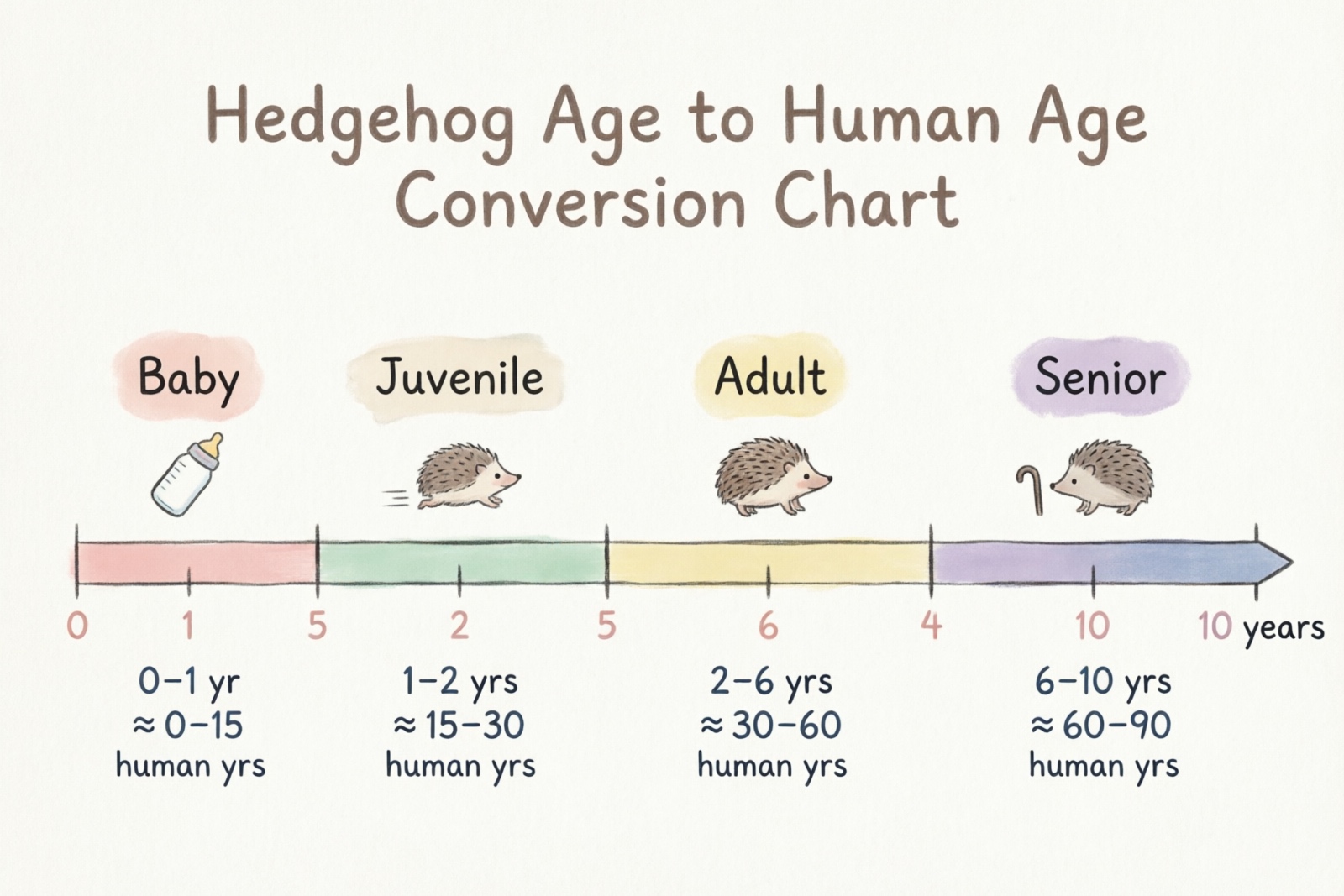
The most common question new hedgehog owners ask is also the most important: how long will my hedgehog live? The answer depends largely on the care you provide. Pet hedgehogs typically live 4-7 years, but some reach 8-9 years with optimal care — and a few exceptional individuals have surpassed 10.
This guide explains the specific factors that determine hedgehog lifespan and gives you actionable steps to help your hedgehog live as long as possible. For a complete care overview, see our hedgehog care guide.
How Long Do Hedgehogs Live?
Quick Answer
- Pet African Pygmy hedgehog: 4-7 years (most common range)
- Wild European hedgehog: 2-3 years (predators, disease, food scarcity)
- Oldest recorded hedgehog: 16 years (Guinness World Record — extremely rare)
- Typical pet lifespan: Most well-cared hedgehogs live 5-6 years
The 4-7 year range is the realistic expectation. Hedgehogs that live beyond 7 years are uncommon but achievable with excellent diet, temperature control, and regular veterinary care. Those reaching 10+ years are exceptional outliers.
What Determines Hedgehog Lifespan?
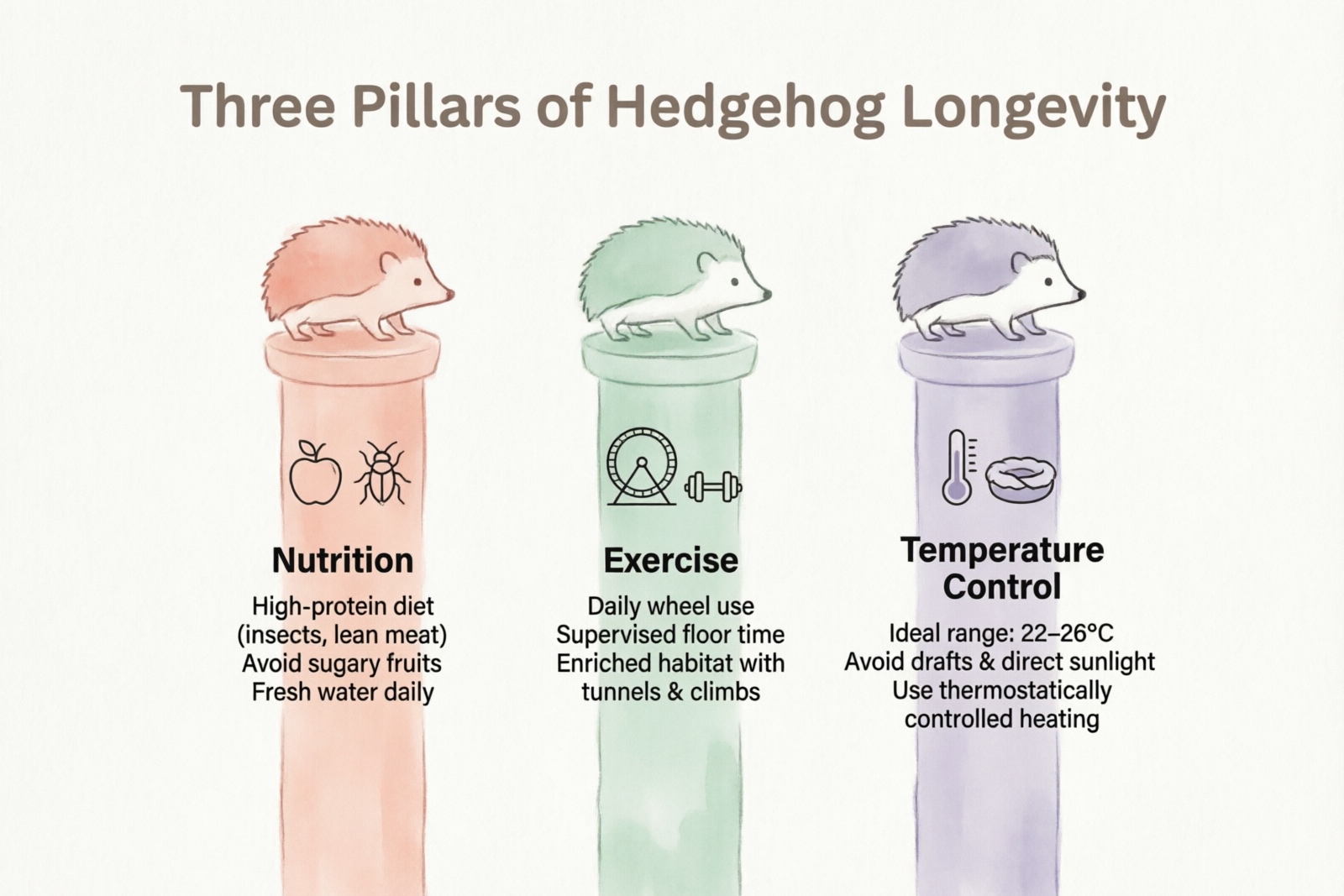
Three factors have the greatest impact on how long your hedgehog lives:
- Diet — The single most influential factor. Proper high-protein, low-fat nutrition prevents obesity, fatty liver disease, and immune deficiency.
- Temperature — The most overlooked factor. Incorrect temperatures can trigger pseudo-hibernation, which can kill within 48 hours.
- Exercise — Prevents obesity and related diseases. An exercise wheel is not optional — it’s essential.
Genetics also play a role. Some hedgehogs are genetically predisposed to certain conditions like Wobbly Hedgehog Syndrome. However, the three factors above are entirely within your control.
African Pygmy Hedgehog Lifespan
Why African Pygmy Hedgehogs Are Most Common
The African Pygmy hedgehog (Atelerix albiventris) is the species most commonly kept as a pet. Over 90% of pet hedgehogs in the United States are African Pygmy or African Pygmy hybrids. They’re popular because they’re small (6-8 inches long), generally docile, and adapt well to captivity. I’ve found them to be rewarding pets for owners who understand their specific needs — particularly around temperature and diet, which we’ll cover in detail below.
Lifespan by Species
| Species | Average Lifespan | Pet Suitability |
|---|---|---|
| African Pygmy | 4-7 years | ✅ Most common pet |
| European Hedgehog | 2-3 years (wild) | ❌ Not suitable — protected in many countries |
| Algerian Hedgehog | 4-6 years | ⚠️ Less common |
| Long-eared Hedgehog | 3-5 years | ⚠️ Rarely available |
Dietary needs vary slightly between species, but all pet hedgehogs share the same core requirement: high protein, low fat, with adequate fiber. See our hedgehog diet guide for species-specific feeding recommendations.
Wild vs Captivity Lifespan
Why Wild Hedgehogs Die Younger
Wild hedgehogs face challenges that captive hedgehogs never encounter:
- Predators — Foxes, owls, badgers, and domestic cats are constant threats
- Food scarcity — Insects become scarce in winter, forcing hibernation that depletes body reserves by 15-30%
- Parasites and disease — Fleas, ticks, and internal parasites are widespread in wild populations
- Road traffic — For European hedgehogs, vehicles are the leading cause of death
- Harsh weather — Extreme cold, drought, and flooding all take a toll
Captivity Advantages & Risks
Captive life eliminates predators and food scarcity, but introduces new risks:
- ✅ Consistent nutrition, no predators, temperature control, veterinary access
- ⚠️ Obesity from insufficient exercise (the most common captive health issue)
- ⚠️ Stress from improper handling or inadequate housing
- ⚠️ Genetic conditions from limited breeding pools
An exercise wheel is one of the most important tools for preventing captive obesity. Wild hedgehogs travel 1-2 miles nightly foraging — a wheel replicates this essential activity.
Diet — The #1 Factor That Affects Hedgehog Lifespan
Why Diet Matters Most
Hedgehogs are insectivores. In the wild, their diet consists primarily of insects, which provide high protein and low fat. When hedgehogs eat inappropriate food — high-fat treats, excess seeds and nuts, or low-quality commercial food — the consequences are severe:
- Obesity → Heart disease, fatty liver disease (FLD), reduced lifespan by 2-3 years
- Malnutrition → Weakened immune system, increased susceptibility to infection
- Calcium deficiency → Metabolic bone disease, particularly in growing hedgehogs
Diet is the factor you have the most control over, and it has the most direct impact on longevity.
Feeding Guidelines for Longevity
- Protein: 28-35% (high protein for insectivore needs)
- Fat: 10-15% maximum (low fat is critical)
- Fiber: 3-5%
- Daily amount: 1-2 tablespoons (approximately 1-2 ounces)
Foods to avoid: Nuts and seeds (too high in fat), dairy products (lactose intolerant), grapes and raisins (toxic), processed human food, and anything with added sugar.
For detailed dietary recommendations, see our best hedgehog food comparison.
Choosing the Right Food
The food you choose as your hedgehog’s daily staple has the biggest impact on their long-term health. I’d recommend looking for foods with 30%+ protein, under 15% fat, and real meat as the first ingredient.
Exotic Nutrition Hedgehog Essential — Chicken Kibble with Mealworms, 1.75 lb ($16.99, 4.7⭐) is a practical daily food that delivers high protein from chicken and dried mealworms. At $16.99 for 1.75 lb, it’s affordable for daily feeding. The resealable bag helps maintain freshness.
For owners wanting a premium option, Spike’s Delite Premium Hedgehog Diet ($39.75, 4.6⭐) uses natural cooked kibble rather than extruded pellets, which is more digestible and retains more nutrients. At $39.75 it’s significantly more expensive, but the quality difference is noticeable — this is the food I’d choose if budget isn’t a constraint.
Temperature — The Hidden Lifespan Killer
Why Temperature Is Critical
This section could save your hedgehog’s life. African Pygmy hedgehogs evolved in warm African climates and cannot regulate their own body temperature. When the temperature drops below their safe range, their body attempts to hibernate — a process that is fatal for domesticated hedgehogs.
Safe temperature range: 75-80°F (24-27°C)
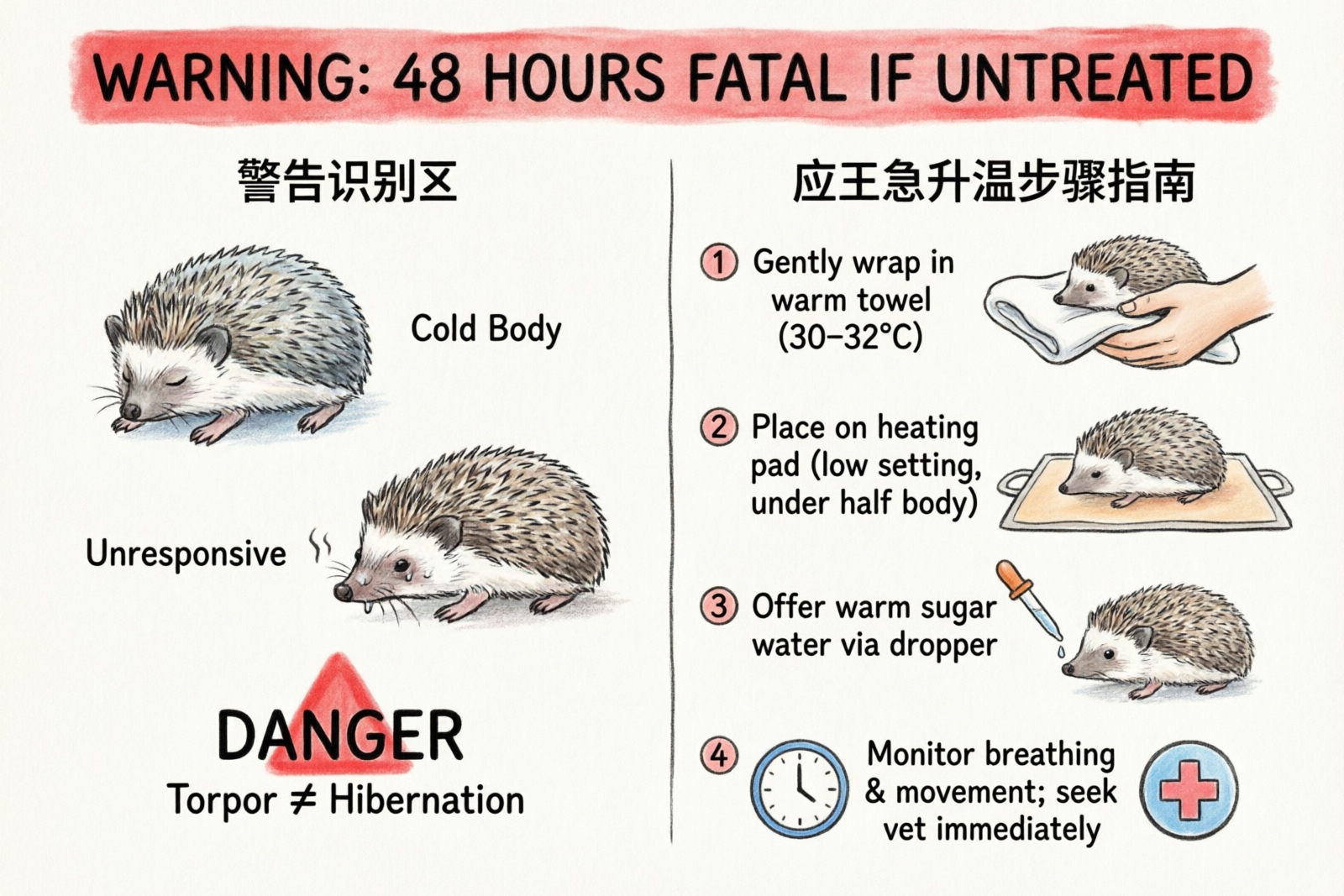
When temperature falls below 72°F (22°C), hedgehogs enter a state called pseudo-hibernation. This is not true hibernation — it’s a stress response that causes the body to shut down. Pseudo-hibernation can kill a hedgehog within 48 hours. This is the single most preventable cause of death in pet hedgehogs.
Signs of Pseudo-Hibernation — Act Immediately
Pseudo-hibernation can kill within 48 hours. If your hedgehog shows ANY of these signs, act immediately:
- Body feels cold to the touch
- Unusually inactive or lethargic
- Loss of appetite
- Curled into a tight ball and difficult to unroll
- Wobbly or uncoordinated movement
Emergency response: Warm your hedgehog gradually — increase temperature by 2-3°F per hour. Do not use direct heat or warm too quickly, which can cause shock. Place your hedgehog against your body (under your shirt) for gentle warming while you set up proper heating. Time is critical — contact a veterinarian immediately.
Heating Solutions
Maintaining proper temperature is not optional — it’s a survival requirement. A ceramic heat emitter (CHE) paired with a fixture and thermostat is the most reliable setup.
A LUCKY HERP 50W Ceramic Heat Emitter, 2-Pack ($15.99, 4.6⭐) produces no light, so it won’t disrupt your hedgehog’s nocturnal sleep cycle. The 2-pack is intentional — always have a backup, since a failed heat emitter during winter can be fatal before you can replace it. You’ll need a separate fixture and thermostat to use it.
For an all-in-one solution, the REPTI ZOO Reptile Light Fixture with Dimming Thermostat ($44.99, 4.4⭐) combines a dome lamp with a built-in dimming thermostat and timer. The built-in thermostat automatically maintains your set temperature, turning the emitter on and off as needed. At $44.99, it’s an investment — but it eliminates the need to buy a separate thermostat controller.
Recommended setup: CHE ($15.99) + REPTI ZOO Fixture ($44.99) = $60.98 for a complete, reliable heating system. Always pair with a digital thermometer to verify actual cage temperature.
For proper enclosure setup with heating, see our hedgehog cage setup guide.
Exercise — Prevent Obesity, Extend Life
Why Hedgehogs Need Exercise
In the wild, hedgehogs travel 1-2 miles every night while foraging for insects. This level of activity keeps them lean, healthy, and mentally stimulated. Captive hedgehogs without exercise opportunities quickly become obese — and obesity leads to fatty liver disease, heart problems, and a shortened lifespan.
Exercise also reduces stress and prevents behavioral problems like cage pacing and self-mutilation. A hedgehog with an exercise wheel is a healthier, happier hedgehog.
An Exercise Wheel Is Essential
A properly sized exercise wheel is the single most important exercise tool for hedgehogs. The Silent Runner 12” Wide Exercise Wheel ($39.99, 4.3⭐) has a 12-inch wide running surface — the minimum recommended size for hedgehogs. Smaller wheels cause back arching and spinal problems. The solid running surface prevents nail trapping, a safety issue with wire wheels. The ball bearing design keeps operation quiet, which matters since hedgehogs are nocturnal and most active while you’re sleeping.
I’ve seen hedgehogs run 3-5 miles per night on a proper wheel. That’s the level of activity they need to stay healthy. If your hedgehog isn’t using the wheel, check that it’s the correct size, properly mounted, and that the running surface is clean.
Other Exercise Ideas
Beyond the wheel, provide additional activity:
- Tunnel toys — Hedgehogs love exploring tunnels; see our hedgehog toys guide for options
- Foraging games — Hide food in different cage locations to encourage natural foraging behavior
- Supervised floor time — Let your hedgehog explore a hedgehog-safe room for 30-60 minutes daily
Aim for at least 30 minutes of wheel running nightly. If your hedgehog isn’t using the wheel, check that it’s the correct size and properly mounted.
Weight Monitoring
Obesity is the most common health problem in captive hedgehogs, and it’s almost entirely preventable. A healthy adult hedgehog typically weighs 300-600 grams. I’d recommend weighing your hedgehog weekly using a kitchen scale — a 5-10% weight change over a month is worth discussing with your vet.
The simplest visual check: can your hedgehog curl into a complete ball? If it can’t close the gap, or if you can see fat rolls when it’s walking, it’s likely overweight. An underweight hedgehog will have a visible spine and hip bones. Both conditions warrant a vet visit to rule out underlying health issues.
For weight management, the combination of proper portion control and nightly wheel exercise is more effective than any supplement or special food. I’ve seen obese hedgehogs lose weight steadily once their owners started measuring food portions and verified the wheel was working correctly.
How to Help Your Hedgehog Live Longer
6 Proven Ways to Extend Lifespan
- Balanced diet — High protein (28-35%), low fat (10-15%), with quality commercial food as the base. Avoid treats that are high in fat or sugar.
- Temperature control — Maintain 75-80°F at all times. Pseudo-hibernation can kill within 48 hours. This is the most preventable cause of death.
- Adequate exercise — A properly sized wheel with 30+ minutes of nightly running. Obesity from inactivity shortens lifespan by years.
- Regular veterinary checkups — Every 6 months for adults, every 3-4 months for seniors. Early detection of tumors and organ problems saves lives.
- Clean environment — Full cage cleaning weekly, spot cleaning daily. Dirty cages harbor bacteria and cause respiratory and skin infections.
- Minimize stress — Quiet sleeping environment during the day, consistent routine, avoid frequent rehoming or major habitat changes.
Veterinary Care Timeline
| Age | Checkup Frequency | Focus Areas |
|---|---|---|
| 0-1 year | Every 3 months | Weight, teeth, parasites |
| 1-3 years | Every 6 months | Full exam, skin check |
| 3+ years | Every 3-4 months | Senior screening, tumor checks |
For common health problems that affect lifespan, see our hedgehog health problems guide.
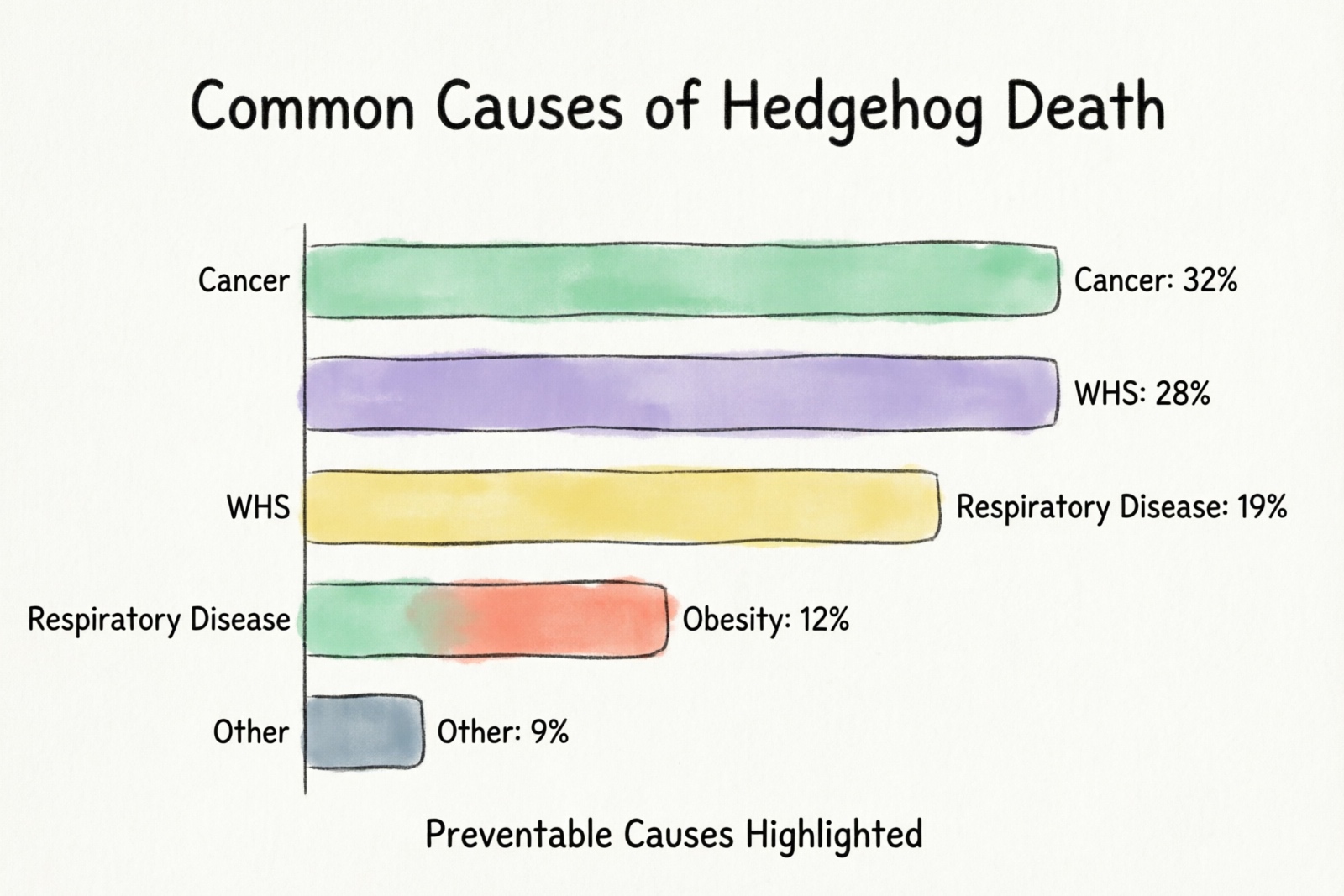
Common Causes of Hedgehog Death
Understanding what kills hedgehogs helps you prevent the preventable causes and prepare for the unavoidable ones.
Top 6 Causes of Death
| Rank | Cause | Preventable? | Prevention |
|---|---|---|---|
| 1 | Cancer / Tumors | ⚠️ Partially | Quality diet, regular vet checks, early detection |
| 2 | Pseudo-hibernation (cold) | ✅ Yes | Maintain 75-80°F with reliable heating — can kill within 48 hours |
| 3 | Wobbly Hedgehog Syndrome | ❌ No | Genetic — no prevention, but proper care extends quality of life |
| 4 | Fatty Liver Disease | ✅ Yes | Control weight, provide exercise wheel |
| 5 | Heart Disease | ⚠️ Partially | Exercise, weight management |
| 6 | Respiratory Infection | ✅ Yes | Clean cage, stable temperature, avoid drafts |
Wobbly Hedgehog Syndrome (WHS)
WHS is a progressive neurological disease similar to ALS in humans. It causes gradual loss of muscle control, typically starting in the hind legs. Symptoms include wobbling, difficulty walking, and eventual paralysis.
- Onset age: Usually 2-3 years
- Cause: Genetic — no known cure or prevention
- Progression: Varies from months to over a year
- Management: Supportive care — padded enclosure, hand-feeding when needed, anti-inflammatory medication
While WHS cannot be prevented, knowing your hedgehog’s lineage can help assess risk. Reputable breeders track WHS in their lines. If you’re considering getting a hedgehog, I’d ask the breeder about WHS history in their breeding stock — this information isn’t always offered, but responsible breeders will have it available.
Cancer and Tumors
Cancer is the leading cause of death in pet hedgehogs over age 3. Tumors can appear anywhere on the body, but are most common in the mouth, skin, and reproductive organs. The best approach is early detection through regular physical exams — running your hands over your hedgehog’s body weekly to feel for lumps or bumps. If you find anything unusual, have your vet examine it promptly. Many tumors are operable if caught early, but the prognosis drops significantly once they’ve grown or spread.
Signs Your Hedgehog Is Aging
When Is a Hedgehog Considered “Senior”?
A hedgehog over 3 years old is considered senior. In human terms, this is roughly equivalent to 60-70 years old. At this stage, your hedgehog needs extra attention and more frequent veterinary visits.
Senior hedgehogs may benefit from softer food options. See our soft hedgehog food guide for age-appropriate dietary adjustments.
Aging Signs to Watch For
- Weight changes — Unexplained weight loss or gain (both are concerning in seniors)
- Reduced activity — Less time on the wheel, shorter exploration sessions
- Physical changes — Thinner skin, more visible spine, muscle loss along the back
- Sensory decline — Reduced vision and hearing (may startle more easily)
- Sleep pattern changes — Sleeping more during active hours
Senior hedgehogs are more vulnerable to temperature drops. Consider adding an under-tank heating pad for additional warmth during colder months. A pad with a digital thermostat allows precise temperature control and works best as supplemental heat alongside a ceramic heat emitter.
Any sudden change in behavior, appetite, or weight in a senior hedgehog warrants an immediate veterinary visit. Don’t assume changes are just “old age” — many age-related conditions are treatable if caught early, and the difference between catching a tumor at 3 months versus 6 months can be the difference between a successful surgery and a palliative care situation.
FAQ: Hedgehog Lifespan Questions
How long do hedgehogs live as pets?
The average hedgehog lifespan for pets is 4-7 years, with most well-cared hedgehogs reaching 5-6 years. With optimal diet, temperature control, exercise, and regular veterinary care, some hedgehogs reach 8-9 years.
What Is the Oldest Hedgehog on Record?
The Guinness World Record for the oldest hedgehog is 16 years. However, this is extremely rare. Lifespans of 8-10 years are uncommon but documented. Anything beyond 7 years is considered exceptional.
How long do African pygmy hedgehogs live?
African Pygmy hedgehogs live 4-7 years on average — the same as the general pet hedgehog lifespan. This is the species most commonly kept as a pet and the lifespan data primarily reflects this breed.
Do hedgehogs die of old age?
Most die from specific causes: cancer, heart disease, Wobbly Hedgehog Syndrome, or organ failure. “Natural death” in hedgehogs usually means they’ve reached a point where age-related decline becomes terminal. Regular veterinary screening helps detect and manage age-related conditions.
How can I tell my hedgehog’s age?
Unless you raised your hedgehog from birth, determining exact age is difficult. Younger hedgehogs have softer quills, brighter eyes, and more energy. Older hedgehogs show thinner skin, more visible spines, and reduced activity. A veterinarian can estimate age based on teeth wear and overall condition.
Can hedgehogs live 10 years?
It’s possible but extremely rare. A 10-year-old hedgehog would require exceptional genetics, optimal diet, perfect temperature control, daily exercise, and regular veterinary care throughout its entire life. If you’re aiming for maximum lifespan, focus on the three controllable factors: diet, temperature, and exercise.
What supplements does my hedgehog need?
If your hedgehog eats a complete, high-quality commercial food, supplements are generally unnecessary. However, a powdered multivitamin sprinkled on food can serve as insurance against nutritional gaps — especially for picky eaters or hedgehogs recovering from illness. I’d consider it optional but not essential. The most important supplement is actually environmental: reliable, consistent heat.
How much does hedgehog veterinary care cost?
Budget for $50-100 per routine exam and $200-500 for diagnostic workups (blood work, X-rays). Emergency care for conditions like gastrointestinal blockages or tumor removal can run $500-2,000. I’d set aside a dedicated emergency fund of $500-1,000 if possible — hedgehog health emergencies happen more often than most new owners expect.
This guide represents current best practices in hedgehog care based on veterinary guidance, exotic animal research, and verified owner experiences. Always consult with an exotic pet veterinarian for specific health concerns.