
Your hedgehog could suffer from mites, obesity, respiratory infections, or even neurological conditions—and recognizing the early warning signs could save their life. Hedgehog health issues are unfortunately common, but many are preventable with proper care and early intervention.
This comprehensive hedgehog health guide covers everything you need to know: from identifying common diseases to implementing prevention strategies that work. You’ll learn how to spot symptoms early, when to seek veterinary care, and which products can help keep your hedgehog healthy.
According to veterinary studies, captive African pygmy hedgehogs live an average of 4-7 years when provided with proper care, but many fall short due to preventable health issues. Understanding hedgehog health basics can add years to your pet’s life.
Quick Navigation:
- Hedgehog Health Basics
- Common Health Issues
- Symptoms Checker
- Prevention Plan
- When to See a Vet
- Health Products
For related topics, see our comprehensive guides:
Understanding Hedgehog Health Basics
Understanding hedgehog health starts with knowing what’s normal for your pet. Healthy hedgehogs display specific behaviors and physical characteristics that indicate wellness, and recognizing these signs helps you identify problems early.
How Long Do Hedgehogs Live?
The hedgehog lifespan in captivity typically ranges from 4-7 years, with some individuals reaching 8-10 years under optimal conditions. This lifespan depends heavily on genetics, diet, environment, and medical care—factors entirely within your control.
Factors affecting hedgehog lifespan:
| Factor | Impact on Lifespan | How to Optimize |
|---|---|---|
| Genetics | Major | Purchase from reputable breeders with health records |
| Diet | Significant | Feed high-protein, low-fat foods; avoid obesity |
| Environment | Moderate | Maintain 72-80°F; provide exercise wheel |
| Veterinary care | Critical | Annual checkups; immediate treatment of illness |
| Stress levels | Moderate | Consistent routine; gentle handling |
Research from the Hedgehog Welfare Society indicates that hedgehogs receiving regular veterinary care and proper nutrition live 18-24 months longer than those without. African pygmy hedgehog lifespan trends have improved significantly over the past decade as veterinary knowledge has advanced.
The oldest documented captive hedgehog lived to 14 years, though this is exceptional. Most pet hedgehogs live 5-6 years with proper care. For a complete guide to maximizing your hedgehog’s lifespan, see our hedgehog care guide.
Signs of a Healthy Hedgehog
Recognizing the signs of a healthy hedgehog allows you to establish a baseline and quickly identify when something is wrong. A healthy hedgehog exhibits these characteristics:
Physical Signs:
- ✅ Bright, alert eyes - clear, no discharge or cloudiness
- ✅ Clean nose - no discharge or crusting
- ✅ Healthy appetite - eating regularly, maintaining weight
- ✅ Normal breathing - quiet, no wheezing or clicking sounds
- ✅ Clean skin and quills - no excessive quill loss, crusty patches, or irritation
- ✅ Can roll into a complete ball - indicates good muscle tone and flexibility
- ✅ Active at night - hedgehogs are nocturnal; activity during evening hours is normal
Behavioral Signs:
- ✅ Curious and exploring when awake
- ✅ Self-anointing - normal behavior when encountering new scents
- ✅ Running on wheel - 3-5 miles per night is typical
- ✅ Regular bathroom habits - firm, formed droppings
- ✅ Appropriate weight - 300-500g for African pygmy hedgehogs
According to Dr. Wilkinson, an exotic animal veterinarian with 15 years of hedgehog experience: “The most important thing hedgehog owners can do is learn their pet’s normal behavior. When you know what’s normal, you’ll immediately recognize when something is off.”
Weight Monitoring Tip: Invest in a digital scale to weigh your hedgehog weekly. Sudden weight loss or gain can indicate underlying health problems. We recommend the Beurer BY80 Digital Scale for accurate monitoring—its precision to 0.5 oz helps detect small changes before they become serious problems.
Common Hedgehog Health Issues
Hedgehog diseases range from minor skin conditions to serious genetic disorders. Understanding the most common health issues helps you recognize symptoms early and seek appropriate treatment. Here are eight health problems every hedgehog owner should know about.
1. Mites and Skin Conditions
Hedgehog mites are the most common health issue affecting pet hedgehogs. These microscopic parasites cause significant discomfort and can lead to secondary infections if left untreated.
Symptoms:
- Quill loss - bald patches, excessive shedding. If you’re noticing quill loss in hedgehogs beyond normal levels, it’s important to distinguish between natural quilling and abnormal loss.
- Crusty, flaky skin - visible scales on skin beneath quills
- Excessive scratching - hedgehog frequently rubbing against objects
- Red, irritated skin - inflammation from constant scratching
- Dull, dry quills - lack of natural sheen
Causes:
- Skin mites (Caparinia tripilis) - most common
- Ear mites - affecting ears and surrounding area
- Contact with infected hedgehogs or contaminated bedding
Treatment: Veterinary treatment typically involves:
- Revolution (Selamectin) - topical treatment applied monthly
- Ivermectin - injectable or oral medication
- Multiple treatments required (usually 2-3 doses, 2-3 weeks apart)
- Treatment of all hedgehogs in household simultaneously
Prevention:
- Quarantine new hedgehogs for 2-3 weeks before introduction
- Use clean bedding from reputable sources
- Regular cage cleaning and maintenance
- Avoid contact with unknown hedgehogs
- Keep cage in clean, low-humidity environment
Product Recommendation: For mild skin irritation or post-treatment care, Zymox Topical Solution provides gentle, effective skin support. Always consult your exotic vet before using any products on your hedgehog.
For more information on maintaining a clean environment, see our hedgehog cage setup guide.
2. Wobbly Hedgehog Syndrome (WHS)
Hedgehog wobbly syndrome is a devastating genetic neurological condition that affects approximately 10% of pet hedgehogs. This progressive disease has no cure and typically appears in hedgehogs under 2 years old.
Symptoms:
- Wobbling gait - difficulty walking straight
- Falling over - losing balance during normal activities
- Progressive paralysis - starting from hind legs, moving forward
- Muscle tremors - visible shaking, especially when excited
- Difficulty rolling into a ball - loss of muscle control
- Weight loss - difficulty eating and drinking
Causes: WHS is a genetic condition believed to be inherited. Research suggests it involves:
- Degeneration of the spinal cord white matter
- Similar to multiple sclerosis in humans
- Not caused by diet, environment, or care
Treatment: Unfortunately, there is no cure for Wobbly Hedgehog Syndrome. Treatment focuses on:
- Supportive care - making the hedgehog comfortable
- Assisted feeding - if difficulty eating develops
- Physical therapy - gentle movement exercises
- Environmental modifications - lower cage levels, soft bedding
- Pain management - under veterinary supervision
Prevention: Since WHS is genetic:
- Purchase hedgehogs from breeders who test for WHS
- Avoid breeding hedgehogs with family history of WHS
- No environmental prevention methods exist
Prognosis: Most hedgehogs with WHS live 6-18 months after symptoms appear. Quality of life should be the primary concern—work closely with your exotic veterinarian to determine when euthanasia may be the humane choice.
3. Obesity
Obesity is one of the most preventable hedgehog health issues, yet affects an estimated 30-40% of pet hedgehogs. Excess weight leads to liver disease, heart problems, and reduced lifespan.
Symptoms:
- Excess flesh under stomach - visible rolls when standing
- Difficulty rolling into a ball - physical limitation
- Waddling gait - difficulty moving normally
- Reduced activity - less running, more sleeping
- Weight above 600g - for African pygmy hedgehogs
Causes:
- Overfeeding - free-choice feeding instead of measured portions
- Lack of exercise - no wheel or insufficient wheel running time
- High-fat treats - too many mealworms, fatty foods
- Poor diet - low-quality cat food with fillers
Treatment:
- Measure daily food - switch to portion-controlled feeding (1-2 tablespoons high-quality food daily)
- Increase exercise - ensure wheel is available and used
- Limit treats - mealworms to 3-4 per day maximum
- Gradual weight loss - aim for 1-2% body weight loss per week
- Weekly weigh-ins - track progress
Prevention:
- Feed measured portions twice daily, not free-choice
- Provide a quality exercise wheel (solid surface, 11”+ diameter)
- Limit high-fat treats (mealworms, waxworms)
- Choose high-protein, low-fat foods
- Monitor weight weekly - invest in a digital scale
Product Recommendations:
| Product | Purpose | Link |
|---|---|---|
| Silent Runner Exercise Wheel | Essential for daily exercise | View on Amazon |
| Beurer BY80 Scale | Track weight weekly | View on Amazon |
The Silent Runner wheel features a solid running surface (no mesh to catch toes) and operates quietly for nighttime use—critical since hedgehogs are nocturnal and need to run 3-5 miles nightly.
4. Respiratory Infections
Respiratory infections are serious hedgehog health issues that can progress rapidly to pneumonia if untreated. Early recognition and veterinary care are essential.
Symptoms:
- Nasal discharge - clear, yellow, or green mucus from nose
- Sneezing - frequent, persistent sneezing
- Wheezing or clicking sounds - labored breathing
- Loss of appetite - reduced eating
- Lethargy - decreased activity, sleeping more
- Eye discharge - often accompanies respiratory issues
Causes:
- Bacterial infections - most common (Pasteurella, Bordetella)
- Viral infections - less common but possible
- Environmental factors - dusty bedding, poor ventilation
- Temperature fluctuations - drafts, cold temperatures
- Stress - weakens immune system
Treatment:
- Immediate veterinary care required
- Antibiotics prescribed by exotic vet
- Supportive care (fluids, warmth, rest)
- Nebulization therapy in severe cases
- Isolation from other hedgehogs
Prevention:
- Maintain consistent temperature (72-80°F)
- Use low-dust bedding (fleece liners recommended)
- Keep cage clean to reduce bacteria
- Avoid drafts and sudden temperature changes
- Quarantine new hedgehogs for 2-3 weeks
- Ensure proper ventilation
Warning: Respiratory infections can become life-threatening within 24-48 hours. If your hedgehog shows difficulty breathing, seek emergency veterinary care immediately.
5. Dental Problems
Dental disease affects many hedgehogs, particularly as they age. Regular monitoring can prevent serious complications.
Symptoms:
- Drooling - excessive saliva, wet chin
- Difficulty eating - dropping food, chewing on one side
- Bad breath - foul odor from mouth
- Weight loss - unable to eat properly
- Pawing at mouth - indicating oral pain
- Visible tartar - brown buildup on teeth
Causes:
- Periodontal disease - gum inflammation and infection
- Broken or fractured teeth
- Abscesses - infection at tooth root
- Tumors - oral cancers (squamous cell carcinoma)
Treatment:
- Professional dental cleaning under anesthesia
- Extraction of damaged teeth
- Antibiotics for infection
- Pain management
- Soft food during recovery
Prevention:
- Feed hard kibble to promote chewing
- Provide dental-safe chews (avoid bones, antlers)
- Annual veterinary dental exams
- Monitor for bad breath or eating changes
- Avoid sugary treats
6. Eye Problems
Eye injuries and infections are common in hedgehogs due to their active nature and tendency to burrow.
Symptoms:
- Holding eye closed - squinting or refusing to open
- Excessive tearing - watery or mucous discharge
- Pawing at eye - scratching or rubbing
- Cloudiness - visible opacity in eye
- Swelling - around eye area
Causes:
- Foreign objects - bedding, dust, substrate
- Corneal scratches - from sharp objects in cage
- Infections - bacterial or viral
- Trauma - fighting, falls, rough handling
- Dry eye - insufficient tear production
Treatment:
- Veterinary diagnosis required
- Eye flush for foreign objects
- Antibiotic eye ointment for infections
- Surgery for severe injuries
- Elizabethan collar to prevent rubbing
Prevention:
- Use soft, dust-free bedding
- Remove sharp objects from cage
- Keep cage clean
- Handle gently around face
- Regular eye checks during handling
7. Gastrointestinal Infections
GI infections range from mild to life-threatening and require prompt veterinary attention.
Symptoms:
- Diarrhea - loose, watery, or bloody stools
- Lethargy - low energy, reduced activity
- Loss of appetite - refusing food
- Dehydration - sunken eyes, skin tenting
- Weight loss - rapid decline
Causes:
- Bacterial infections - Salmonella, E. coli
- Parasites - intestinal worms, protozoa
- Dietary changes - sudden food switches
- Stress - environmental or handling stress
- Antibiotic use - can disrupt gut bacteria
Treatment:
- Immediate veterinary care required
- Fecal exam to identify cause
- Antibiotics or antiparasitic medication
- Fluid therapy for dehydration
- Probiotics to restore gut health
- Bland diet during recovery
Prevention:
- Proper hygiene when handling
- Wash hands before and after contact
- Regular fecal checks (every 6-12 months)
- Quarantine new hedgehogs
- Gradual diet transitions
Important: Hedgehogs can carry Salmonella without showing symptoms. Always wash hands thoroughly after handling your hedgehog or cleaning their cage. Salmonella can spread to humans, causing serious illness.
8. Cancer and Tumors
Unfortunately, cancer is relatively common in hedgehogs, particularly as they age. Early detection improves outcomes.
Symptoms:
- Visible lumps - under skin or in mouth
- Unexplained weight loss
- Lethargy and weakness
- Difficulty eating - oral tumors
- Abdominal swelling
- Bleeding - from mouth, nose, or genitals
Common Types:
- Uterine tumors - in females, very common
- Squamous cell carcinoma - oral tumors
- Mast cell tumors - skin
- Lymphosarcoma - lymphatic system
Treatment:
- Surgical removal of tumors
- Chemotherapy in some cases
- Palliative care
- Quality of life decisions
Prevention: While cancer can’t be entirely prevented:
- Regular veterinary checkups
- Monthly home exams (feel for lumps)
- Early spaying may reduce uterine tumors
- Immediate vet visit for any lumps or bumps
Prognosis: Depends on tumor type and stage. Early detection is critical—schedule vet visits immediately if you find any unusual lumps.
Hedgehog Health Checker: Symptoms Guide
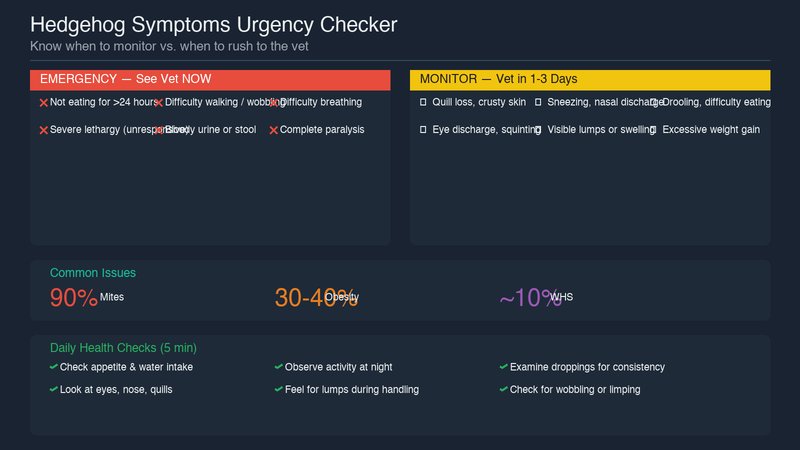
Use this quick-reference table to identify potential health issues and determine urgency. This hedgehog health checker helps you make informed decisions about when to seek veterinary care.
| Symptom | Possible Causes | Urgency | Action |
|---|---|---|---|
| Quill loss, crusty skin | Mites, fungal infection | Medium | Check for mites, see vet within 1-2 days |
| Difficulty walking, wobbling | WHS, injury, infection | HIGH | See vet immediately |
| Not eating for >24 hours | Illness, dental issues, stress | HIGH | See vet within 24 hours |
| Sneezing, nasal discharge | Respiratory infection | Medium | Monitor, see vet if persists >12 hours |
| Diarrhea | GI infection, parasites, diet change | HIGH | See vet within 24 hours, check for Salmonella |
| Lethargy, unresponsiveness | Various serious illnesses | HIGH | See vet immediately |
| Excessive weight gain | Obesity, pregnancy | Medium | Adjust diet, increase exercise, monitor |
| Rapid weight loss | Illness, dental disease, cancer | HIGH | See vet within 24 hours |
| Drooling, difficulty eating | Dental problems | Medium | See vet within 2-3 days |
| Eye discharge, holding eye shut | Eye injury, infection | Medium | See vet within 1-2 days |
| Visible lumps or swelling | Tumors, abscess | Medium-High | See vet within 1 week for diagnosis |
| Bloody urine or stool | Internal injury, infection | HIGH | See vet immediately |
Red Flag Symptoms (Seek Emergency Care):
- 🚨 Difficulty breathing
- 🚨 Not eating for more than 24 hours
- 🚨 Severe lethargy (won’t wake up)
- 🚨 Difficulty walking or paralysis
- 🚨 Signs of pain (hissing, balling up, refusing to uncurl)
- 🚨 Bleeding from any orifice
Tip: Keep an exotic veterinarian’s contact information readily available. Not all vets treat hedgehogs—find one before you need one.
Preventing Hedgehog Health Problems: Your Action Plan
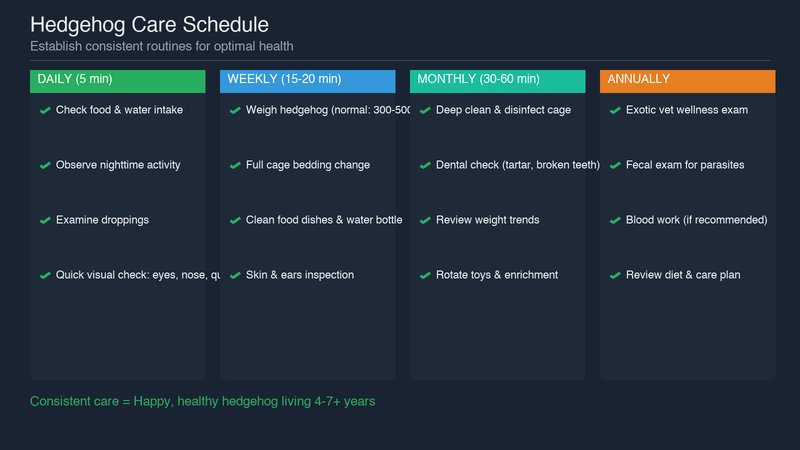
Prevention is the cornerstone of hedgehog health maintenance and disease prevention. Establishing a consistent care routine helps you catch problems early and maintain your hedgehog’s well-being.
Daily Health Checks (5 minutes)
Make these checks part of your daily interaction:
Physical Checks:
- ✅ Appetite - Is food being eaten? Check food bowl
- ✅ Water consumption - Is water bottle level decreasing?
- ✅ Activity level - Is your hedgehog active at night?
- ✅ Bathroom habits - Are droppings normal (formed, not loose)?
- ✅ Movement - Any wobbling, limping, or difficulty walking?
Visual Inspection:
- ✅ Eyes - Clear, no discharge
- ✅ Nose - Clean, no discharge
- ✅ Quills - Normal appearance, no bald patches
- ✅ Skin - Check for crusty areas or irritation
- ✅ Feet - No injuries or swelling
Weekly Tasks (15-20 minutes)
Weight Monitoring:
- Weigh your hedgehog using a digital scale
- Record weight in a log book or app
- Normal range: 300-500g for African pygmy hedgehogs
- Alert vet if weight changes more than 10% in a week
Cage Maintenance:
- Full bedding change or wash fleece liners
- Clean and sanitize food dishes
- Clean water bottle and check for leaks
- Wipe down cage surfaces
- Check wheel for debris and clean
Health Inspection:
- Examine skin closely for mites, wounds, or irritation
- Check ears for debris or discharge
- Inspect teeth and gums if possible
- Feel for any unusual lumps
Monthly Tasks (30-60 minutes)
Deep Cleaning:
- Disinfect entire cage with pet-safe cleaner
- Clean or replace wheel surface
- Check cage for damage, sharp edges
- Rotate or replace toys and enrichment items
Dental Check:
- Look for tartar buildup
- Check for broken teeth
- Monitor for bad breath
Weight Trend Review:
- Review monthly weight log
- Identify any concerning trends
- Adjust diet if necessary
Annual Veterinary Checkups
Schedule a wellness exam with an exotic pet veterinarian at least once per year, or more frequently for hedgehogs over 3 years old.
What to expect:
- Full physical examination
- Weight and body condition assessment
- Dental check
- Fecal exam for parasites
- Discussion of diet and care
- Blood work (if recommended)
Cost: Expect $75-150 for a basic wellness exam. Blood work adds $100-200.
Finding an exotic vet: Not all veterinarians treat hedgehogs. The Association of Exotic Mammal Veterinarians maintains a directory of qualified practitioners. Research and establish a relationship with an exotic vet before you need emergency care.
When to See a Vet
Knowing when to seek veterinary care can save your hedgehog’s life. Understanding the difference between minor issues and emergencies helps you make the right decision quickly.
Emergency Signs (Seek Care Immediately)
These symptoms indicate life-threatening conditions requiring immediate veterinary attention:
Respiratory Distress:
- Open-mouth breathing
- Gasping for air
- Blue or purple gums/tongue
- Severe wheezing
Severe Lethargy:
- Unresponsive to handling
- Cannot be woken up
- Weak or limp body
Complete Anorexia:
- Not eating for more than 24 hours
- Hedgehogs can develop hepatic lipidosis (fatty liver disease) quickly
Neurological Symptoms:
- Seizures
- Complete inability to walk
- Head tilt with circling
- Sudden blindness
Trauma:
- Falls from height
- Animal attacks
- Severe bleeding
- Broken bones
What to do:
- Call your exotic vet immediately
- If after hours, go to emergency exotic vet
- Keep hedgehog warm (not hot) during transport
- Bring any relevant information (what happened, when symptoms started)
Finding an Exotic Vet
Not all veterinarians are qualified to treat hedgehogs. Here’s how to find the right one:
Before You Need One:
- Search online directories:
- Association of Exotic Mammal Veterinarians (AEMV)
- Hedgehog Welfare Society Vet List
- Local exotic pet clubs or groups
- Call and ask:
- “Do you treat hedgehogs?”
- “How many hedgehogs do you see per month?”
- “What are your emergency hours?”
- “Do you have experience with WHS?”
- Schedule a wellness visit:
- Establish care before emergencies
- Gives you a baseline health record
- Builds relationship with vet
Questions to Ask Your Vet:
- What is your experience with hedgehogs?
- Do you offer emergency or after-hours care?
- What is the cost of a typical visit?
- Can you perform surgery if needed?
- Do you work with a specialist for complex cases?
Cost Expectations:
| Service | Cost Range |
|---|---|
| Wellness exam | $75-150 |
| Fecal exam | $25-50 |
| Blood work | $100-200 |
| X-rays | $150-300 |
| Mite treatment | $50-100 |
| Emergency visit | $150-300+ |
| Surgery | $500-2,000+ |
Tip: Start an emergency vet fund. Setting aside $50-100 per month ensures you’re prepared for unexpected medical expenses.
Hedgehog Health Products and Insurance
Investing in the right health products and considering pet insurance can protect your hedgehog’s health and your finances.
Essential Health Products
These products help monitor and maintain your hedgehog’s health:
| Product | Price | Purpose |
|---|---|---|
| Exotic Nutrition Hedgehog Essential | $16.99 | Complete nutrition |
| Silent Runner Exercise Wheel | $39.99 | Exercise & obesity prevention |
| Beurer BY80 Digital Scale | $41.99 | Weight monitoring |
| Hedgehog Booster Multivitamin | $10.95 | Immune support |
| Zymox Topical Solution | $19.49 | Skin & ear health |
Starter Kit Recommendation: For new hedgehog owners, prioritize these three items:
- Quality food (Exotic Nutrition Essential)
- Exercise wheel (Silent Runner)
- Digital scale (Beurer BY80)
These three products address the most common health issues: poor nutrition, obesity, and undetected weight changes.
Pet Insurance for Hedgehogs
Should you get pet insurance for your hedgehog? The short answer: Yes, if you can find coverage.
Hedgehogs are prone to health issues that can become expensive:
- Cancer treatment: $1,000-3,000+
- Dental surgery: $300-800
- WHS supportive care: $500-1,500+
- Respiratory treatment: $200-500
Insurance Options:
Nationwide Pet Insurance (formerly VPI) offers exotic pet coverage:
- Cost: $15-30 per month
- Coverage: Illnesses, accidents, cancer treatment
- Deductible: $250-500 annual deductible
- Reimbursement: 50-90% of eligible vet costs
Pet insurance gives you peace of mind for unexpected vet bills and can cover many common hedgehog health issues. Over your hedgehog’s lifetime, it could save thousands of dollars. The main limitations are that not all exotic pets are covered in all states, pre-existing conditions are excluded, and Wobbly Hedgehog Syndrome may be classified as genetic (meaning it wouldn’t be covered). You’ll also need documentation from an exotic vet to file claims.
Alternative: Vet Savings Account If insurance isn’t available or affordable:
- Save $50-100 per month in a dedicated account
- Aim for $600-1,200 emergency fund
- Use only for medical expenses
Recommendation: Given hedgehogs’ propensity for health issues, pet insurance or a dedicated vet fund is highly recommended. One serious illness can cost more than years of premiums.
Frequently Asked Questions
Do hedgehogs have health problems?
Yes, hedgehogs are prone to several health issues. The most common hedgehog diseases include mites (affecting up to 90% of hedgehogs at some point), obesity (30-40% of pets), respiratory infections, dental disease, and cancer. Wobbly Hedgehog Syndrome (WHS) affects approximately 10% of pet hedgehogs. Regular veterinary care, proper diet, and daily monitoring can prevent hedgehog health issues and or catch many issues early. See our Common Health Issues section for detailed information on each condition.
How long do hedgehogs live as pets?
The average hedgehog lifespan in captivity is 4-7 years, with some living 8-10 years under optimal care. African pygmy hedgehogs—the most common pet species—typically live 5-6 years. Factors affecting lifespan include genetics, diet quality, exercise, temperature maintenance, and access to exotic veterinary care. Hedgehogs receiving proper nutrition, regular exercise, and annual vet checkups tend to live longer. See our Lifespan section for factors that influence longevity.
How hard are hedgehogs to take care of?
Hedgehogs require moderate to advanced care. They need:
- Specific temperature (72-80°F) year-round
- High-protein diet with insects
- Daily interaction to maintain tameness
- Nocturnal schedule (active at night)
- Exotic veterinary care (not all vets see hedgehogs)
- Daily cage cleaning
- Regular health monitoring
For dedicated owners willing to meet these needs, hedgehogs make rewarding pets. For more information on general care, see our complete hedgehog care guide.
Do hedgehogs recognize their owners?
Yes, hedgehogs can recognize their owners through scent and voice. They have poor eyesight but excellent smell and hearing. With regular handling, hedgehogs learn to identify their owner’s scent and may become more relaxed and less defensive around familiar people. However, they don’t show affection like dogs or cats—recognition typically looks like decreased fear response rather than active greeting. Learn more about hedgehog behavior in our care guide.
What should I do if my hedgehog is not eating?
Loss of appetite for more than 24 hours is a medical emergency. Hedgehogs can quickly develop hepatic lipidosis (fatty liver disease) when not eating. Possible causes include illness, dental problems, stress, temperature issues, or respiratory infection.
Immediate steps:
- Check cage temperature (72-80°F required)
- Offer favorite treats to entice eating
- Look for other symptoms (lethargy, discharge, difficulty breathing)
- See an exotic vet within 24 hours if not eating
See our When to See a Vet section for more emergency guidance.
Conclusion
Maintaining your hedgehog’s health and hedgehog health requires vigilance, knowledge, and proactive care. By understanding common health issues, implementing preventive measures, and seeking veterinary care when needed, you can help your hedgehog live a long, healthy life.
Key takeaways:
-
Regular health checks are essential. Daily observation and weekly weigh-ins help you catch problems early. Invest in a digital scale and track your hedgehog’s weight consistently.
-
Early detection saves lives. Learn the symptoms of common conditions like mites, respiratory infections, and Wobbly Hedgehog Syndrome. When in doubt, consult your exotic vet.
-
Find a qualified hedgehog vet before you need one. Not all veterinarians treat hedgehogs. Establish care with a qualified exotic pet veterinarian for annual wellness exams and emergency situations.
-
Prevention is the best medicine. Proper diet, regular exercise, consistent temperature, and clean living conditions prevent many common health issues.
-
Be prepared for medical costs. Whether through pet insurance or a dedicated savings account, having funds available for unexpected health issues ensures your hedgehog can receive necessary care.
Your hedgehog depends on you for their well-being. By following the guidance in this hedgehog health guide and staying attentive to changes in behavior or appearance, you’ll be well-equipped to provide excellent care.
For comprehensive care information, explore our related guides:
- Complete Hedgehog Care Guide - Housing, handling, and daily care
- Hedgehog Diet Guide - Nutrition and feeding recommendations
- Hedgehog Cage Setup - Creating the perfect habitat
Common Questions
This guide represents current best practices for hedgehog health as of 2026. Always consult with a qualified exotic pet veterinarian for medical advice specific to your hedgehog.