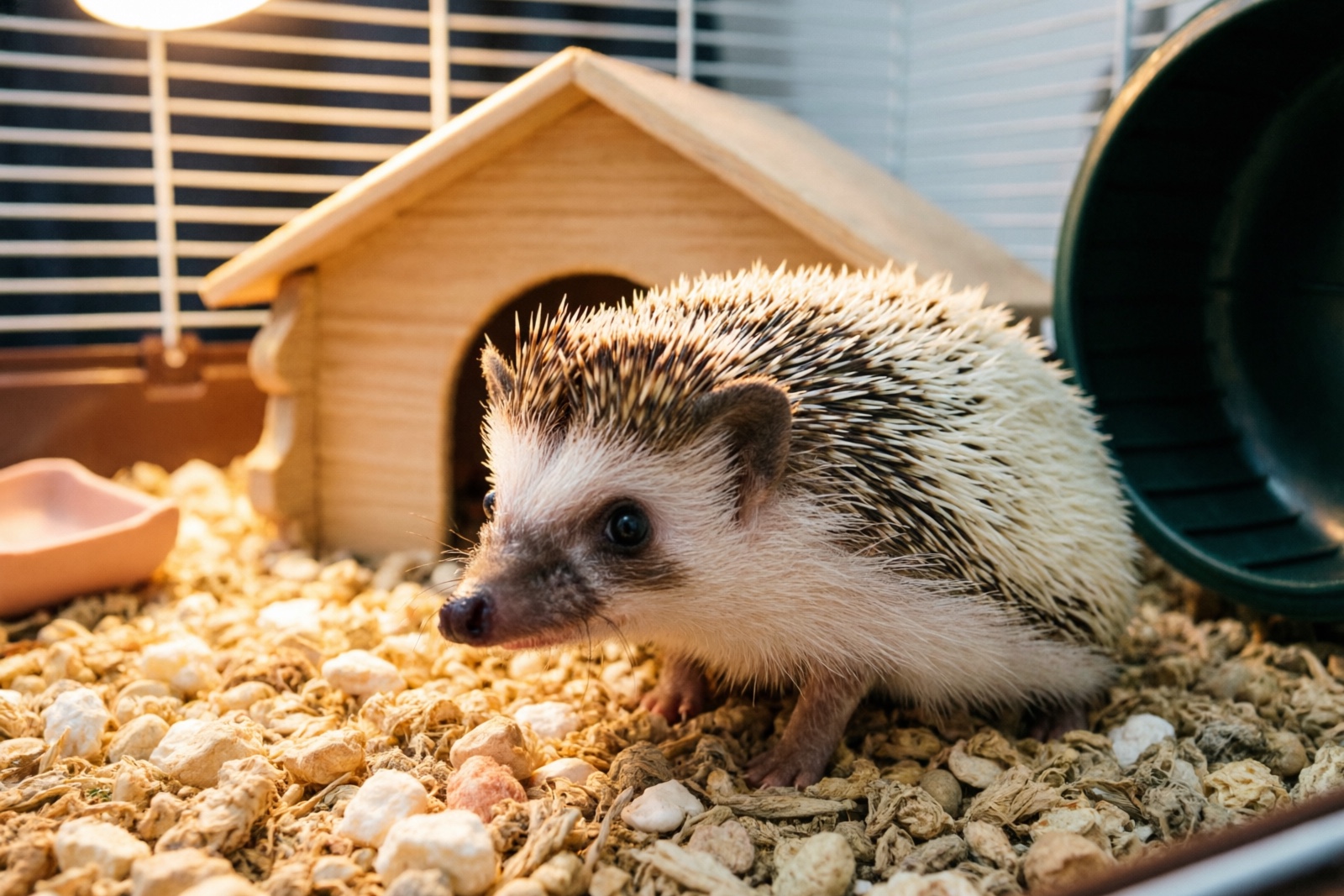
Creating the right environment for your hedgehog is essential for their health and happiness. Hedgehogs have specific needs—especially temperature control—that differ from other small pets. This comprehensive guide covers everything you need to set up the perfect hedgehog habitat.
Why Proper Setup Matters
Hedgehog-Specific Needs
African Pygmy Hedgehogs (most common pet hedgehog):
- Nocturnal: Active at night, sleep during day
- Insectivores by nature: Forage and hunt
- Require warmth: Native to warm African climates
- Solitary: Live alone in wild
- Sensitive to temperature: Cannot hibernate like wild hedgehogs
Without proper setup, hedgehogs can develop:
- Attempted hibernation (can be fatal in captivity)
- Respiratory infections (from cold temperatures)
- Stress behaviors (excessive pacing, bar biting)
- Obesity (from lack of exercise)
- Foot problems (wire floors, inappropriate bedding)
Critical: Temperature control is the #1 most important factor in hedgehog housing. Temperatures below 72°F can trigger hibernation attempts, which can be fatal.
Cage Requirements
Cage Size
Minimum: 4 square feet of floor space (24” x 24”) Recommended: 6-8 square feet (24” x 36” or larger) Better: Larger is always better—hedgehogs are active at night
Height: 12-18 inches minimum (some hedgehogs climb, need ventilation)
Rule: Hedgehogs need enough space for wheel, hide, food/water stations, and exploring.
Cage Types
1. Wire Cages with Solid Bottom ⭐⭐⭐⭐
Pros:
- Good ventilation
- Easy to find
- Various sizes
- See-through (enjoy watching hedgehog)
Cons:
- Must have solid bottom (no wire floors)
- Wire spacing must be small (1/2” - 1”) or hedgehog can escape
- Some have ramps/levels (hedgehogs don’t use, fall risk)
Recommended:
-
MidWest Homes for Pets Cage (36” L x 24” W x 24” H)
-
Price: $80-120
-
Solid plastic bottom, wire top
-
Living World Deluxe Habitat (various sizes)
-
Price: $80-150
-
Wire top, plastic base
-
Buy on Amazon (similar option)
2. Plastic Storage Bins (DIY) ⭐⭐⭐⭐⭐
Pros:
- Inexpensive ($15-40)
- Large size (105-110 quart)
- Solid sides (secure, retain heat)
- Easy to clean
- Clear (visibility)
Cons:
- Need to add ventilation (drill holes in sides/lid)
- Not as attractive as commercial cages
- Need to modify for accessories
How to Set Up:
- Purchase 105-110 quart clear storage bin
- Drill ventilation holes in upper sides (not lid—hedgehog may stand on hind legs and reach)
- Add 2-3 inch bedding
- Add wheel, hide, food/water
Tip: Storage bins retain heat better than wire cages, making temperature control easier.
Recommended:
- IRIS 105-Qt Storage Bin
- Price: $20-35
- Large, clear
- Buy on Amazon
3. C&C Cages (Cubes & Coroplast) ⭐⭐⭐⭐⭐
Pros:
- Customizable size
- Very large (can be 8+ square feet)
- Inexpensive for size
- Easy to expand
Cons:
- DIY assembly required
- Coroplast needs to be sourced
- Setup time
How to Make:
- Purchase wire grid cubes (storage cubes)
- Purchase Coroplast (corrugated plastic) for base
- Assemble grid walls
- Cut Coroplast to fit inside (6+ inch walls to contain bedding)
- Secure grids with zip ties
Best for: Maximum space at low cost. Can create 8+ sq ft enclosures.
4. Glass Aquariums ⭐⭐
Pros:
- Easy to find
- See-through
Cons:
- Poor ventilation (too hot, humidity builds up)
- Heavy
- Hard to find large enough (need 40+ gallons)
- Difficult temperature regulation
Not recommended for these reasons.
What to Avoid
- ❌ Wire-bottom cages: Feet fall through, cause injury and infection
- ❌ Small cages (<4 sq ft): Not enough space for exercise
- ❌ Aquariums (unless very large + modified ventilation): Poor airflow
- ❌ Multi-level cages: Hedgehogs are not climbers, falls cause injury
- ❌ Wooden cages: Absorb urine, hard to clean, harbor bacteria
Temperature Control (Critical!)
Ideal Temperature Range
Optimal: 74-80°F (23-27°C) Safe range: 72-82°F (22-28°C) Danger zone: Below 72°F (22°C) or above 85°F (29°C)
Hedgehogs must be kept warm. Temperatures below 72°F can trigger attempted hibernation, which is life-threatening in captive hedgehogs.
Why Temperature Matters
Wild European hedgehogs:
- Hibernate in winter when temperatures drop
- Bodies slow down, survive on fat reserves
African Pygmy Hedgehogs (pets):
- Do NOT hibernate properly
- Attempted hibernation can be fatal
- Bodies aren’t adapted for hibernation
- Can die from hibernation attempt
Signs of attempted hibernation:
- Lethargy, wobbly walking
- Cold to touch
- Not eating or drinking
- Curled in tight ball, unresponsive
If this happens:
- Warm gradually (don’t heat too fast)
- Hold against your body, use heating pad on LOW
- See vet if unresponsive after warming
Heating Methods
1. Ceramic Heat Emitter (CHE) + Thermostat ⭐⭐⭐⭐⭐
Best overall solution
What you need:
- Ceramic heat emitter (100-150 watt)
- Thermostat (to regulate temperature)
- Ceramic socket fixture (plastic melts)
Setup:
- Mount CHE above or near cage (not inside—fire/burn risk)
- Plug into thermostat
- Set thermostat to 76-78°F
- Place thermometer in cage to monitor
Recommended:
-
Ceramic Heat Emitter (100-150W)
-
Price: $15-40
-
Inkbird Temperature Controller (Thermostat)
-
Price: $30-40
Essential: Use thermostat! CHE without regulation can overheat cage.
2. Heating Pad Under Part of Cage ⭐⭐⭐⭐
Good supplemental heat
What you need:
- Reptile heating pad or human heating pad (on low)
- Place under part of cage (not all—hedgehog needs cool spot too)
Setup:
- Place heating pad under 1/3 to 1/2 of cage
- Set to low or medium
- Ensure hedgehog can move away from heat if too warm
Recommended:
- Zoo Med ReptiTherm Under Tank Heater (Large)
- Price: $20-30
- Buy on Amazon
Important: Don’t heat entire cage. Hedgehog needs temperature gradient to regulate body temp.
3. Space Heater (Room Heating) ⭐⭐⭐
Good for heating entire room
Pros:
- Heats whole room evenly
- Hedgehog cage isn’t the only heated area
Cons:
- More expensive to run
- Dries air (watch humidity)
Recommended:
- Ceramic space heater (safe, no exposed heating elements)
- Use with thermostat for safety
4. Snuggle Safe Heat Disc ⭐⭐⭐⭐
Supplemental heat
What it is: Microwaveable heat disc (stays warm 8-10 hours)
How to use:
- Microwave according to instructions
- Wrap in towel or fleece cover
- Place in cage (hedgehog can snuggle against it)
Recommended:
- Snuggle Safe Microwave Heat Pad
- Price: $25-35
- Includes cover
- Buy on Amazon
Tip: Excellent for power outages or travel.
Temperature Monitoring
Essential equipment:
- Digital thermometer in cage
- Check temperature daily
- Monitor at cage floor level (where hedgehog is)
Recommended:
- Digital thermometer with probe
- Price: $10-15
- Buy on Amazon
Bedding Options
Safe Bedding
1. Fleece Liners ⭐⭐⭐⭐⭐
Best overall choice
Pros:
- Soft (no foot injuries)
- Washable, reusable
- No dust (good for respiratory health)
- Hedgehogs love to burrow
Cons:
- Need to wash frequently (every 2-3 days)
- Multiple sets needed
- Upfront cost
Setup:
- Measure cage bottom
- Cut fleece to size (2-3 layers)
- Place in cage
- Spot clean daily, wash every 2-3 days
Recommended:
- Anti-pill fleece fabric (buy by yard from fabric store)
- Cage liners (pre-made)
- Price: $20-40
- Buy on Amazon (similar storage option)
2. Paper-Based Bedding ⭐⭐⭐⭐
Good choice
Options:
- Carefresh
- Kaytee Clean & Cozy
- Oxbow Pure Comfort
Pros:
- Soft, absorbent
- Low dust
- Natural odor control
Cons:
- Ongoing cost
- Some hedgehogs get it stuck in quills
Recommended:
- Carefresh Natural Bedding
- Price: $20-30 for 50L
- Buy on Amazon
3. Aspen Shavings ⭐⭐⭐
Acceptable choice
Pros:
- Natural
- Absorbent
- Inexpensive
Cons:
- Can be dusty
- Some hedgehogs get shavings stuck in quills
- Messier than paper bedding
Recommended:
- Kaytee Aspen Bedding
- Price: $15-25
- Buy on Amazon - $13.74
Bedding to Avoid
- ❌ Cedar shavings: Toxic phenols, respiratory damage
- ❌ Pine shavings: Phenols, respiratory issues (kiln-dried pine is safer but still not ideal)
- ❌ Sawdust: Too dusty, respiratory problems
- ❌ Cat litter (clay/crystal): Dusty, can cause impaction if eaten
- ❌ Newspaper (with colored ink): Ink can be toxic
Safety: Cedar and pine shavings contain phenols that cause liver damage and respiratory issues in small animals.
Essential Cage Accessories
1. Exercise Wheel ⭐⭐⭐⭐⭐
Absolutely essential—hedgehogs are active at night and need exercise
Requirements:
- Size: 10-12 inches diameter (minimum 10”)
- Solid running surface (no mesh/wire—feet can slip through)
- Quiet (you’ll thank us at 2 AM)
Recommended:
-
Flying Saucer Wheel 12”
-
Price: $30-40
-
Solid surface, quiet
-
Bucket Wheel 12” (DIY or purchased)
-
Price: $25-45
-
Solid, quiet
Critical: Do not use wheels smaller than 10”. Hedgehogs need large wheels to run comfortably.
2. Hide / Sleeping Area ⭐⭐⭐⭐⭐
Essential—hedgehogs need dark, secure place to sleep during day
Options:
- Snuggle sack / sleeping bag: Hedgehog crawls inside
- Wooden hide house: Natural, dark
- PVC igloo: Easy to clean
- Tissue box (temporary, replace when soiled)
Recommended:
-
Snuggle Sack (fleece)
-
Price: $10-20
-
Washable, cozy
-
Exo Terra Cave
-
Price: $12-20
-
Realistic, dark
Tip: Hedgehogs love snuggle sacks—they burrow inside and sleep.
3. Food and Water Dishes
Food dish:
- Heavy ceramic bowl: Won’t tip over
- Size: 4-6 inch diameter
- Shallow: Easy to access
Water:
- Water bottle (most common): 8-16 oz
- Position at hedgehog height
- Check daily that it works
- Heavy ceramic bowl: Some hedgehogs prefer bowls
- Change water daily
- Can get bedding in it
Recommended:
-
Ceramic Food Dish
-
Price: $8-12
-
Lixit Water Bottle (16 oz)
-
Price: $10-15
4. Litter Box (Optional but Recommended)
Why litter train:
- Easier cleanup
- Cleaner cage
- Hedgehogs often choose one corner to toilet
Setup:
- Small, shallow pan
- Paper-based litter (not clay)
- Place in corner hedgehog already uses
Recommended:
- Small cat litter pan
- Price: $5-10
- Buy on Amazon
5. Toys & Enrichment
Hedgehogs need mental stimulation:
- Toilet paper tubes (cut lengthwise to prevent head getting stuck)
- Dig box: Container with safe substrate for digging
- Cat toys (solid balls, small stuffed animals—check for safety)
- Live insect hunting (mealworms, crickets—in cage or playpen)
- Tunnels: PVC pipes, fabric tunnels
Enrichment is essential for preventing boredom and stress behaviors.
Cage Location
Where to Place the Cage
Good locations:
- Bedroom or quiet room: Hedgehogs sleep during day, need quiet
- Away from windows: Direct sun can overheat cage
- Climate-controlled room: Consistent temperature
- Near electrical outlet: For heating equipment
Avoid:
- ❌ Direct sunlight: Overheating risk
- ❌ Drafts: Near doors, windows, AC vents
- ❌ Kitchen: Cooking fumes, temperature fluctuations
- ❌ High-traffic areas: Stress from constant activity
- ❌ Near other pets: Stress, disease risk
Lighting
Natural light cycle: 12-14 hours light, 10-12 hours dark
- Use natural daylight (don’t need UV lights like reptiles)
- Keep cage away from bright lights during day (hedgehog sleeping)
- At night, dim light is fine (hedgehog active)
Cleaning Schedule
Daily
- Spot clean: Remove visible waste, soiled bedding areas
- Fresh water
- Remove uneaten fresh food
- Check temperature
Weekly
- Full cage clean:
- Remove hedgehog to safe carrier
- Remove all accessories
- Dump bedding
- Wash cage with mild soap and water
- Rinse thoroughly
- Dry completely
- Add fresh bedding
- Clean wheel, hide, dishes
- Return hedgehog
- Wash fleece liners (if using)
- Clean water bottle nozzle
Monthly
- Deep clean all accessories
- Check wheel for wear/damage
- Inspect cage for damage
- Replace worn items
Safety Checklist
Cage Safety
- ✅ Solid bottom (no wire floors)
- ✅ Appropirate size (minimum 4 sq ft, larger better)
- ✅ Temperature 74-80°F
- ✅ Thermometer in cage
- ✅ No sharp edges
- ✅ Escape-proof (small bar spacing, secure lid)
- ✅ Wheel 10”+ diameter, solid surface
- ✅ Dark sleeping area
- ✅ Safe bedding (no cedar/pine)
- ✅ No small gaps where hedgehog could get stuck
Common Setup Mistakes
Mistake 1: Cage Too Cold
Problem: Temperature below 72°F → hibernation attempt → can be fatal Solution: Use CHE + thermostat, monitor temperature daily
Mistake 2: Wire Floor
Problem: Feet fall through, injuries, infections (bumblefoot) Solution: Use solid bottom cage or cover wire with fleece/mat
Mistake 3: Wheel Too Small
Problem: Back arches, uncomfortable, hedgehog won’t use Solution: Minimum 10” wheel, 12” better
Mistake 4: No Hide
Problem: Hedgehog has nowhere secure to sleep → stress Solution: Provide dark, enclosed sleeping area
Mistake 5: Cedar/Pine Bedding
Problem: Respiratory damage, liver toxicity Solution: Use fleece, paper bedding, or aspen
Summary: Setup Checklist
| Item | Specification | Essential? |
|---|---|---|
| Cage | 4+ sq ft, solid bottom | ✅ Yes |
| Temperature | 74-80°F | ✅ Yes (critical) |
| Heating | CHE + thermostat | ✅ Yes |
| Thermometer | Digital, in cage | ✅ Yes |
| Bedding | Fleece or paper-based | ✅ Yes |
| Wheel | 10-12”, solid surface | ✅ Yes |
| Hide | Dark, enclosed | ✅ Yes |
| Food dish | Heavy ceramic | ✅ Yes |
| Water | Bottle or heavy bowl | ✅ Yes |
| Litter box | Optional | ⚠️ Recommended |
| Toys | Enrichment | ⚠️ Recommended |
Frequently Asked Questions (FAQ)
1. What temperature should my hedgehog’s cage be?
74-80°F (23-27°C). Below 72°F is dangerous (hibernation risk). Above 85°F is too hot.
2. Do hedgehogs need light at night?
No. Hedgehogs are nocturnal and see well in dim light. Normal household lighting in evening is fine.
3. Can hedgehogs climb out of cages?
Yes, some can. Ensure cage walls are at least 12” high and have secure lid. Some hedgehogs are escape artists!
4. Why is my hedgehog’s wheel dirty in the morning?
Normal! Hedgehogs often poop while running. Clean wheel daily.
5. Can I use a heating pad designed for humans?
Yes, on LOW setting, under part of cage. Don’t put inside cage (chewing hazard). Use reptile heating pad for safety.
6. Do hedgehogs need UV light?
No. Hedgehogs are not reptiles and don’t require UV lighting.
7. Why does my hedgehog sleep all day?
Normal! Hedgehogs are nocturnal. They sleep during day and are active at night.
8. How often should I clean the cage?
Daily spot clean, weekly full clean. More often if cage gets soiled quickly.
9. Can I put my hedgehog’s cage in the garage?
No. Garages have temperature fluctuations, fumes, and are not climate-controlled. Place cage in temperature-controlled room.
10. What if the power goes out?
Use Snuggle Safe heat disc or warm water bottles wrapped in towels. Have backup plan for heating during outages.
11. How often should I clean my hedgehog’s cage?
Spot clean daily (remove waste), full clean weekly (change all bedding, wash cage). More frequent if cage gets soiled quickly.
12. Can I use a heat lamp instead of CHE?
Not recommended. Heat lamps produce light which disturbs hedgehog’s nocturnal schedule. Ceramic heat emitters provide heat without light.
13. Why does my hedgehog’s wheel get so dirty?
Normal! Hedgehogs often poop while running. Clean wheel daily. Some owners place litter box under wheel to catch waste.
14. How do I know if my hedgehog is too hot?
Signs: Panting, spreading out flat, seeking cool surfaces, lethargy, not eating. Move to cooler area immediately. Ideal: 74-80°F.
15. Can hedgehogs climb out of wire cages?
Yes, some can. Ensure cage walls are at least 12” high and have secure lid. Some hedgehogs are excellent climbers and escape artists.
16. Do hedgehogs need bedding or can I use bare cage bottom?
Need bedding. Bare bottom causes foot sores, provides no insulation. Use fleece liners, paper bedding, or aspen shavings.
17. How big should my hedgehog’s wheel be?
Minimum 10” diameter, 12” is better. Smaller wheels cause back to arch, which is uncomfortable and can cause injury. Must be solid surface (no mesh).
18. Can I put my hedgehog’s cage in my bedroom?
Yes, but: Hedgehogs are nocturnal (active at night). You may hear wheel running, rooting around cage at night. Some people find this disruptive to sleep.
19. What temperature is dangerous for hedgehogs?
Below 72°F: Risk of hibernation attempt (can be fatal) Above 85°F: Risk of overheating, heat stress Safe range: 74-80°F (23-27°C)
20. Why is my hedgehog sleeping in the litter box?
May be too warm (seeking cooler spot), or litter box is in preferred corner. Try adding another hide, check cage temperature.
Real-World Setup Examples
Example 1: Budget Setup (Under $100)
Cage: 105-quart storage bin (DIY) - $25 Heating: Ceramic heat emitter + thermostat - $50 Bedding: Fleece liners (DIY from fabric store) - $15 Wheel: 12” bucket wheel - $30 Hide: Snuggle sack (DIY from fleece) - $5 Dishes: Ceramic bowls from dollar store - $5 Thermometer: Digital thermometer - $10 Total: ~$140
Note: Heating equipment is most important expense—don’t skip quality thermostat.
Example 2: Mid-Range Setup ($200-300)
Cage: MidWest wire cage (36” x 24”) - $100 Heating: CHE + thermostat + heating pad - $70 Bedding: Paper bedding (Carefresh) - $25/month Wheel: Flying Saucer 12” - $35 Hide: Commercial igloo + snuggle sack - $20 Dishes: Heavy ceramic - $10 Thermometer + extras: - $20 Total: ~$280
Example 3: Premium Setup ($400+)
Cage: Custom C&C cage (8+ sq ft) - $100 Heating: CHE + thermostat + space heater (room) - $100 Bedding: Fleece liners (multiple sets) - $50 Wheel: Custom bucket wheel (quiet) - $45 Hides: Multiple options (snuggle sack, igloo, tunnel) - $40 Dishes: Stainless steel or heavy ceramic - $20 Litter box + litter - $15 Toys and enrichment: - $40 Thermometer + hygrometer: - $20 Total: ~$430+
Tip: Even budget setups can be excellent. Most important factors: correct temperature, appropriate wheel, safe bedding.
Common Setup Mistakes (And How to Fix Them)
Mistake 1: Cage in Drafty Area
Problem: Drafts cause temperature fluctuations, respiratory issues Solution: Move cage away from windows, doors, AC vents. Place against interior wall.
Mistake 2: Using Cedar or Pine Bedding
Problem: Phenols in wood cause respiratory damage, liver issues Solution: Switch to fleece, paper bedding, or aspen shavings immediately.
Mistake 3: Wheel Too Small
Problem: Back arches, uncomfortable, hedgehog won’t use wheel Solution: Upgrade to 10-12” wheel with solid running surface.
Mistake 4: No Thermometer in Cage
Problem: Can’t monitor temperature accurately Solution: Place digital thermometer at cage floor level, check daily.
Mistake 5: Inconsistent Temperature
Problem: Temperature fluctuations stress hedgehog, trigger hibernation attempts Solution: Use thermostat to maintain consistent 74-80°F.
Mistake 6: Cage Too Small
Problem: Not enough exercise space, stress, behavioral issues Solution: Upgrade to minimum 4 sq ft (larger is better).
Mistake 7: Bright Lights During Day
Problem: Hedgehog can’t sleep well, stressed Solution: Place cage away from bright windows, provide dark hide.
Seasonal Considerations
Winter
Challenges: Lower ambient temperature, harder to maintain warmth Solutions:
- Add second heating source (CHE + heating pad)
- Move cage to warmer room
- Use cage cover (blanket) at night to retain heat
- Have backup heating plan for power outages (Snuggle Safe, generator)
Summer
Challenges: Overheating risk if temperature exceeds 80°F Solutions:
- Monitor temperature closely
- Use fan (not blowing directly on cage) to circulate air
- Provide ceramic tile or stone for hedgehog to lay on (cool surface)
- Move cage to cooler room (basement, interior room)
- Never put hedgehog in refrigerator or freezer (too cold)
Safety Checklist
Before placing hedgehog in cage:
- Temperature 74-80°F with thermometer in cage
- Heating source has thermostat (for CHE)
- No wire floors (solid bottom only)
- Wheel 10”+ diameter, solid surface
- Dark hide available
- Fresh water and food
- Safe bedding (no cedar/pine)
- No sharp edges or escape routes
- Cage secure (lid or high walls)
- Cage away from drafts, direct sun, other pets
Final Tips
For New Hedgehog Owners
- Set up cage completely before bringing hedgehog home
- Test temperature for 24-48 hours to ensure stability
- Have backup heating plan (power outages happen)
- Monitor hedgehog’s first week closely (stress, eating, activity)
- Don’t change setup too quickly (let hedgehog adjust)
For Experienced Owners
- Upgrade cage size if possible (larger is always better)
- Add more enrichment (toys, foraging opportunities)
- Consider multiple hides (options = less stress)
- Invest in quiet wheel (better for your sleep too!)
- Regularly review and improve setup
The Bottom Line
Most important factors:
- Correct temperature (74-80°F, non-negotiable)
- Appropriate wheel (10”+, solid surface)
- Safe bedding (no cedar/pine)
- Dark hide (security)
- Large enough cage (4+ sq ft)
Get these right, and your hedgehog will thrive!
Cage conditions directly affect health — read more about hedgehog health to catch problems early.