
Syrian hamster chew toys are not optional — they are essential. Every Syrian hamster needs chew toys to stay healthy for both dental health and mental wellbeing. A Syrian hamster’s teeth grow continuously throughout its life, roughly three inches per year, and without appropriate chewing surfaces those teeth will overgrow to the point of causing serious health problems.
The challenge is that not all syrian hamster chew toys are safe, and Syrian hamsters have specific needs that differ from dwarf hamsters. They are larger, have stronger jaws, and destroy chew toys faster. This guide covers the best syrian hamster chew toys and everything you need to know: which materials are safe, which are dangerous, the best products for Syrian-sized hamsters, and how to solve one of the most common behavioral problems — cage bar biting.
For more on overall hamster health, including dental issues and how diet affects teeth, see our hamster health guide and hamster diet guide.
Why Syrian Hamsters Need Chew Toys
The Dental Problem
Syrian hamster teeth grinding is a natural behavior that keeps their teeth at a healthy length. Hamsters are rodents, which means their front incisors never stop growing. In the wild, constant gnawing on seeds, twigs, roots, and other tough materials keeps those teeth at a healthy length. In captivity, where food is soft and readily available, chew toys become the primary way your hamster maintains dental health.
When a Syrian hamster does not have enough syrian hamster chew toys to chew on, several problems develop:
- Overgrown incisors that curl into the mouth or pierce the gums
- Difficulty eating hard seeds and dry food
- Weight loss from reduced food intake
- Drooling and wet chin caused by teeth misalignment
- Expensive vet visits for tooth trimming under anesthesia
I have seen cases where neglected dental wear — from missing syrian hamster chew toys — led to teeth growing into the roof of the mouth — painful, dangerous, and entirely preventable with a few dollars worth of syrian hamster chew toys.
Why Syrians Specifically
Syrian hamsters are the largest common pet hamster species, reaching 6 to 7 inches in length. Their teeth and jaws are bigger and stronger than dwarf hamsters. This means they chew through materials faster and need larger, harder chew toys to keep them engaged. A chew stick that lasts a dwarf hamster a month might be gone in a week with a Syrian.
Mental Enrichment
Quality syrian hamster chew toys serve a dual purpose beyond dental health. Chewing is a natural behavior that prevents boredom, reduces stress, and gives your hamster something constructive to do — especially at night when they are most active. Hamsters without enough enrichment often develop destructive habits, most commonly biting cage bars.
When you wonder how to stop syrian hamster biting cage bars, the first step is providing enough chew options. Keep 2 to 3 chew toys in the cage at any time to maintain interest. For more on creating a stimulating environment, see our hamster toys guide.
Providing safe wood for hamster chewing is essential — the wrong wood can make your hamster sick.
Syrian Hamster Chew Toys: Safe vs Unsafe Materials
Knowing which materials are safe is one of the most important things you can learn as a hamster owner. Some commonly sold products contain materials that can cause respiratory damage, liver toxicity, or intestinal blockage.
Safe vs Unsafe Materials Comparison
| Safe Materials | Unsafe Materials |
|---|---|
| Apple wood | Cedar (toxic aromatic oils) |
| Willow | Pine (toxic phenols) |
| Pear wood | Cherry (cyanide compounds) |
| Birch | Yew (highly toxic) |
| Poplar | Oak (tannins, hard to digest) |
| Bamboo | Pressure-treated wood (chemicals) |
| Timothy hay | Painted or dyed wood (chemicals) |
| Seagrass | Glued or nailed toys (choking hazard) |
| Cork | Plastic toys (indigestible) |
| Loofah (natural, uncolored) | Foam or styrofoam (choking + blockage) |
Why Pine and Cedar Are Dangerous
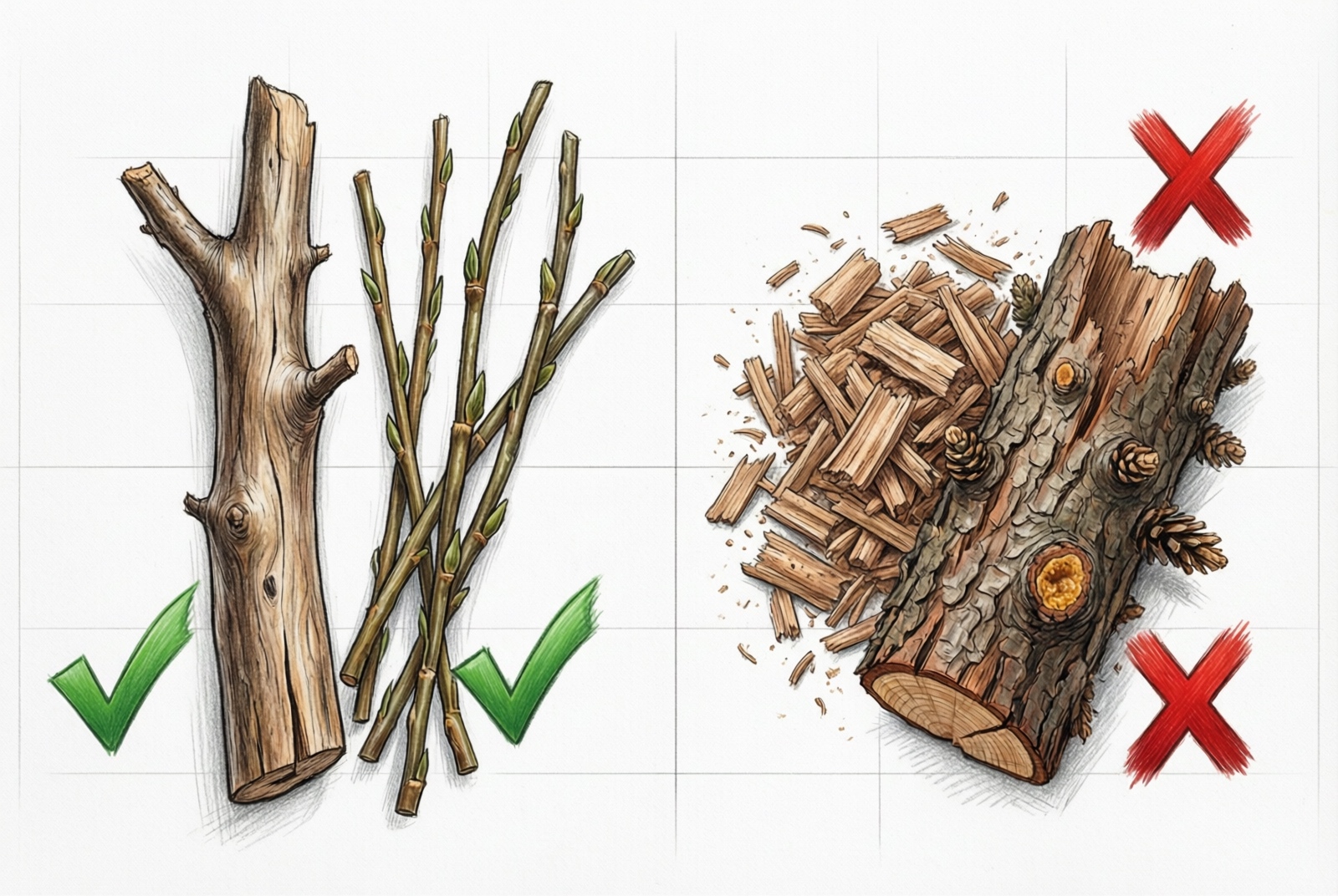
Pine and cedar shavings contain aromatic oils called phenols and terpenes. When your hamster chews on them or even lives on bedding made from these woods, those oils cause respiratory irritation and long-term liver damage. This is well-documented in veterinary literature and is the reason every experienced hamster keeper avoids pine and cedar entirely.
A simple rule of thumb: if a piece of wood has a strong smell, it probably contains volatile oils that are unsafe for your hamster. Safe woods like apple, willow, and pear are relatively odorless.
Dyes and Treatments
Always choose untreated, unpainted, unscented wood. If syrian hamster chew toys are brightly colored, check that the dye is food-grade and specifically marked as safe for small animals. Many cheap imported chew toys use industrial dyes that are not tested for pet safety. I would rather have plain wood than a colorful toy with unknown chemicals.
DIY Chew Toy Ideas
If you want to supplement store-bought toys with free options, plain cardboard toilet paper tubes (no glue, no perfume residue) are safe and Syrian hamsters love shredding them. Apple tree branches from your yard work too — just wash them thoroughly and bake at 200°F for 30 minutes to kill any bacteria or parasites. Unfinished popsicle sticks are another option. For more on safe materials, our hamster toys guide covers general toy safety.
Best Chew Toys for Syrian Hamsters — Top 7 Picks
After testing dozens of products and reviewing thousands of owner reports, these are the best chew toys specifically suited for Syrian hamsters. I have focused on products that are the right size for larger jaws, made from safe materials, and durable enough to survive a Syrian’s strong chewing.
Best Multi-Purpose: Niteangel Wooden Ladder Bridge
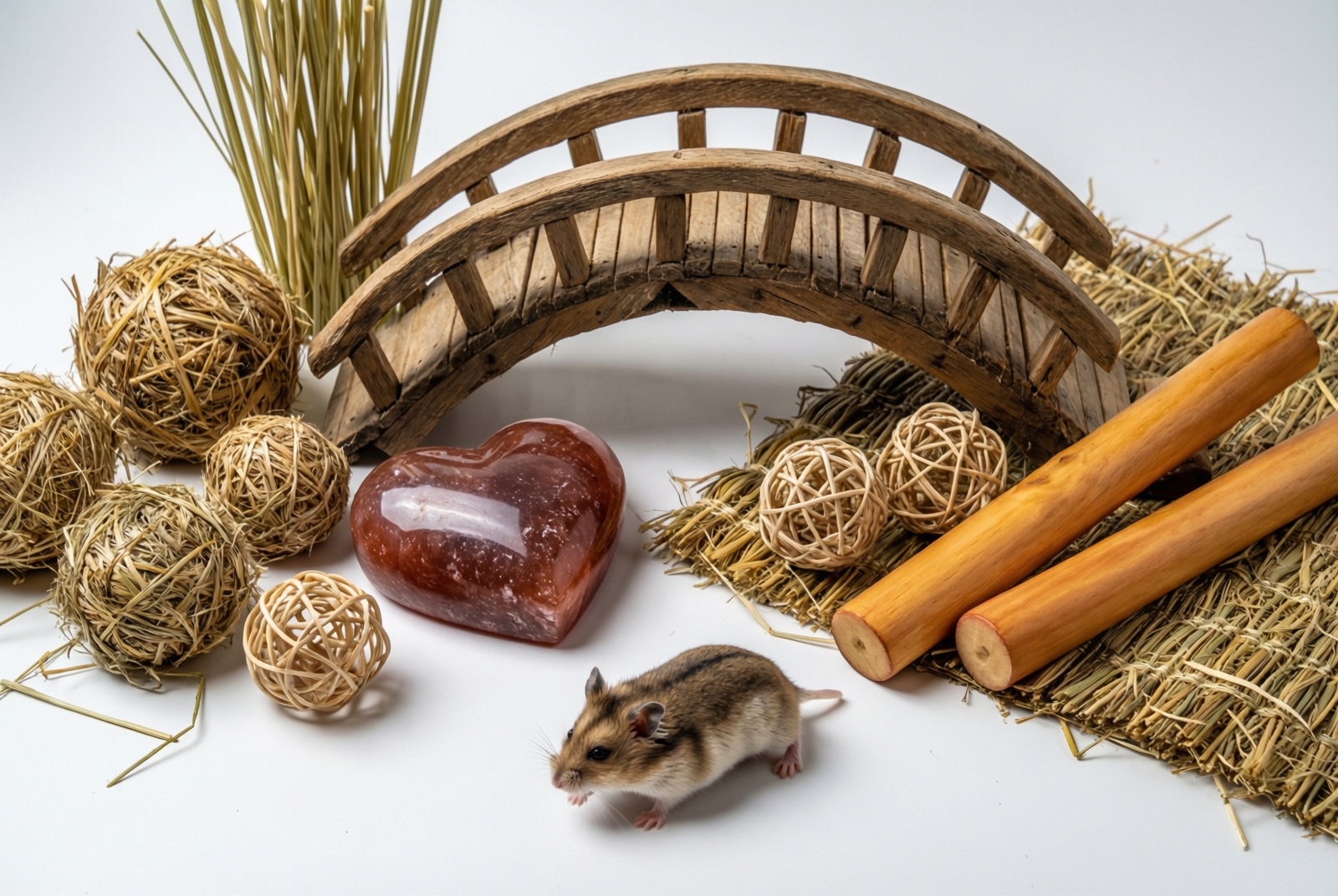
The Niteangel Wooden Ladder Bridge is one of the most versatile hamster accessories available. At $9.99 with a 4.7-star rating across 3,468 reviews, it serves as a bridge, tunnel, climbing structure, and chew toy all in one. The flexible design lets you bend it into different shapes — I have used it as an arch over bedding, a ramp to a second level, and a tunnel connecting two hides.
The natural wood construction is safe for chewing and the size is appropriate for Syrian hamsters. One thing to be aware of: it arrives flat, and the listed length is the flat measurement, not the arched length, so the actual tunnel is shorter than some people expect. Also check for any small gaps between the sticks where tiny toes could get caught — most units are fine, but inspect before placing in the cage.
Best Hay Balls: Niteangel Natural Chew Activity Balls
The Niteangel Natural Chew Activity Balls are a set of hay and grass balls that provide multiple textures for chewing variety. At $9.49 with 3,658 reviews and a 4.6-star rating, they are one of the most popular small animal chew toys on Amazon. Syrian hamsters enjoy pushing them around the cage as much as chewing them.
These natural chew toys for hamsters are made from natural materials with no glue or wire, which I consider essential for safety in any chew toy. Some hamsters are picky and only chew certain textures — this set gives you several options to find what your hamster prefers. A few owners report the balls being larger than expected, but for a Syrian hamster that is actually a benefit since larger balls are easier to interact with.
Best Timothy Hay Variety: VESPRO Timothy Hay Chew Toys
The VESPRO Timothy Hay Chew Toys offer the best variety for the price. At $9.99 for a pack that includes sticks, balls, and wreaths, this is a substantial amount of chew material. With 3,518 reviews and a 4.6-star rating, it is a proven seller.
Timothy hay is an excellent material in syrian hamster chew toys — it is fibrous, safe, and provides some nutritional value if ingested. The different shapes encourage different types of interaction: the sticks get gnawed, the balls get pushed around, and the wreaths can be hung from the cage top for a swinging chew challenge. I would recommend inspecting each piece before giving it to your hamster, as a few owners have reported receiving items with wire or glue holding them together.
Best Organic Set: Bunny Straw Woven Chew Set
The Bunny Straw Woven Chew Set at $11.99 is the most complete organic option. It includes a woven straw bed mat, balls, and chew sticks — all from 100% natural materials. The bed mat is a particularly nice addition since Syrian hamsters love to burrow under and chew on flat woven surfaces. With a 4.7-star rating across 396 reviews, the quality is good.
One important caveat: inspect every piece for zip ties and wire before giving them to your hamster. Several owners have found plastic zip ties holding parts together, which are a serious choking hazard. Remove anything that is not natural material. Also check for signs of pests — a small number of buyers reported finding bugs in natural straw products.
Best Natural Fruitwood: PINVNBY Natural Fruitwood Chew Sticks
The PINVNBY Natural Fruitwood Chew Sticks are the best choice if you want pure wood chews. At $16.99 for a variety pack of apple wood and sweet bamboo, they offer different wood types in one package. The apple wood sticks are the right thickness for Syrian jaws, and the organic certification means no pesticide concerns.
With a 4.7-star rating across 224 reviews, these are well-regarded. The main complaint is inconsistent quality — some pieces are great, others look like scraps. Inspect the sticks and discard any that are too thin or splintered. The sweet bamboo pieces tend to be the favorite among hamsters who try this set.
Best Budget Pick: Oxbow Enriched Life Celebration Heart
The Oxbow Enriched Life Celebration Heart at $6.69 is the most affordable option on this list and comes from Oxbow, one of the most trusted brands in small animal nutrition. The heart-shaped design is visually appealing, and the natural materials are safe. With 422 reviews and a 4.7-star rating, it is well-liked by most small pet owners.
I would use this as a supplement rather than a primary chew toy. It is a mineral chew, not wood, so it does not provide the same dental wear that natural wood does. Some owners have noticed that colored syrian hamster chew toys can stain paws. Use it alongside your main syrian hamster chew toys — one every couple of weeks.
Best Activity Balls: 9 Pcs Rolling Activity Chew Balls
The 9 Pcs Rolling Activity Chew Balls at $13.69 are the best option for physical enrichment among syrian hamster chew toys. This set of nine balls in different materials — willow, rattan, seagrass, and corn leaf — gives Syrian hamsters plenty of variety. The ball size is right for Syrian hamsters to push, bat, and chase around the cage, which provides exercise on top of dental wear — making them some of the best options for active pets.
With 574 reviews and a 4.7-star rating, these are popular. The important safety note: some of the willow balls have foam inside, which is dangerous if ingested. Before giving any ball to your hamster, squeeze it and feel for foam filling. Remove and discard any that have it. Stick with the solid woven balls.
Understanding syrian hamster vs dwarf hamster chew toys differences matters because Syrian hamsters have stronger jaws and larger mouths.
Syrian vs Dwarf Hamster Chew Toys — Size & Material Differences
This is an area where a lot of conflicting advice circulates about syrian hamster chew toys. Syrian hamsters and dwarf hamsters are different species with different sizes, jaw strengths, and chewing habits. Using the wrong size toy can be unsafe.
Syrian vs Dwarf Comparison
| Feature | Syrian Hamster | Dwarf Hamster |
|---|---|---|
| Body length | 6-7 inches | 3-4 inches |
| Jaw strength | Stronger, destroys toys faster | Weaker, toys last longer |
| Toy size needed | Medium to large | Small to medium |
| Ball diameter minimum | 1.5-2 inches | 1-1.5 inches |
| Chew stick thickness | 0.5 inch or thicker | 0.25-0.5 inch |
| Risk with small toys | Can swallow whole | Generally safe |
| Risk with large toys | Safe, may ignore if too big | Cannot grip or chew effectively |
| Chew speed | Fast — replace frequently | Slower — longer lasting |
| Preferred textures | Hard wood, thick willow | Softer hay, thin twigs |
The key takeaway is straightforward: Syrian hamsters need larger and harder chew toys than dwarf hamsters. A dwarf-sized chew stick that is too small for syrian hamster chew toys might be small enough for a Syrian to swallow whole, creating a choking or intestinal blockage risk. Conversely, a large, dense wood block that a Syrian can work on for weeks might be completely unmanageable for a dwarf that cannot even grip it.
For more on Syrian-specific housing requirements, see our proper hamster enclosure guide.
Syrian Hamster Chew Toys: Stopping Cage Bar Biting
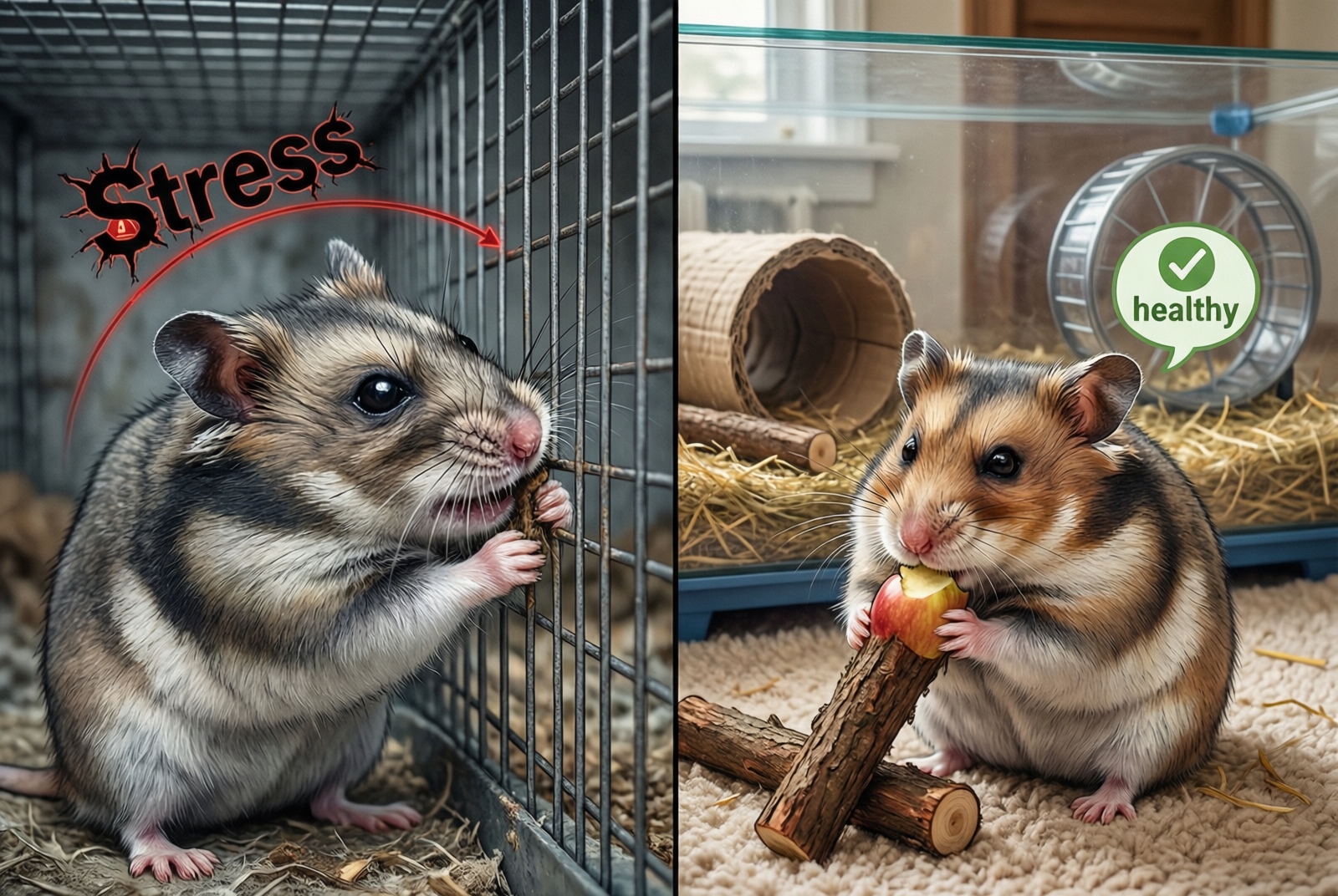
Cage bar biting is one of the most common problems — and usually means syrian hamster chew toys are lacking. It is also one of the most misunderstood. Understanding why it happens makes it much easier to fix.
Why Hamsters Bite Cage Bars
Bar biting is almost always a sign that something in the hamster’s environment is wrong. The most common causes are:
- Boredom and lack of enrichment — the hamster has nothing else to do
- Cage too small — the most frequent underlying cause
- Not enough chew toys — no appropriate outlet for natural chewing behavior
- Stress — loud environment, inconsistent routine, or feeling exposed
Bar biting is harmful. It causes broken teeth, damaged gums, nose injuries — all preventable with proper syrian hamster chew toys from rubbing against bars, and chronic stress. Unlike normal teeth grinding, which is healthy, bar biting is a stress behavior that needs to be addressed.
Step-by-Step Solutions
Step 1: Add more chew toys. This is the simplest fix. More syrian hamster chew toys means less bar biting. If your Syrian hamster has better things to chew, it will stop chewing the bars. Place 2 to 3 chew toys near the spots where the biting occurs most.
Step 2: Increase cage size. The minimum recommended floor space for a Syrian hamster is 450 square inches — with room for syrian hamster chew toys. Bar biting often starts when a hamster outgrows its cage. If your cage is smaller than this, upgrading to a larger enclosure is the single most impactful change you can make. See our Syrian hamster cage size guide for specific recommendations.
Step 3: Add more enrichment. Scatter feeding (hiding food in bedding rather than using a bowl) encourages natural foraging behavior. Multiple hides, digging areas, and tunnels give the hamster constructive activities. Our cage enrichment guide covers this in detail.
Step 4: Reduce stress. Place the cage in a quiet room away from high-traffic areas. Maintain a consistent daily routine. Avoid sudden changes to the cage layout.
Step 5: Try bitter spray as a last resort. Some owners apply a pet-safe bitter spray to the cage bars. This works for some hamsters and is ignored by others. I would only try this after addressing the root causes above.
Step 6: Consider a barless enclosure. Glass tanks or PVC enclosures eliminate bars entirely. This is the most reliable long-term solution for persistent bar biters. Our hamster cage setup guide covers enclosure options.
For more on understanding your hamster’s behavior, see our hamster behavior guide.
Frequently Asked Questions
Do Syrian hamsters need chew toys?
Absolutely yes. Syrian hamsters’ teeth grow approximately three inches per year and must be worn down through chewing. Without syrian hamster chew toys, teeth overgrow, causing difficulty eating, weight loss, and vet bills for tooth trimming under anesthesia. Keep 2 to 3 syrian hamster chew toys in the cage at all times and rotate them regularly to maintain your hamster’s interest.
Why is my Syrian hamster biting the cage bars?
The most common causes are boredom, a cage that is too small (minimum 450 square inches for a Syrian), lack of chew toys, and stress. Add more chew toys first — this resolves the problem in most cases. If bar biting continues, evaluate your cage size and enrichment level. Bar biting is a stress behavior, not normal chewing.
What wood is safe for Syrian hamsters to chew?
Safe woods include apple, willow, pear, birch, poplar, and bamboo. Always use untreated, unpainted wood. Dangerous woods include cedar and pine (aromatic oils cause liver and respiratory damage), cherry (cyanide compounds), yew (highly toxic), and oak (tannins). If you collect branches yourself, wash and bake them at 200°F for 30 minutes before use.
Can Syrian hamsters have mineral chews?
Yes, mineral chews like the Oxbow Celebration Heart are safe in moderation, but they should not be the only syrian hamster chew toys available. Natural wood and hay syrian hamster chew toys provide better dental wear because they are harder and require more chewing effort. I would offer mineral chews as an occasional supplement — once or twice a month — rather than a primary chew toy.
How often should I replace hamster chew toys?
It depends on the material and your individual hamster. Natural wood syrian hamster chew toys should be replaced when chewed down to a size small enough to swallow. Hay and grass toys should be replaced when they fall apart or get soiled. Most Syrian hamsters destroy a typical chew toy in 1 to 3 weeks. Keep 2 to 3 in the cage and swap out the ones that get too small.
Are loofah chews safe for hamsters?
Natural loofah makes good syrian hamster chew toys when uncolored. Avoid any loofah that has been dyed or treated. Loofah is softer than wood, so it is good for variety but should not be the only chew material since it does not wear teeth as effectively. Syrian hamsters generally prefer harder materials, but some enjoy shredding loofah as an enrichment activity.
Can I use toilet paper rolls as chew toys?
Plain cardboard toilet paper tubes are safe and free, as long as there is no residual glue or adhesive. Syrian hamsters enjoy shredding them and using them as tunnels. Paper towel tubes work too and are larger, which is better suited to the Syrian’s size. Just make sure all paper residue has been removed from the tube.
My Syrian hamster does not chew his toys — what should I do?
Try offering different textures — the right syrian hamster chew toys make all the difference. Some hamsters prefer wood, others prefer hay — syrian hamster chew toys come in many textures, and some go for fruitwood specifically. You can rub a tiny amount of peanut butter or banana on a new chew toy to spark initial interest. Scatter feeding — hiding food throughout the bedding instead of using a bowl — also encourages natural foraging behavior that involves gnawing. If your hamster suddenly stops chewing all food entirely, that warrants a vet visit to check for dental problems.