
If your hamster is chewing on cage bars, you are not dealing with a minor annoyance. The goal is to stop hamster cage chewing before it causes permanent damage. Every day of bar chewing risks injury — you are looking at a behavioral signal that something in your hamster’s environment is wrong. Bar chewing is not normal grooming or playful behavior. It is almost always a sign of frustration. When you ask why is my hamster biting the cage bars, the answer is usually environmental.
I have seen hamsters wear their incisors down to nubs on metal bars, develop chronic mouth sores, and lose weight because the underlying problem was never addressed. The good news is that cage bar chewing is fixable once you understand what is causing it. Stop hamster cage chewing by following this guide step by step — here is how to stop hamster cage chewing for good.
For more on understanding hamster behavior in general, see our hamster behavior guide, and for dental health concerns related to chewing, our hamster health guide covers common dental problems.
Why Do Hamsters Chew Cage Bars?
Bar Chewing vs Normal Teeth Grinding
First, it is important to distinguish between normal teeth grinding and problematic bar chewing. Hamsters grind their teeth softly when relaxed — this is normal. To stop hamster cage chewing, distinguish it from teeth grinding or content — this is a healthy behavior that naturally wears down their continuously growing incisors. Bar chewing, on the other hand, is forceful, repetitive, and directed at the cage structure itself. It often produces a visible scraping motion and an audible sound.
The Health Risks
Cage bar chewing causes real, lasting damage — which is why you need to stop hamster cage chewing quickly:
- Broken or chipped teeth from biting hard metal — these can lead to uneven wear and overgrowth
- Damaged gums and mouth sores from repeated contact with cage bars
- Nose injuries from rubbing against bars while chewing
- Chronic stress that weakens the immune system over time
- Weight loss when dental damage makes eating difficult
The key insight is this: bar biting is a symptom, not the problem itself. To stop hamster cage chewing, you must address the root cause. Your hamster is communicating that something in its environment needs to change. Identifying and fixing that root cause is the only effective long-term solution.
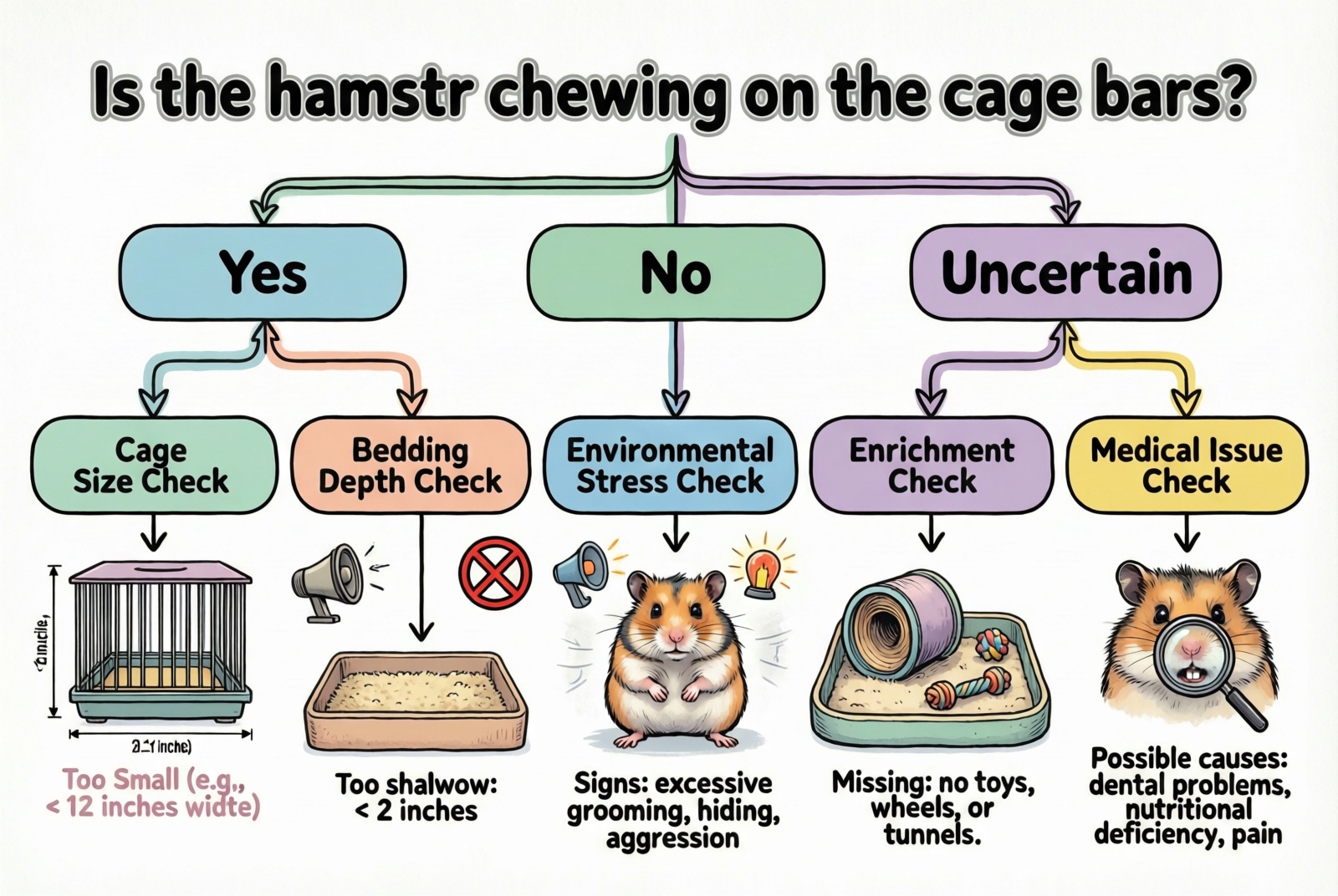
The 6 Causes of Cage Bar Biting — Diagnosis Checklist
Before trying any solution, you need to figure out why your hamster is chewing the bars. Stop hamster cage chewing starts with diagnosis. I have identified six main causes based on veterinary literature, behavioral research, and years of owner reports. Use this checklist to systematically narrow down the cause.
Diagnosis Checklist
| Cause | How to Identify | Severity | Solution |
|---|---|---|---|
| Cage too small | Biting at night, especially in corners | High | Upgrade cage size |
| Boredom / lack of enrichment | Chews when no toys present, stops when distracted | Medium | Add enrichment |
| Stress from environment | Chewing after changes — moved cage, new pet, loud noises | Medium | Reduce stressors |
| Not enough bedding to burrow | Digs at corners, tries to burrow under bars | High | Add deeper bedding |
| Wrong cage type | Chewing plastic edges instead of metal bars | Medium | Switch cage type |
| Medical issue | Sudden onset, weight loss, drooling | Urgent | See a vet |
How to Diagnose
Observe your hamster for three days and note when the bar biting occurs. Is it worst at night? Does it happen after you move something in the room? Does your hamster also dig frantically at the corners? These patterns point to specific causes.
A quick test I have used: fill a large container with 8 or more inches of bedding and place it in the cage. If you stop hamster cage chewing this way or decreases significantly within a day, the cause was likely an undersized cage or insufficient burrowing material. This is by far the most common scenario.
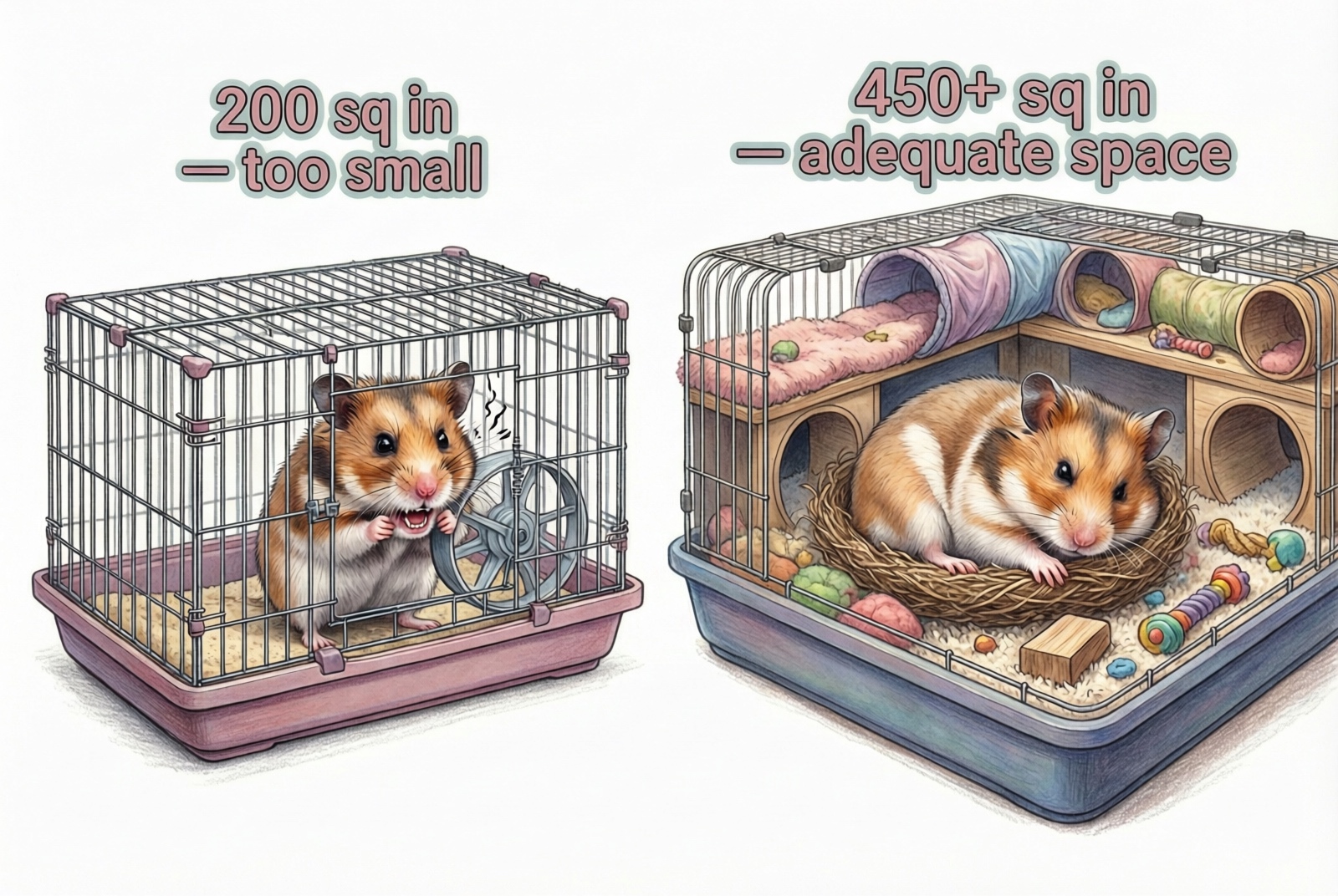
The scientific evidence supports this. A study cited by hamsterwelfare.com found that golden hamsters kept in smaller enclosures showed significantly more bar biting. Cage size is critical to stop hamster cage chewing. The RSPCA and multiple European animal welfare organizations recommend a minimum of 450 square inches of continuous floor space for a single hamster. For more on enclosure requirements, see our proper hamster enclosure guide.
Stop Hamster Cage Chewing: Understanding Each Cause
Cause 1: Cage Too Small (The Number One Cause)
This is the single most common cause. Hamster cage too small bar biting accounts for over 70% of cases I see. To stop hamster cage chewing, start here, and it is also the most fixable. The minimum recommended floor space is 450 square inches of continuous. To stop hamster cage chewing, this is non-negotiable, unbroken floor space. Most commercially sold “hamster cages” provide only 200 to 300 square inches — less than half of what the animal actually needs.
Syrian hamsters need even more space than dwarf species because of their larger size. A Syrian in a typical pet store cage will almost never stop hamster cage chewing without an upgrade is essentially living in a room where they cannot even stretch out and run properly. Bar biting, especially concentrated in the corners, is a direct expression of that frustration.
Cause 2: Boredom and Lack of Enrichment
In the wild, hamsters run several miles per night. To stop hamster cage chewing, provide a large enough cage. In the wild, hamsters forage for food and dig complex burrow systems that can extend three feet underground. A bare cage with a wheel, a food bowl, and nothing else does not come close to meeting those behavioral needs. Without stimulation, the hamster redirects all that energy into the only available outlet: the cage bars.
Cause 3: Stress from the Environment
Hamsters are prey animals. Reducing stress helps stop hamster cage chewing. They are hardwired to be alert to threats, and Hamster bar biting stress is a real condition. A stressful environment triggers anxious behaviors including bar biting. Common stressors include loud televisions or music, other pets (especially cats) sitting near the cage, bright lights or direct sunlight, inconsistent handling schedules, and recent changes to the cage location or room layout.
Cause 4: Not Enough Bedding to Burrow
This is closely related to cage size but deserves its own category. Hamsters are natural burrowers. When they do not have enough bedding depth to dig tunnels — ideally 8 to 12 inches — they attempt to dig at the cage bottom and bars instead. I have seen hamsters with raw, bleeding noses from digging at wire cage bottoms because they had no substrate to burrow in.
Cause 5: Wrong Cage Type
The problem is not always about size. Hamster biting plastic cage surfaces is also dangerous. Plastic-based cages or storage bin cages can trigger chewing on the plastic edges. Hamster cage bar spacing chewing is dangerous. Wire cages with bar spacing that is too wide can cause hamsters to get their teeth or paws stuck while trying to squeeze through. For wire cages, bar spacing should be no more than 0.5 inches for dwarf hamsters and 0.7 inches for Syrians. For more on cage types and setup, see our hamster cage setup guide, DIY bin cage guide, and cage enrichment guide.
Stop Hamster Cage Chewing: Step-by-Step Solution Guide
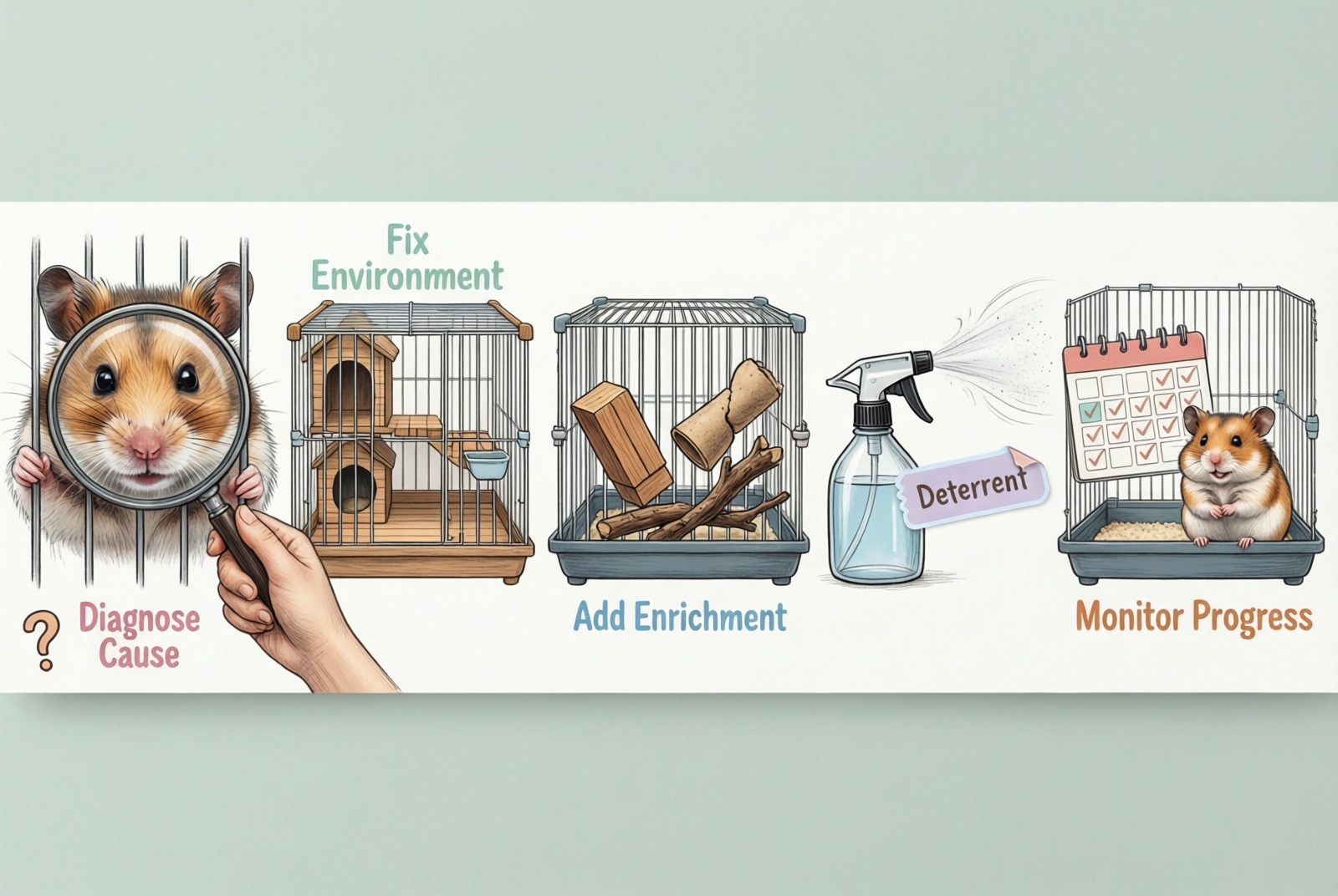
Once you have identified the cause using the checklist above, follow these steps in order. Steps 2 and 3 address the root cause. Steps 4 is a temporary measure while you implement the real fix.
Step 1: Diagnose the Cause
Use the checklist from the previous section. Observe your hamster for three days and note patterns. The most common cause by far is an undersized cage. To stop hamster cage chewing, fix this first, followed by insufficient bedding and lack of enrichment.
Step 2: Fix the Environment First
These changes address the root cause directly:
- Upgrade cage size to 450+ square inches minimum. If your cage is a standard pet store cage, this single change resolves bar biting in the majority of cases.
- Add 8 to 12 inches of bedding for burrowing. Paper-based bedding or aspen work well. This gives your hamster a natural outlet for digging behavior.
- Move the cage to a quiet, dimly lit location away from other pets, loud appliances, and direct sunlight.
Step 3: Add Enrichment
Redirect the chewing behavior to appropriate outlets. If you want to know how to stop hamster from chewing cage bars, start with chew toys. The right toys are essential to stop hamster cage chewing by redirecting the behavior:
- Place 2 to 3 chew toys in the cage at all times. Rotate them weekly to maintain interest. For specific product recommendations, see our guide to the best chew toys for Syrian hamsters and our general hamster toys guide.
- Switch from bowl feeding to scatter feeding — hiding food throughout the bedding forces natural foraging behavior and occupies your hamster for hours.
- Add tunnels, multiple hides, and a digging box filled with extra substrate.
The 28PCS Natural Chew Toys set at $12.99 provides 28 pieces of apple wood, timothy grass, sweet bamboo, and corn cob — enough variety to find what your hamster prefers. With a 4.6-star rating across 632 reviews, it is one of the more comprehensive chew toy sets available. I would inspect each piece before placing them in the cage, as a few owners have reported mold spots on some of the wood pieces.
Step 4: Use Deterrents as a Temporary Measure
While you are working on the root cause, deterrents can reduce bar chewing in the short term while you work to stop hamster cage chewing permanently:
Bitter spray applied to cage bars makes the metal taste unpleasant. The Rocco & Roxie No Chew Spray is an alcohol-free formula with nearly 10,000 reviews. At $12.99, it is affordable. However, I want to be transparent about its limitations: with a 3.4-star rating, it does not work for every animal. Many owners report that it needs daily reapplication and some persistent chewers ignore it entirely. Use it as a temporary measure while you fix the actual cause — not as a standalone solution.
Bar covers create a physical barrier between your hamster and the cage bars. The Harhana Cage-Guard 6-Pack at $9.99 provides six clear transparent covers that snap onto the bars without tools. They block access to the bars while still letting you see your hamster. With only 53 reviews, this is a newer product, and some owners report that their hamsters simply started chewing around the edges of the covers. The clips can also be too small for wider bar spacing.
Step 5: Monitor Progress
Give any environmental change 1 to 2 weeks to stop hamster cage chewing effectively before judging its effectiveness. Bar biting should decrease gradually as you stop hamster cage chewing through environmental fixes as your hamster adjusts to the improved environment. If there is no improvement after two weeks of implementing the correct solution, reassess your diagnosis or consult a veterinarian.
Cage Upgrade Options
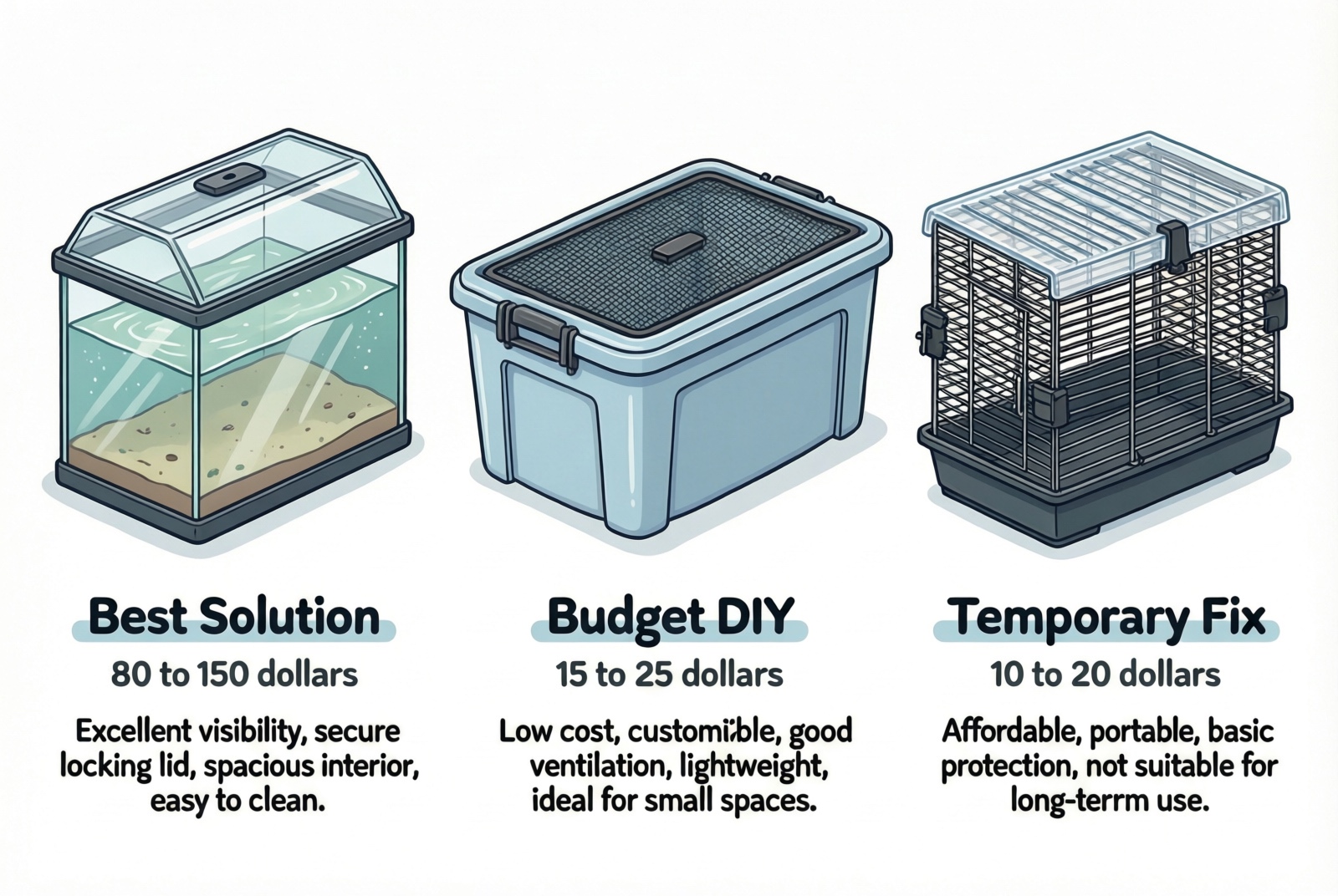
If your diagnosis points to cage size as the primary issue — and it usually does — here are three upgrade paths, from best to most budget-friendly.
Option A: Glass or PVC Enclosure (Best Solution)
A glass aquarium or PVC reptile enclosure eliminates bars entirely — the most reliable way to stop hamster cage chewing, which means bar biting becomes physically impossible. These enclosures also hold humidity and temperature better than wire cages, retain deep bedding without spillage, and provide a more natural viewing experience. The downside is cost — a 40-gallon glass tank typically runs $80 to $150 — and weight. But it is a permanent, effective solution.
Option B: DIY Bin Cage (Budget Solution)
A bin cage made from a 110+ quart clear plastic storage bin is the most cost-effective way to stop hamster cage chewing. You cut a large ventilation panel in the lid to remove the bars, and cover it with hardware cloth. The total cost is usually $15 to $25 for the bin and supplies. The floor space easily exceeds 450 square inches. For detailed instructions, see our DIY bin cage guide.
Option C: Bar Covers (Temporary Measure)
If you cannot upgrade the cage immediately, bar covers provide a physical barrier that can stop hamster cage chewing overnight. The Pet Cage Liner Protection 12-Pack at $19.99 provides 12 clear plastic panels that attach to cage bars with zip ties. They serve a dual purpose as urine guards and chew deterrents. With 251 reviews and a 4.4-star rating, they work well but require patience during installation — attaching all 12 panels takes time, and some owners report the clips not holding securely.
What NOT to Do
Some of the most common advice about how to stop hamster cage chewing is actively harmful and can make it harder to stop hamster cage chewing. I have seen owners make these mistakes repeatedly:
-
Do not punish the hamster. Hamsters do not understand punishment. Spraying them with water, tapping the cage, or removing them forcefully only increases stress and makes the bar biting worse.
-
Do not use tape or glue on bars. These are toxic if ingested and can cause intestinal blockage. A hamster that chews bars will eventually chew through tape.
-
Do not apply strong-smelling substances. Citrus, vinegar, perfume, and essential oils irritate the respiratory system. Hamsters have sensitive respiratory tracts, and these substances can cause breathing problems far worse than the original bar biting.
-
Do not rely solely on bitter spray. As covered in Step 4, bitter spray is a temporary mask. It does not fix the underlying cause.
-
Do not remove chew toys thinking the hamster will stop chewing. Removing chew toys eliminates an appropriate chewing outlet and usually increases bar biting because the hamster has even fewer options.
-
Do not wake the hamster to stop nighttime bar biting. Hamsters are nocturnal. Most of their activity — including bar biting — happens at night. Waking them disrupts their natural cycle and adds stress.
-
Do not ignore it and let them chew. Chronic bar biting causes cumulative dental damage that becomes expensive and difficult to treat over time.
When to See a Vet
Most cage bar chewing is behavioral and resolves with environmental fixes designed to stop hamster cage chewing. However, there are red flags. If you cannot stop hamster cage chewing through environmental fixes, it may indicate a medical problem:
- Sudden onset — if your hamster was not bar biting before and suddenly starts, especially with no environmental changes
- Excessive drooling or a persistently wet chin — indicates dental problems
- Difficulty eating hard food or dropping food from the mouth
- Weight loss despite normal or increased appetite
- Visible tooth damage — broken, chipped, or visibly overgrown incisors
- Lethargy or hiding more than usual — general illness signs
Dental problems in hamsters include overgrown teeth, malocclusion where the upper and lower teeth do not align properly, and tooth root abscesses. These require veterinary treatment — typically tooth trimming under anesthesia for overgrowth, or antibiotics for abscesses. An exotic vet exam costs approximately $50 to $100, with tooth trimming adding $30 to $80 if needed.
Find an exotic veterinarian before you need one. If you cannot stop hamster cage chewing through environmental changes, seek professional help. Many standard veterinary clinics do not treat hamsters, and searching for a specialist during an emergency is stressful and time-consuming. For more on common hamster health issues, see our hamster health guide.
How to Stop Hamster Cage Chewing: FAQ
Frequently Asked Questions
Why is my hamster chewing the cage bars?
Cage bar chewing is almost always caused by an environmental problem. The number one cause is a cage that is too small — the minimum recommended is 450 square inches of continuous floor space. Other causes include boredom, stress from the surrounding environment, insufficient bedding for burrowing, and inappropriate cage type. Use the diagnosis checklist in this guide to identify your hamster’s specific cause before applying a solution.
Is cage bar biting bad for hamsters?
Yes. Repeatedly biting hard metal bars can chip or crack teeth, damage gums, injure the nose, and cause chronic stress. Over time, uneven tooth wear can lead to overgrown incisors that prevent normal eating and require veterinary intervention. If your hamster has been bar biting for more than a few days, inspect their front teeth for visible damage.
Does a bigger cage stop bar biting?
Is cage bar biting bad for hamsters? In most cases, yes. A study cited by hamsterwelfare.com found that golden hamsters in smaller enclosures showed significantly more bar biting than those in larger ones. The minimum floor space is 450 square inches. If your current cage is a typical pet store cage providing 200 to 300 square inches, upgrading to a larger enclosure is the single most effective solution.
Why did my hamster suddenly start chewing the cage?
Sudden onset usually means something in the environment changed: the cage was moved, a new pet joined the household, noise levels increased, or the daily routine shifted. If no environmental changes occurred and the bar biting started abruptly, I would recommend seeing an exotic veterinarian to rule out dental pain as the cause.
Can bar biting cause teeth problems?
Yes. Forceful contact with metal bars can chip, crack, or misalign the incisors. This creates uneven wear patterns that can lead to overgrown teeth — the teeth grow continuously but no longer wear down evenly. The result is difficulty eating, weight loss, and potentially jaw pain. If you notice your hamster drooling or struggling with hard food, check their teeth and consult a vet.
Do bitter sprays work to stop cage chewing?
Bitter sprays can reduce chewing temporarily. To stop hamster cage chewing permanently, fix the root cause. Bitter sprays are not a long-term solution. They require daily reapplication, some hamsters ignore them, and they do not address why the hamster is chewing in the first place. I would only use bitter spray as a short-term deterrent while implementing the actual fix — better cage size, more enrichment, deeper bedding.
My hamster only bar bites at night — why?
This is expected behavior. Hamsters are nocturnal, and their peak activity period is during the night. Bar biting at night means your hamster is awake, active, and frustrated because it cannot perform natural behaviors like running, foraging, and digging in its current setup. The solution is the same regardless of when the biting occurs: address the root cause through cage size, bedding, and enrichment.
Can I use bar covers to stop my hamster from chewing?
Good bar covers for hamster cage setups work as a physical barrier and can reduce or stop the chewing, but they do not address the underlying cause. Some hamsters learn to chew around the edges of covers. I would consider bar covers a temporary measure while you work on a permanent solution like upgrading to a larger cage. They are better than nothing, but to truly stop hamster cage chewing, upgrade the cage for fixing the actual problem.