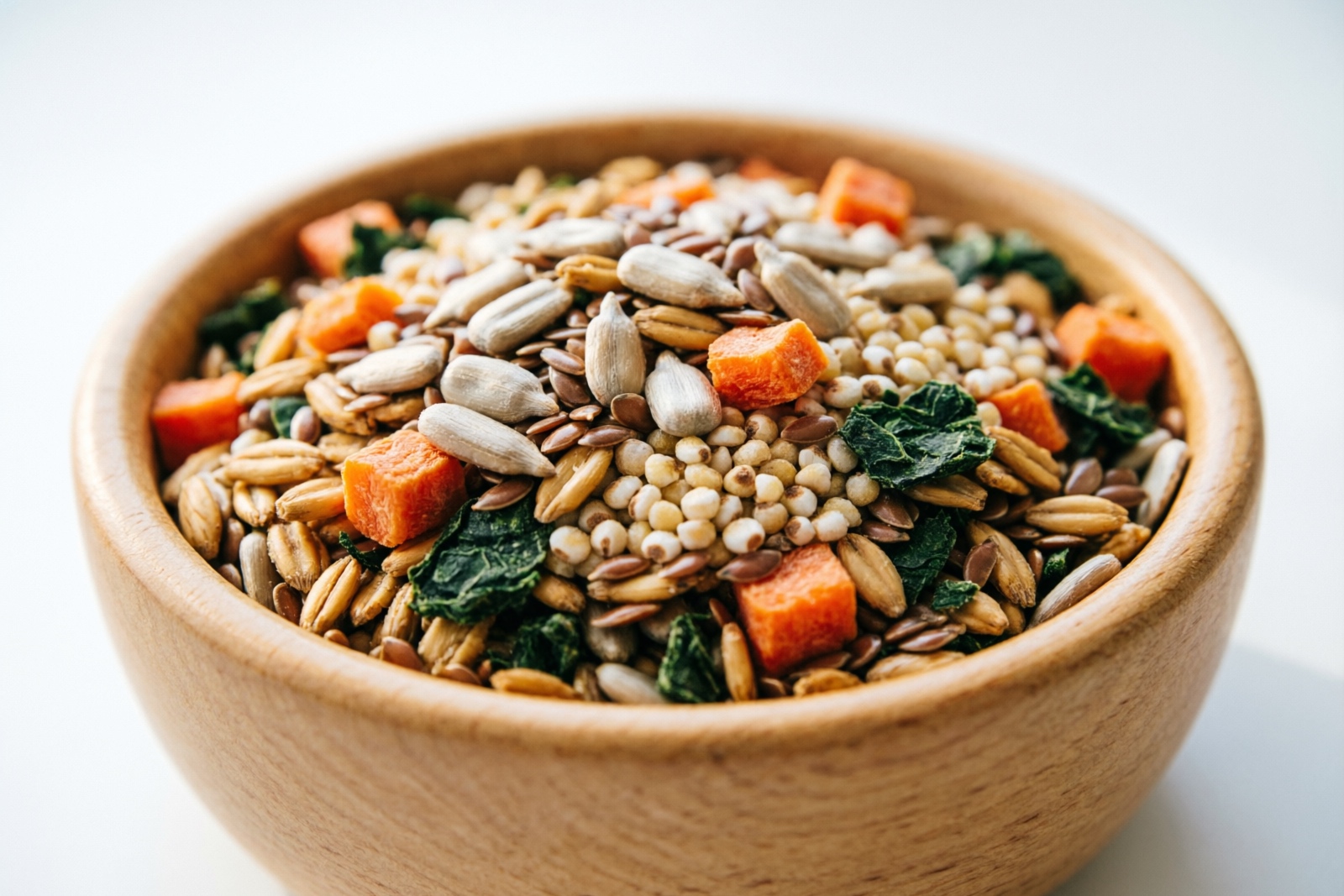
Complete Homemade Hamster Food Guide: Recipes, Nutrition & Best Ingredients
More hamster owners are discovering the benefits of homemade hamster food as an alternative to commercial pellets. Creating your own homemade hamster food blend gives you complete control over ingredients, eliminates preservatives and fillers, and allows customization for your hamster’s specific needs. However, many owners feel overwhelmed by conflicting information about what’s safe and nutritious.
This comprehensive homemade hamster food guide solves that problem. You’ll discover three proven recipes for different experience levels, understand the essential nutrients your hamster needs, learn which ingredients to include (and avoid), and get practical storage tips to keep your mix fresh. Whether you’re a first-time hamster owner or an experienced keeper looking to improve your hamster’s diet, this guide provides everything you need to create a healthy hamster food mix at home.
Why Choose Homemade Hamster Food? Benefits vs Commercial Options
Making your own best homemade hamster food offers several significant advantages over store-bought options. The primary benefit is complete ingredient control—you know exactly what goes into your hamster’s bowl without hidden preservatives, artificial colors, or low-quality fillers that many commercial foods contain.
Key Benefits of DIY Hamster Food:
- No mystery ingredients: Commercial foods often contain unspecified “grain products” or “by-products”
- Customizable nutrition: Adjust protein and fat levels for your hamster’s age, species, and activity level
- Cost-effective: Buying bulk ingredients costs less per serving than premium commercial brands
- Fresher and more nutritious: Ingredients retain more nutrients when freshly mixed
- Better for picky eaters: You can adjust ratios based on what your hamster actually eats
Commercial hamster foods do offer convenience, but quality varies dramatically between brands. Some premium brands provide balanced nutrition, while budget options contain mostly cheap fillers like corn and alfalfa. If you don’t have time for homemade preparation, the Dry Hamster Food Herbal Natural Flavor ($24.80) offers a quality commercial alternative with natural herbal ingredients that support digestive health.
When homemade makes the most sense:
- Your hamster has allergies or sensitivities to commercial food ingredients
- You have a picky eater who refuses commercial pellets
- You want to provide the highest quality nutrition possible
- You’re keeping dwarf hamsters with special dietary needs
Essential Nutrients for Hamsters: What Your Mix Must Include
Creating a truly healthy hamster food mix requires understanding hamster nutritional requirements. An unbalanced homemade diet can lead to serious health problems, so getting the nutrient ratios right is critical.
Protein Requirements:
- Syrian hamsters: 16-18% protein content
- Dwarf hamsters (Campbell’s, Winter White, Roborovski): 17-19% protein content
- Growing babies and pregnant females need 20%+ protein
Fat Content Guidelines:
- Ideal range: 4-7% fat
- Too much fat leads to obesity and diabetes (especially in dwarf hamsters)
- Healthy fat sources: flaxseed, chia seeds, small amounts of nuts
- Avoid: excessive sunflower seeds and peanuts
Fiber Needs:
- Minimum 6-8% fiber for digestive health
- High-quality hay and vegetable matter provide essential fiber
- Fiber prevents digestive issues and supports dental health through chewing
Vitamins and Minerals:
- Vitamin A: Supports vision and immune function (found in carrots, sweet potato)
- Vitamin D: Essential for calcium absorption (supplement if needed)
- Vitamin E: Antioxidant for cell health (found in seeds and nuts)
- Calcium-to-phosphorus ratio: Should be approximately 1.5:1 to 2:1
Common Nutritional Deficiencies in Homemade Mixes: The biggest mistake in hamster diet recipe creation is insufficient protein. Many owners create seed-heavy mixes that lack adequate protein sources. Always include dried insects, peas, or quality protein sources in your blend.
Best Ingredients for Homemade Hamster Food Mix
Creating a nutritious hamster seed mix recipe starts with understanding ingredient categories and their proper ratios. A well-balanced natural hamster food recipe includes five main ingredient groups.
Base Ingredients (60-70% of your mix):
- Millet seeds: Small, easily digestible, excellent for dwarf hamsters
- Canary seed: High protein content, good base grain
- Flaxseed: Omega-3 fatty acids for coat health
- Oats (rolled or steel-cut: Fiber and sustained energy
- Barley and wheat: Additional grain variety
The Sukh Hamster Millet Sprays (30Pcs) ($7.39) provides natural millet that’s perfect for your base ingredient. These sprays also double as foraging enrichment—your hamster will enjoy harvesting the seeds directly from the spray.
Protein Sources (15-20% of mix):
- Pumpkin seeds: Excellent protein and zinc
- Dried peas: Plant-based protein, loved by most hamsters
- Dried mealworms or crickets: High-quality animal protein
- Sunflower seeds: Limit to small amounts due to high fat content
Healthy Fats (5-10% of mix):
- Walnuts: Crushed into small pieces, omega-3 rich
- Almonds: Unsweetened, unsalted, chopped small
- Chia seeds: Tiny but nutritionally dense
- Flaxseed: Dual purpose as base grain and fat source
Dried Fruits (5-10% of mix, as treats): Safe options include dried apple, banana chips (unsweetened), and cranberries. The Sustain Herbivore Apple & Banana Treats ($9.99) offers quality dried fruit that’s perfect for adding to homemade mixes in moderation.
Dried Vegetables (5-10% of mix):
- Carrot pieces, sweet potato chunks, and dried pumpkin add vitamins and fiber
- Ensure vegetables are thoroughly dried to prevent mold in your mix
For variety, the Hamster Spray Set Natural Grains ($14.89) includes multiple grain types with different textures that enhance your homemade blend.
3 Proven Homemade Hamster Food Recipes
Here are three tested homemade hamster food recipe options ranging from beginner-friendly to premium blends, including a specialized dwarf hamster formula.
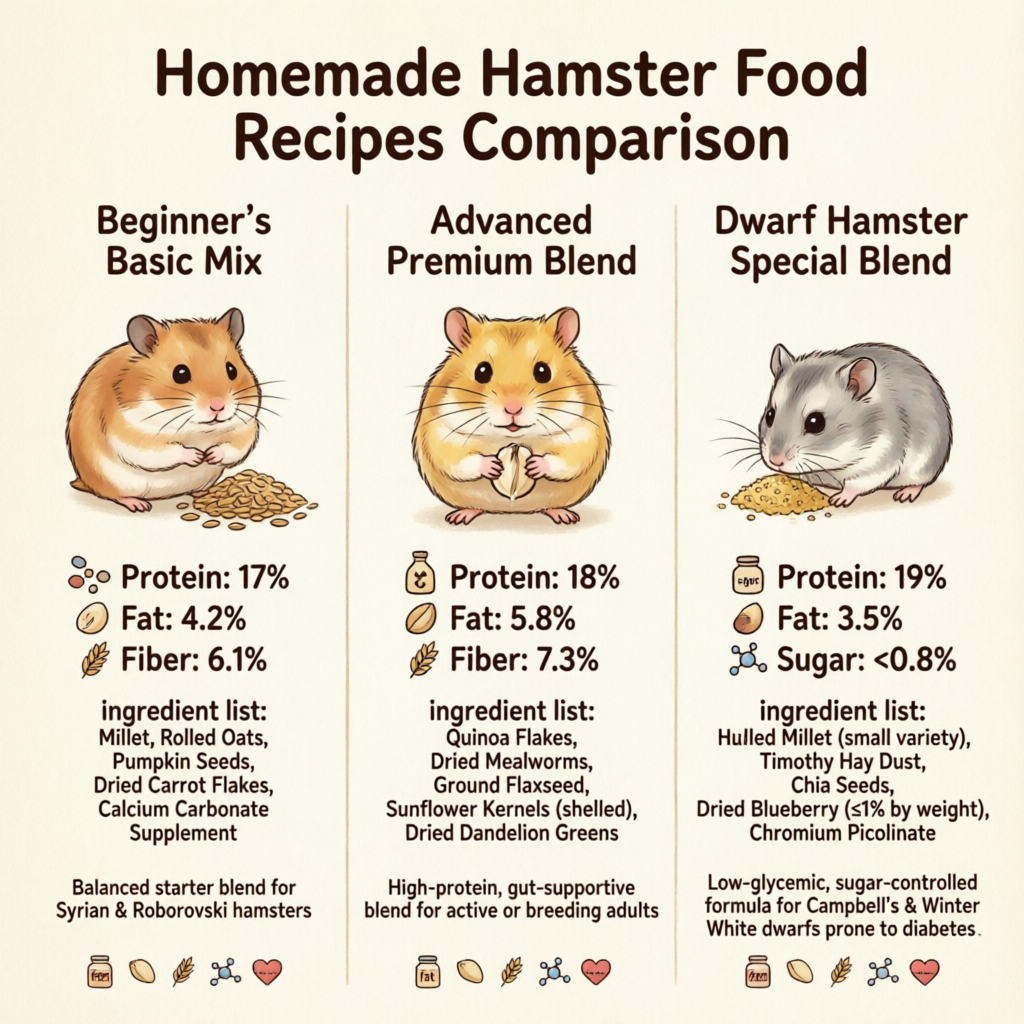
Recipe 1: Beginner’s Basic Mix
Perfect for first-time hamster owners and Syrian hamsters. This simple diy hamster food mix provides balanced nutrition without overwhelming complexity.
Prep time: 10 minutes | Yield: 2-week supply for one hamster
Ingredients:
- 2 cups mixed millet seeds
- 1 cup rolled oats
- 1/2 cup pumpkin seeds
- 1/4 cup dried mealworms
- 1/4 cup dried carrot pieces
Instructions:
- Combine all ingredients in a large, clean bowl
- Mix thoroughly to distribute ingredients evenly
- Transfer to an airtight container
- Store in a cool, dark place
Nutritional Breakdown: Approximately 17% protein, 5% fat, 8% fiber
Cost Analysis: About $8-10 for ingredients, lasting 2+ weeks—significantly cheaper than premium commercial foods.
Recipe 2: Advanced Premium Blend
For experienced owners wanting to provide optimal nutrition. This comprehensive hamster food blend for dwarfs and Syrians includes varied textures and premium ingredients.
Prep time: 20 minutes | Yield: 1-month supply
Ingredients:
- 1.5 cups mixed seeds (millet, canary seed, flaxseed)
- 1 cup rolled oats
- 1/2 cup dried peas
- 1/4 cup pumpkin seeds
- 1/4 cup sunflower seeds (limit due to fat content)
- 1/4 cup dried insects (mealworms or crickets)
- 2 tablespoons dried herbs (chamomile, dandelion)
- 2 tablespoons dried flowers (rose petals, marigold)
Instructions:
- In a large container, combine all base seeds and grains
- Add protein sources and mix well
- Gently fold in dried herbs and flowers
- Store in an airtight container away from light
Nutritional Breakdown: 18% protein, 6% fat, 9% fiber
For comparison, the GIGATEMP petifool Blütenfest Natural Food ($30.26) offers a German-quality commercial option with similar flower-based ingredients—use it as a quality benchmark for your homemade mix.
Recipe 3: Dwarf Hamster Special Blend
Specially formulated for dwarf hamsters (Campbell’s, Winter White, Roborovski) with lower fat content and smaller seed sizes. This specialized hamster food blend for dwarfs addresses their unique nutritional needs.
Prep time: 15 minutes | Yield: 3-week supply
Key Dwarf Hamster Considerations:
- Lower fat content (dwarf hamsters prone to obesity and diabetes)
- Smaller seed sizes (easier for tiny hands to handle)
- Higher protein percentage
- Limited sugary fruits
Ingredients:
- 1.5 cups small millet seeds (yellow and red millet)
- 1 cup rolled oats (quick oats work well)
- 1/2 cup dried peas
- 1/4 cup flaxseed
- 2 tablespoons dried mealworms
- 1 tablespoon dried apple (unsweetened, very small pieces)
Instructions:
- Combine millet and oats in a storage container
- Add dried peas and flaxseed, mixing thoroughly
- Add mealworms and dried apple sparingly
- Mix well and store properly
Nutritional Breakdown: 19% protein, 4% fat, 8% fiber
Special Note: Campbell’s and Winter White dwarf hamsters are prone to diabetes. This recipe minimizes sugar while providing essential nutrition. Monitor your hamster’s weight and adjust portions accordingly.
Step-by-Step Guide: How to Mix Homemade Hamster Food
Creating your diy hamster food mix is straightforward once you have the right ingredients. Follow this process for consistent, safe results every time.
Preparation Checklist:
- Clean, dry mixing bowl (large enough to hold all ingredients)
- Measuring cups for accurate ratios
- Clean spoon or whisk for mixing
- Airtight storage containers ready
Mixing Process:
- Measure base ingredients first—seeds and grains form the bulk of your mix
- Add protein sources—distribute evenly throughout the base
- Mix in fats and fruits—these are smaller quantities, ensure even distribution
- Add herbs and supplements last—these are potent and should be well-dispersed
- Mix thoroughly—stir for at least 2 minutes to ensure even distribution
Portion Control Guidelines:
- Syrian hamsters: 1-2 tablespoons daily
- Dwarf hamsters: 0.5-1 tablespoon daily
- Adjust based on your hamster’s size, age, and activity level
Feeding Schedule:
- Feed in the evening when hamsters are naturally active
- Provide fresh vegetables separately (small pieces)
- Remove uneaten fresh food after 4-6 hours
Proper storage is crucial for maintaining freshness. The OXO Good Grips Pet POP Container 6.0 Qt ($24.99) provides premium airtight storage with a convenient scoop included.
For budget-friendly storage, the IRIS USA WeatherPro Airtight Container ($12.98) offers reliable airtight protection at half the price.
Storage and Freshness: Keeping Your Homemade Mix Safe
In your hamster cage setup, proper storage is essential for maintaining the nutritional quality and safety of your homemade hamster food. Poor storage leads to nutrient degradation, rancidity, and potential mold growth.
Storage Guidelines:
- Use airtight containers to prevent moisture and pest intrusion
- Store in a cool, dark location away from direct sunlight
- Maximum shelf life: 2-3 months for dry mixes
- Label containers with the mixing date
Freshness Indicators:
- Smell test: Fresh mix smells nutty and pleasant, not rancid
- Visual inspection: No visible mold, insects, or webbing
- Texture check: Seeds should be firm, not soft or crumbly
Signs of Spoilage:
- Musty or sour odor indicates mold growth
- Oily or rancid smell means fats have gone bad
- Small insects or webbing suggest pest infestation
- When in doubt, throw it out—hamsters are small and sensitive to toxins
Freezing for Long-Term Storage: Make large batches and freeze portions in sealed bags for up to 6 months. Thaw completely before feeding, and never refreeze thawed food.
For daily feeding, quality food bowls make a difference. The Hamster Food Bowl Ceramic 2 Pack ($12.99) offers heavy ceramic bowls that won’t tip over, with a cute tree design.
The Niteangel Wooden Hamster Feeding Bowl ($9.49) provides a natural wood option that’s safe if chewed.
Common Mistakes to Avoid When Making Homemade Hamster Food
Even well-intentioned owners make errors when creating homemade hamster food. Learning from common mistakes helps you avoid nutritional imbalances and health problems.
Nutritional Imbalance Mistakes:
- Too much fat from excessive sunflower seeds, peanuts, or nuts
- Insufficient protein from seed-only mixes without insects or peas
- Missing essential nutrients by using too few ingredient varieties
- Not adjusting recipes for different hamster species
Dangerous Ingredients to Avoid:
- Onions, garlic, and chives (toxic to hamsters)
- Chocolate and caffeine (potentially fatal)
- High-sugar dried fruits with added sweeteners
- Salted or seasoned nuts and seeds
- Sticky foods that can cause cheek pouch impaction
Preparation Mistakes:
- Using moldy or stale ingredients
- Not washing dried ingredients before mixing
- Incorrect measuring leading to imbalanced ratios
- Mixing new batches into old food instead of using fresh containers
Storage and Feeding Errors:
- Storing food in warm or sunny locations
- Leaving food in non-airtight containers
- Overfeeding leading to obesity and food hoarding
- Not removing uneaten fresh foods promptly
Safety Reminders: Always introduce new foods gradually to avoid digestive upset. Monitor your hamster’s weight, energy level, and stool consistency when changing diets. Consult an exotic pet veterinarian if you notice any health concerns.
Enhancing Your Hamster’s Diet: Supplements and Enrichment
While a well-formulated homemade mix provides complete base nutrition, certain supplements and enrichment additions can enhance your hamster’s health and happiness.
When Supplements Help:
- Growing babies need extra calcium and protein
- Pregnant or nursing females require increased nutrition
- Sick or recovering hamsters benefit from vitamin support
- Elderly hamsters may need digestive aids
Natural Supplements:
- Dried herbs (chamomile, dandelion) support digestion
- Calcium supplements prevent deficiency in growing hamsters
- Vitamin drops can fill nutritional gaps (use sparingly and as directed)
Enrichment Through Foraging: Make mealtime engaging by providing foraging opportunities. The Sukh Natural Hamster Bedding Sprays ($8.99) adds natural herbs that encourage foraging behavior.
The Sukh 60Pcs Nature Flower Herb Bedding ($8.99) provides flowers and herbs that serve as both cage decoration and foraging material.
Bath Sand Benefits: Hamster bath sand isn’t just for bathing—rolling in sand helps with fur maintenance and provides mineral intake. The Hamster Bath Sand 3lb Dust Free ($10.99) offers dust-free sand that’s safe for regular use.
For a premium option, the DR.DUDU Hamster Bath Sand 2.8lb ($12.59) provides fine white sand with excellent reviews from over 1,400 customers.
Frequently Asked Questions About Homemade Hamster Food
How to make homemade hamster food? Follow our three proven recipes above, starting with the Beginner’s Basic Mix for simplicity. The key is proper ingredient ratios: 60-70% base grains, 15-20% protein, and limited fats and fruits.
What ingredients are safe for homemade hamster food? Safe ingredients include millet, oats, pumpkin seeds, dried peas, dried mealworms, flaxseed, and small amounts of dried fruits like apple and banana. See our complete ingredient guide above for detailed information.
Can I make my own hamster food mix? Absolutely! With proper knowledge of nutritional requirements and safe ingredients, making your own mix is straightforward. Start with our Beginner’s Basic Mix recipe and advance to more complex blends as you gain confidence.
What is the best homemade hamster food recipe? The “best” recipe depends on your hamster species. Syrians do well with our Beginner’s Basic Mix or Advanced Premium Blend. Dwarf hamsters should use our Dwarf Hamster Special Blend with lower fat content.
How to balance nutrition in homemade hamster food? Aim for 16-19% protein, 4-7% fat, and 6-8% fiber. Include diverse ingredients from all categories (grains, proteins, fats, vegetables, limited fruits). Our recipes above provide balanced ratios.
What seeds can I use for hamster food? Safe seeds include millet, canary seed, flaxseed, pumpkin seeds, and limited sunflower seeds. Avoid fruit seeds with pits (apple seeds, cherry pits) as they can be toxic.
How much homemade food should I give my hamster? Syrian hamsters need 1-2 tablespoons daily; dwarf hamsters need 0.5-1 tablespoon. Adjust based on your hamster’s size, age, and activity level. Monitor weight to prevent obesity.
Is homemade hamster food better than commercial? Homemade food offers ingredient control, no preservatives, and customization. However, it requires more effort and knowledge. Quality commercial foods work well for busy owners, while homemade is ideal for health-conscious caretakers.
Conclusion: Start Making Healthy Homemade Food for Your Hamster Today
Creating homemade hamster food gives you complete control over your pet’s nutrition while eliminating preservatives and mystery ingredients found in many commercial products. With the three proven recipes in this guide—Beginner’s Basic Mix, Advanced Premium Blend, and Dwarf Hamster Special Blend—you have everything needed to provide optimal nutrition for any hamster species.
Remember these key points:
- Proper nutrient ratios (16-19% protein, 4-7% fat, 6-8% fiber) are essential
- Use diverse ingredients from all categories for balanced nutrition
- Store homemade mixes in airtight containers in cool, dark locations
- Introduce new foods gradually and monitor your hamster’s health
- Adjust portions based on species, size, and activity level
Start with the Beginner’s Basic Mix to build confidence, then experiment with the Advanced Premium Blend as you become more comfortable. Your hamster will benefit from fresher, more nutritious food—and you’ll have peace of mind knowing exactly what’s in your pet’s bowl.
Join the growing community of health-conscious hamster owners who have discovered the benefits of homemade nutrition. Your hamster will thank you with better health, more energy, and a shinier coat.