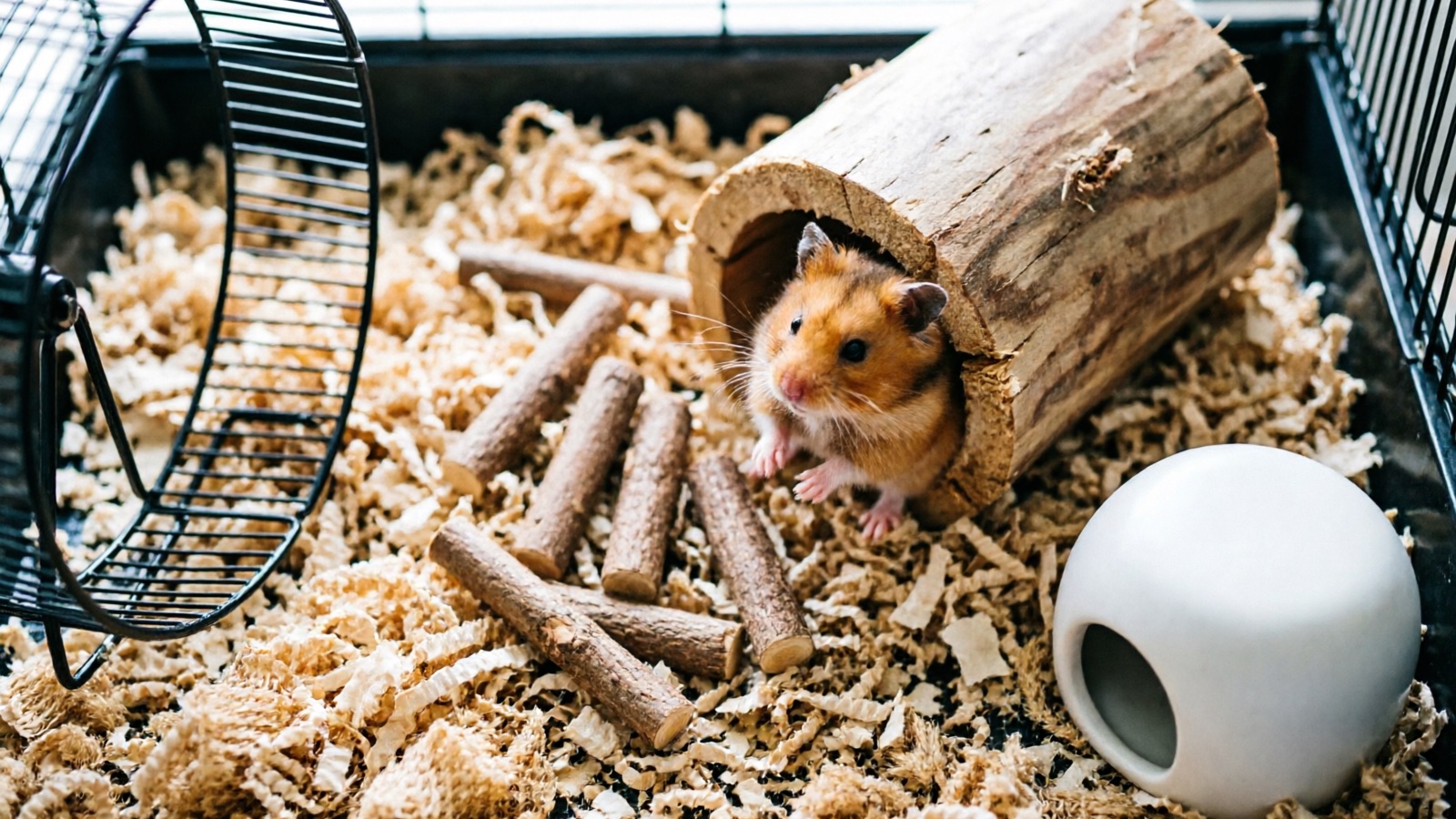
Quick Comparison: 7 Best Hamster Toys Tested
| Product | Type | Price | Best For |
|---|---|---|---|
| Niteangel Chew Toys (Carrot, 6-Pack) | Chew | $9.99 | 🦷 Best Budget Chew |
| VESPRO Timothy Hay Sticks and Balls | Chew | $9.99 | 🌿 Most Popular Chew |
| Bissap Collapsible 3-Way Tunnel | Tunnel | $8.99 | 🏃 Best Budget Tunnel |
| Hamiledyi Wooden 2-Chamber Hideout-Tunnel | Tunnel | $8.99 | 🏠 Best Tunnel-Hideout Hybrid |
| Niteangel 6-Room Maze Hideout | Hideout | $36.99 | 🏰 Best Exploration Toy |
| Wooden Seesaw Playground | Exercise | $7.15 | ⚖️ Best Budget Exercise |
| Hamiledyi Foraging Puzzle Toy | Puzzle | $9.99 | 🧩 Best Mental Stimulation |
⚠️ Important safety note before we start: Product #5 (Niteangel Maze) has multiple verified reports of hamster deaths caused by the lid mechanism. I’ve included it because it’s genuinely popular and highly rated, but I strongly recommend reading the safety section below before purchasing.
Syrian vs Dwarf: What Toys Does Your Hamster Need?
I’ve been keeping hamsters for over a decade, and the single biggest mistake I see new owners make is buying toys without considering breed size. Picking the right toy starts with knowing your hamster’s breed. Syrians and dwarfs have different size requirements, chewing habits, and activity patterns — a toy that’s perfect for one breed can be useless or even dangerous for the other.
Size is the biggest factor. Syrian hamsters (120-200g) need larger tunnels with a minimum 2-inch diameter, sturdier exercise toys that won’t tip under their weight, and bigger hideout chambers. Dwarf hamsters (30-50g) fit through smaller spaces and prefer compact, lightweight toys. I’ve seen dwarf owners buy Syrian-sized accessories that take up half the cage — and Syrian owners buy dwarf-sized tunnels their hamster can’t squeeze through.
Chewing behavior is surprisingly different between breeds too. Syrians tend to be more destructive chewers who’ll work through wooden toys quickly. Dwarfs are more cautious — many will ignore chew toys entirely if the wood is too hard. If you have a picky dwarf chewer, hay-based chews are usually more appealing than solid wood.
Activity patterns also matter. Dwarfs are generally more active and exploratory, benefiting from more complex tunnel systems. Syrians are more territorial and appreciate larger hideouts with clear sleeping chambers they can defend. For more on choosing toys by breed, our hamster toys guide covers the behavioral science behind enrichment, and our Syrian hamster chew toys review focuses specifically on chew options for larger hamsters.
What is enrichment? In the hamster world, enrichment means anything that encourages natural behaviors — chewing, burrowing, foraging, climbing, and exploring. A wheel is enrichment. A tunnel is enrichment. Even a pile of deep bedding counts. The goal is to give your hamster a cage that works like a scaled-down version of their wild habitat.
Safety note for dwarf owners: dwarf hamsters can squeeze through surprisingly small gaps. Any toy with openings needs to be checked for escape risk — if your dwarf’s head fits through a gap, the rest of their body will follow.
Best Hamster Chew Toys
Hamster teeth grow continuously — roughly 1-2mm per week. Without proper chewing outlets, teeth can overgrow to the point of piercing the jaw or preventing eating. Chew toys aren’t optional extras. They’re essential dental care.
VESPRO Timothy Hay Sticks and Balls
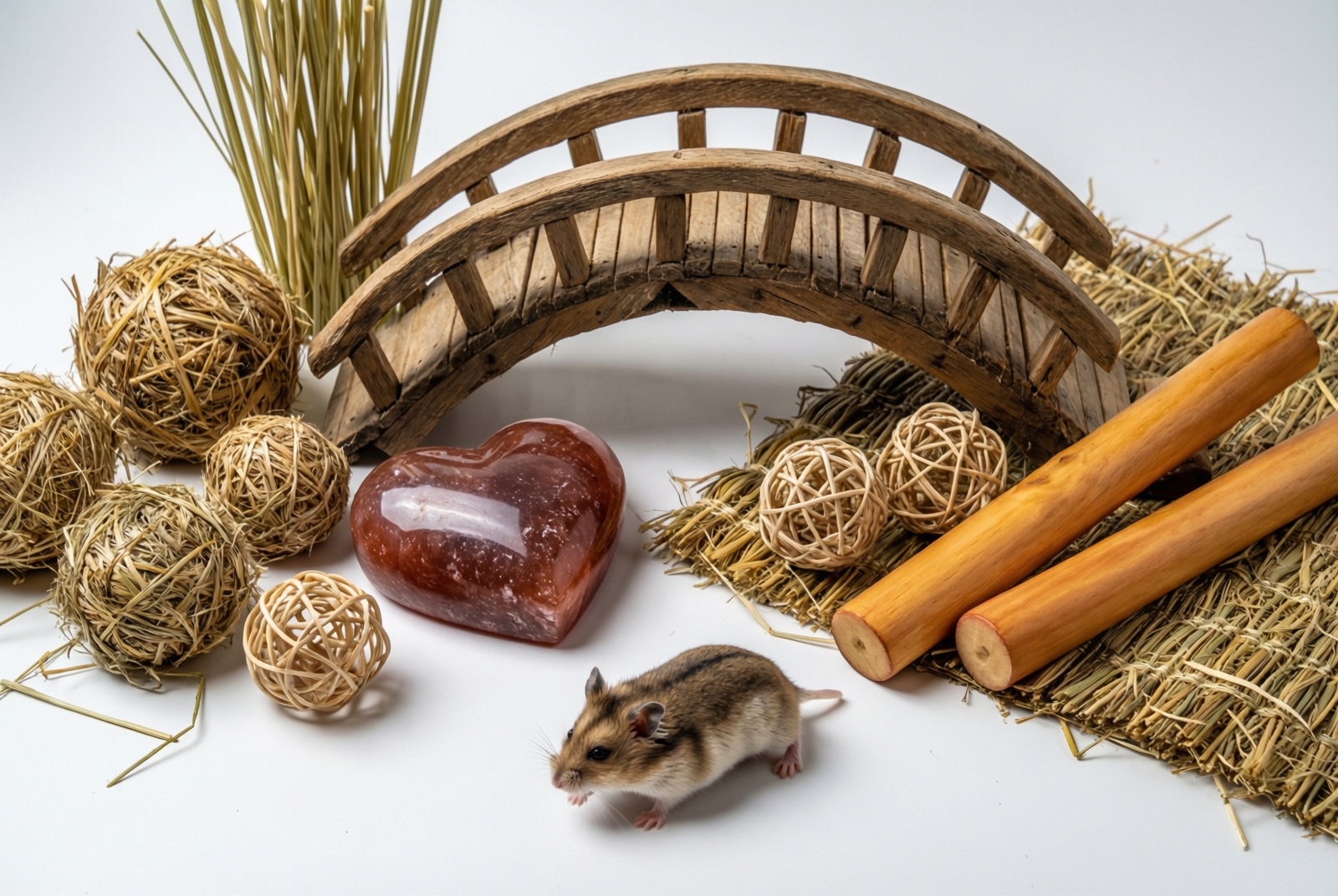
The most-reviewed chew toy on this list by a wide margin, with a 4.5-star rating at just under $10. What makes hay-based chews appealing is the texture — it’s fibrous enough to wear down teeth but soft enough that most hamsters can actually bite into it, unlike some hardwood chews that are too dense. In my experience, hamsters who reject every wooden chew in the pet store will usually go for hay-based options.
Made from natural timothy hay, these sticks and balls are safe and digestible. If your hamster accidentally swallows pieces, they pass through safely — unlike wood splinters, which can cause internal blockages. The set includes sticks, balls, and woven shapes, and one reviewer noted you get enough to “use half and rotate them out with the other half,” which is exactly the right enrichment strategy.
Safety concerns to be aware of: multiple reviewers have received moldy hay pieces. Mold is dangerous to hamsters — inspect every single piece before putting it in the cage, and discard anything that looks or smells off. Another reviewer found that the colored sticks were dyed rather than natural, which raises questions about the dye safety. And one reported a string wrapping around their guinea pig’s neck — remove any string or wire elements before offering anything from this set to your hamster.
Best use: daily chew toys for dental health. Inspect for mold before each use. Remove string or wire elements. Rotate pieces weekly to maintain novelty.
Niteangel Carrot-Shape Chew Toys (6-Pack)
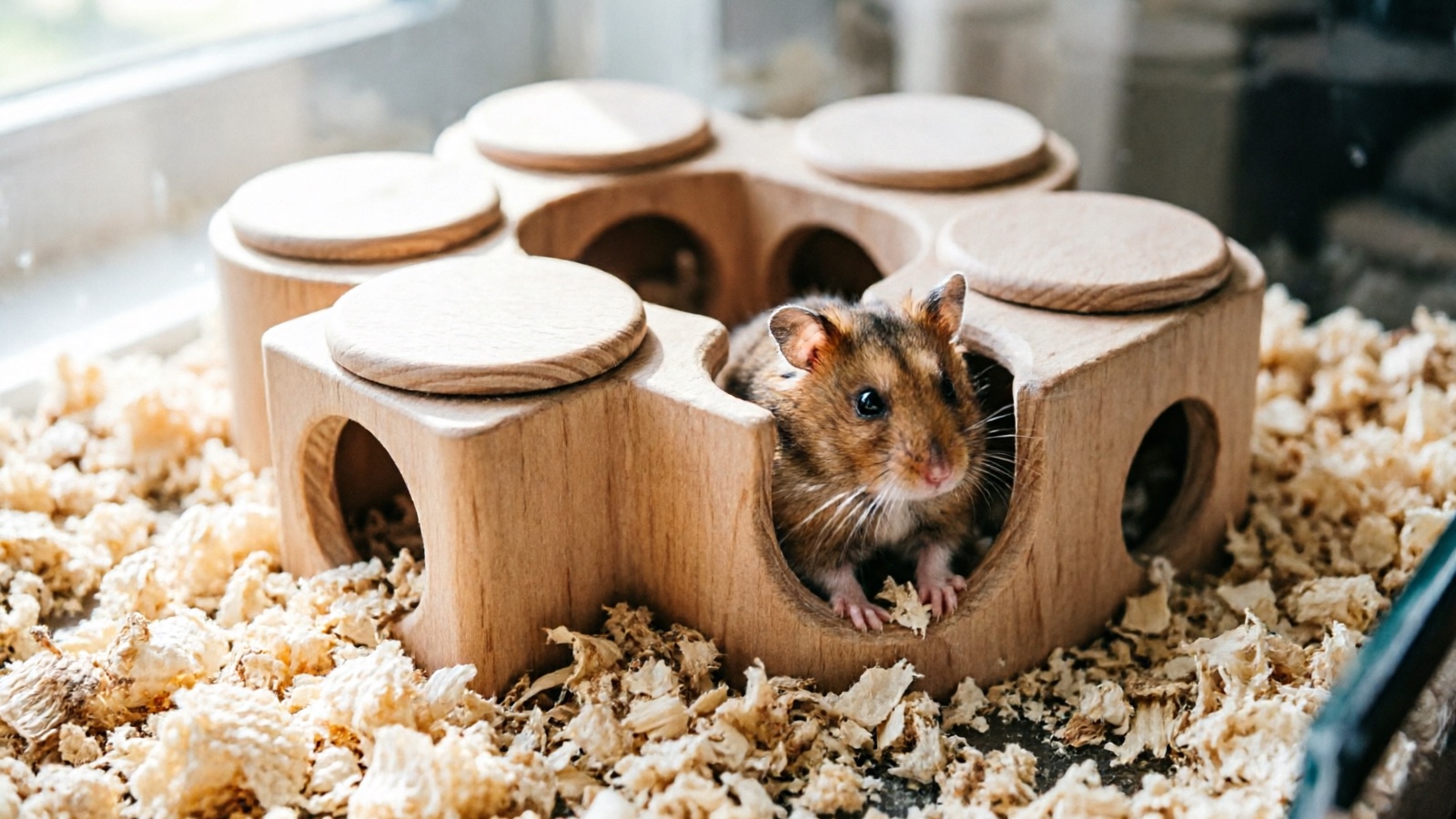
Visually, these are probably the cutest chew toys you’ll find — six little wooden carrots at under $10. The honest truth, though: many hamsters simply ignore them. One reviewer said “I gave three pieces to three of my hamsters, and NONE of them were interested.” Another called the wood “hard as a rock” and said their hamster couldn’t bite it at all.
The ones who do like them seem to really enjoy them — “one of the few wooden chews they like chewing. Small enough that my Syrian hamsters can carry down to their nest.” But the hit-or-miss engagement rate is a real pattern, not just a few outliers.
Color rubbing off is another concern. One reviewer wiped a carrot with a wet tissue and the dye stained it yellow-orange. If you do use these, don’t let your hamster ingest the dyed surface layer — sanding it lightly before first use can help.
Best use: as decorative cage enrichment that some hamsters may chew. Don’t rely on these as your primary dental care — pair with hay-based chews like the VESPRO set above.
For a broader look at cage enrichment strategies beyond chew toys, our hamster cage enrichment guide covers dig boxes, foraging setups, and other boredom-busting ideas.
Best Hamster Tunnel Toys
Tunnels tap into a hamster’s most fundamental instinct — burrowing underground. In the wild, hamsters build elaborate tunnel systems with multiple chambers for sleeping, food storage, and elimination. Cage tunnels replicate this behavior above ground, and most hamsters gravitate toward them immediately. I’ve found that adding a tunnel is usually the single most impactful change you can make to a bare cage.
Bissap Collapsible 3-Way Tunnel
The highest-rated tunnel on this list at , priced at under $9. What sets it apart is the 3-way design — three openings going in different directions, creating a branching tunnel system that encourages exploration. Hamsters naturally prefer choosing between multiple paths, so this design triggers more active exploration than a straight tunnel.
It’s collapsible, which makes cleaning straightforward. One reviewer said they hosed it off outside and “it’s good as new, no stains or smells.” The foldable design also means you can swap it out easily for your weekly toy rotation.
The main concern is size. Multiple reviewers call it “super DUPER tiny” and say it’s much smaller than the photos suggest. For dwarf hamsters, it works well. For Syrian owners, check the dimensions carefully — it’s better suited for smaller Syrians. The fabric material is another consideration: if your hamster is a heavy chewer, they may destroy the fabric quickly. A wooden tunnel is a safer choice for destructive chewers.
Hamiledyi Wooden 2-Chamber Hideout-Tunnel

At under $9 with this is a dual-purpose piece — it works as both a tunnel and a hideout, with the added bonus of a platform on top. One reviewer said their hamster “has used it to sleep inside more than once, and has no hesitation to climb on top of it to get to his food dish.”
The platform is the real value-add here. You can place a food dish or small wheel on top, effectively adding vertical space to your cage without any extra footprint. That’s useful for smaller enclosures where every inch counts.
Quality varies significantly between units. Some arrive well-fitted, while others have rough joints that need sanding and pieces that “don’t go together well.” Inspect for splinters before use. Size is also a recurring issue — size up if you have a large Syrian. The medium size is better for Syrians, small for dwarfs.
Best use: as a multi-functional cage centerpiece that combines tunnel, hideout, and platform in one. See our hamster cage setup guide for tips on arranging tunnels within your enclosure layout.
Best Hideout and Exploration Toys
A good hideout is arguably the most important single item in a hamster cage. It’s where they sleep, store food, and retreat when stressed. I always tell new owners: budget for the hideout before anything else. Multi-chamber hideouts add exploration value on top of the security function.
Niteangel 6-Room Maze Hideout — With a Critical Safety Warning
This is the most reviewed product on this list — 2 with a at around $37. The 6-room design with removable lids and connectable chambers is genuinely impressive. Multiple reviewers describe their hamsters immediately moving in and using different chambers for sleeping, food storage, and exploring. The open bottom allows burrowing underneath, and you can place a wheel on top — it’s designed to be the centerpiece of your hamster’s habitat.
⚠️ CRITICAL SAFETY WARNING — READ THIS BEFORE BUYING
Multiple reviewers report hamster deaths caused by the lid mechanism. I’m going to quote the reviews directly because this is too important to paraphrase:
“My hamster managed to lift up the lid and then accidentally wedge himself in between the top of the lid and one of the walls and it CRUSHED HIS NECK and killed him.”
“My dwarf hamster was able to push it up and he got his head stuck in between the wall and roof and passed away.”
These are not isolated incidents. At least three verified death reports exist, and additional reviewers describe near-misses. The lid sits on top without a secure fastening mechanism, and hamsters — especially dwarfs — can push it up from inside. When the lid falls back down, it can trap and crush the hamster’s neck or head.
Additional concerns include one reviewer who found bugs living inside the wood crevices, and another who attributed an upper respiratory infection to the hideout’s wood material.
If you purchase this product, secure or remove the lid before use. Options include:
- Remove the lid entirely and use it as an open-top maze (simplest solution)
- Secure the lid with non-toxic adhesive or small clips
- Place a weight on top of the lid that hamsters can’t dislodge
The exploration value of the 6-room design is real, and most hamsters love it. But the lid is a genuine safety hazard, especially for dwarf hamsters. Don’t buy this if you’re not willing to modify the lid.
Best Hamster Exercise and Puzzle Toys
Beyond the wheel — which is non-negotiable for every hamster cage — additional exercise and puzzle toys prevent boredom and stimulate natural behaviors. For wheel recommendations, see our best hamster wheel guide.
Wooden Seesaw Playground
At around $7.15 with this combines a rocking seesaw with a tunnel passage underneath. The concept is sound — hamsters naturally climb and balance, and the rocking motion adds unpredictable movement that some find engaging.
The execution is mixed. Several reviewers describe the wood as “cheap, thin pinewood” and the glue holding it together failing after minimal use. Some units arrive broken. The seesaw mechanism also doesn’t work well on deep bedding because the base sinks into the substrate, preventing the rocking motion.
Size is a persistent complaint — it works for dwarf hamsters but many Syrian owners find it too small. “I bought this for a Syrian hamster and it was much, much too small for him.”
Best use: as a cheap add-on for dwarf hamsters on shallow bedding. Not recommended as a primary exercise toy or for large Syrians.
Hamiledyi Foraging Puzzle Toy
Foraging puzzles are underrated for hamsters. In the wild, hamsters spend hours searching for food. A puzzle toy that hides treats replicates this natural behavior and provides genuine mental stimulation — which is just as important as physical exercise for preventing cage boredom.
At under $9.99 with this wooden puzzle has small compartments where you hide treats and your hamster figures out how to access them. Pets who’ve used it seem to enjoy the challenge — “our bunnies love these! It keeps them so busy!”
The main limitation is the shallow compartments. “You can fit a thin slice of carrot in the spots but that’s about it.” Stick to small treats — a single sunflower seed or a tiny piece of vegetable per compartment. The relatively low review count (64) also means less track record than other options on this list, and some units arrive with missing pieces.
Best use: as a supplemental enrichment tool. Hide small treats, rotate it in and out of the cage weekly, and don’t expect it to hold large food items. Our hamster exercise guide covers more ways to keep your hamster physically and mentally active.
How Many Hamster Cage Toys Do You Actually Need?
More toys doesn’t equal more enrichment — in fact, a cluttered cage causes stress. Hamsters need open space to run and burrow, and cramming too many accessories into an enclosure limits their natural movement patterns.
The sweet spot is 4-6 toys in the cage at any time. Here’s how I’d structure it:
Always in the cage (non-negotiable):
- A properly sized wheel (see our best hamster wheel guide)
- One hideout
- One chew toy
- One tunnel
Rotate weekly (buy 8-10 toys total, keep 4-6 in the cage):
- Additional tunnels
- Puzzle toys
- Seesaws and climbing platforms
- Dig boxes
The rotation strategy is where the real enrichment happens. I’ve been rotating my own hamsters’ toys this way for years, and it consistently re-engages them with items they’d been ignoring for weeks. When you swap out 2-3 toys each week, your hamster treats the “new” arrivals as novel objects and investigates them with fresh interest. This prevents the habituation that makes hamsters ignore toys they’ve had for months.
Avoid: anything with loose string, wire, or small detachable parts. Anything with sharp edges. Anything treated with paint or varnish unless specifically labeled pet-safe. If a toy has an opening, make sure your hamster can’t get stuck or escape through it.
For help planning your full cage layout with toy placement, our hamster cage setup guide walks through enclosure planning from substrate to accessories.