Introduction to Guinea Pig Toys
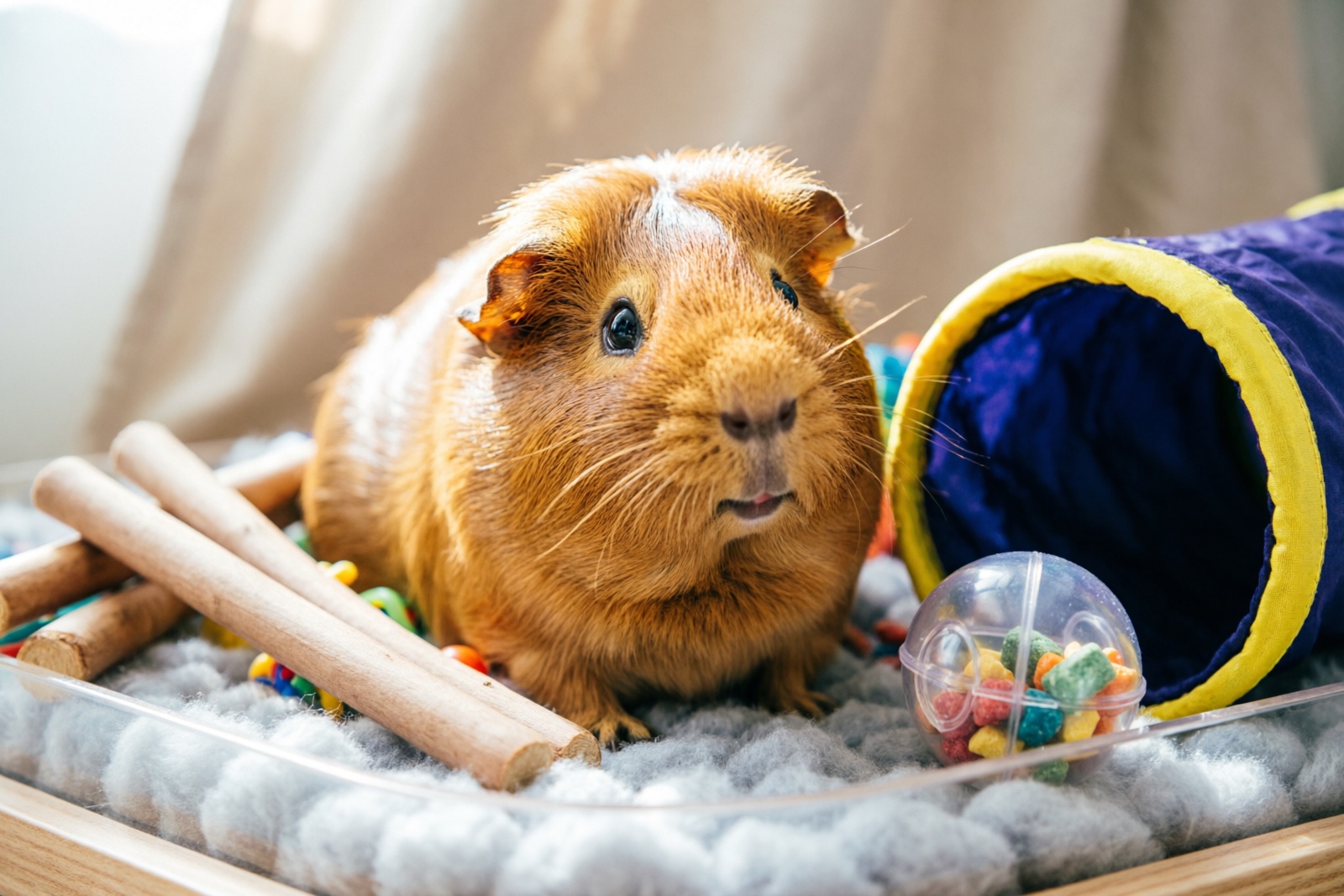
Guinea pig toys are essential for your pet’s wellbeing. Guinea pigs are intelligent, social animals that need mental stimulation to stay happy and healthy. In the wild, they spend hours foraging for food, exploring tunnels, and chewing on fibrous plants. In captivity, toys provide essential enrichment that prevents boredom, promotes dental health, and encourages natural behaviors.
Without adequate toys and stimulation, guinea pigs can develop behavioral problems like bar-biting, lethargy, and even depression. Their teeth grow continuously throughout their lives, making chew toys not just fun but medically necessary. The right toys can also strengthen the bond between you and your guinea pig through interactive play.
This guide covers everything you need to know: from budget-friendly DIY projects to well-tested commercial products. You’ll learn what guinea pigs love most, which materials are safe, and how to keep your pets entertained without breaking the bank.
For more information on how toys impact your pet’s wellbeing, see our guide on guinea pig health.
What Makes Guinea Pig Toys Different from Rabbit Toys
Guinea pigs and rabbits have overlapping needs — both need chew toys and tunnels — but there are important differences worth understanding before you shop. Guinea pigs don’t dig burrows like rabbits do, so digging-focused toys are less relevant. Guinea pigs are ground dwellers that rarely climb, so vertical structures and elevated platforms that work for rabbits are usually ignored by guinea pigs.
What guinea pigs respond to most: horizontal exploration (tunnels and mazes), foraging challenges (food puzzles and scatter feeding), social enrichment (toys that work for pairs or groups), and constant-access chewing. Their chewing habits are different too — guinea pigs tend to graze on chewable items throughout the day rather than destroying toys in focused sessions like rabbits.
Best Guinea Pig Chew Toys
Chew toys are non-negotiable for guinea pigs. Their teeth grow continuously, and without abrasive materials to wear them down, dental problems develop quickly. Overgrown teeth can prevent a guinea pig from eating properly, leading to weight loss and potentially fatal complications.
Grddaef 25 Pcs Natural Timothy Hay Toys
The Grddaef 25 Pcs Natural Timothy Hay Toys ($9.99, 4.7 stars) focuses on edible, natural materials. All 25 pieces are made from timothy hay, which means they’re completely safe if your guinea pig decides to eat rather than just chew them. I like this for guinea pigs specifically because many guinea pigs treat chew toys as snacks anyway — having an all-edible option eliminates any worry about ingesting non-food materials.
The trade-off is durability. These toys crumble and get consumed much faster than wooden alternatives. I’d recommend them as a daily-use chew option and supplement with longer-lasting wooden chew sticks for variety.
Wooden Molar Toys Set with Swing and Bridge
The Hamster Chew Toys Set ($11.99, 4.6 stars) includes interactive elements like a swing and bridge alongside traditional chew pieces. This is more than just a chew toy set — the swing and bridge encourage climbing and exploration, which adds value beyond dental health.
Some guinea pigs ignore the swing entirely, but most interact with the bridge and chew pieces. The wooden construction is durable and safe. I’ve found this set works best in larger cages where the swing and bridge have room to be properly installed without crowding the floor space.
Grddaef 20 PCS Bunny Chew Toys
The Grddaef 20 PCS Bunny Chew Toys ($9.99, 4.6 stars) offers apple wood and timothy hay pieces in a variety of shapes. While the packaging says “bunny,” these work perfectly for guinea pigs too. I’d pair this with the 25-piece timothy hay set above for maximum variety — the combination gives you 45 different chew items for under $20, which lasts most owners 2-3 months.
For information on what treats to use with foraging toys, see our guide on guinea pig food.
Tunnel and Hideout Toys
Guinea pigs are prey animals that feel secure when they have places to hide and tunnels to explore. Unlike rabbits, guinea pigs rarely climb or jump onto elevated structures, so horizontal tunnels and ground-level hideouts are what matter most.
Rypet 3-Way Collapsible Tunnel
The Rypet Guinea Pig Tunnel 3-Way Collapsible ($9.99, 4.8 stars) is a three-way tunnel that creates multiple paths and hiding spots. At under $10, it’s affordable enough to replace when it wears out. The collapsible design is practical for cage cleaning — just fold it flat and set it aside.
I’d recommend this over straight single-path tunnels because the three-way design gives guinea pigs a choice of direction, which encourages more active exploration. The included ball attachment is a nice bonus, though some guinea pigs ignore it. The material is relatively thin, so if your guinea pigs are heavy chewers, expect to replace it every few months.
Oxbow Timothy Hay Tunnel
The Oxbow Timothy Hay Tunnel ($11.59, 4.4 stars) is 100% woven timothy hay — your guinea pigs can hide in it and eat it simultaneously. Oxbow is a trusted brand in small pet care, and the quality of the weaving is consistently good.
The obvious drawback: it gets eaten. In a multi-pig household, this tunnel can disappear in under a week. I’d treat it as a periodic enrichment item rather than a permanent cage fixture. For a daily-use tunnel, the Rypet collapsible is more practical; for a special treat, the Oxbow hay tunnel is a hit.
Foraging and Puzzle Toys
Guinea pigs are natural foragers — in the wild, they spend most of their waking hours searching for and eating food. Puzzle toys that require them to work for treats engage this instinct and provide meaningful mental stimulation.
Foraging Mat for Scatter Feeding
The Rabbit Foraging Mat ($6.99, 4.3 stars) is a fleece mat with pockets where you hide pellets or vegetables. Your guinea pig sniffs out and roots through the fabric to find food. It’s the most affordable foraging toy I’ve found, and at $6.99, it’s an easy addition to any enrichment setup.
The mat is machine washable, which is essential because it will get soiled. It’s on the small side for multiple guinea pigs — if you have three or more, I’d get two mats or use it during floor time in a playpen rather than inside the cage.
Foraging Toys 6 in 1 Puzzle Set
The Foraging Toys 6 in 1 ($8.99, 4.2 stars) provides six different wooden puzzle toys with varying difficulty levels. The simpler puzzles (sliding lids) work for most guinea pigs right away; the more complex ones (ball-in-track) may require a few days of training with visible treats.
I’ve found that guinea pig responses to puzzle toys vary more than with chew toys or tunnels. Some pigs are puzzle-solvers who work through every challenge; others just wait for you to hand them the treat. If your guinea pig falls into the latter category, scatter feeding (hiding food around the cage rather than using a bowl) is a simpler alternative that achieves similar mental stimulation.
DIY Guinea Pig Toys
DIY toys are often just as engaging as commercial products, and they cost almost nothing. Making your own guinea pig toys also lets you control exactly what materials your pets are exposed to.
Toilet Paper Roll Toys
Empty toilet paper rolls are versatile, free, and completely safe when used properly:
- Simple Chew Toy: Cut a few slits in one end and fold them back to create a “flower” shape. Guinea pigs love tossing and chewing these.
- Treat Dispenser: Fold one end closed, add a few pellets or dried herbs, and fold the other end. Your guinea pig will enjoy figuring out how to get the treats.
- Tunnel System: Connect multiple rolls together to create a mini tunnel system.
Cost: Free | Time: 5 minutes | Safety: Always remove any glue residue from the roll before giving it to your guinea pig.
Cardboard Box Maze
Transform old shipping boxes into an exploration playground:
- Collect 2-3 cardboard boxes of varying sizes
- Cut doorways and windows in the sides
- Connect boxes by cutting matching holes and securing them together
- Add treats or hay inside to encourage exploration
Cost: Free | Time: 15-20 minutes | Safety: Remove any tape, staples, or printed ink that could be ingested.
PVC Pipe Tunnels
A 4-inch diameter PVC pipe from a hardware store makes an excellent, indestructible tunnel. It’s cheaper than fabric tunnels, easier to clean (just rinse), and cannot be chewed apart. A 10-foot section costs under $5.
Apple Wood Sticks
Collect branches from untreated apple trees, cut into 4-6 inch pieces, scrub clean, and bake at 250°F for 30 minutes to sterilize. Let cool completely before giving to your guinea pig. Cherry, peach, apricot, and plum woods are toxic — stick to apple, willow, or kiln-dried pine.
For more ideas on creating a comfortable environment, see our guide on guinea pig bedding.
Guinea Pig Boredom Busters
Guinea pigs are intelligent creatures that can become bored without adequate stimulation. A bored guinea pig may develop behavioral problems or health issues from inactivity.
Signs of Boredom in Guinea Pigs
- Bar-Biting or Cage Chewing: Constant chewing on cage bars indicates frustration
- Lethargy: Spending all day sleeping or hiding with little activity
- Repetitive Behaviors: Pacing, circling, or other repetitive movements
- Decreased Appetite: Less interest in food or treats
- Overgrooming: Excessive grooming leading to bald patches
- Aggression: Unusual biting or fighting with cage mates
Toy Rotation Strategy
Rotating toys is one of the most effective ways to maintain interest:
Weekly Rotation System:
- Keep 3-5 toys in the cage at any time
- Every week, remove 2-3 toys and replace with “new” ones from storage
- Clean and store removed toys for future rotation
- After 3-4 weeks, the first toys will seem “new” again
Environmental Enrichment Beyond Toys
- Scatter feeding: Replace bowl-feeding by scattering pellets and hay around the cage
- Cage layout changes: Rearrange hideouts and tunnels monthly
- Floor time: Provide regular out-of-cage exploration time in a safe, enclosed area
- Social enrichment: Guinea pigs are herd animals — a companion of their own species is the single most impactful enrichment you can provide
Floor Time Ideas
Floor time gives guinea pigs access to a larger space than their cage, which is valuable for exercise and exploration. I’d recommend at least 30-60 minutes of supervised floor time daily if your schedule allows.
Setting up a safe floor time area:
- Use a playpen or baby gates to create an enclosed space on the floor
- Place a waterproof mat or blanket underneath to protect your flooring
- Add tunnels, hideouts, and hay piles to the area
- Keep other pets (cats, dogs) out of the room
- Sit quietly nearby — some guinea pigs will approach you more confidently during floor time than inside their cage
I’ve noticed that guinea pigs who get regular floor time tend to be more confident and less skittish during handling. The larger space seems to build their confidence, and they often become more interactive with their owners during these sessions. If your guinea pig is particularly shy, floor time in a quiet room with just you present can be a great bonding opportunity.
Floor time toy suggestions:
- Set up a tunnel course using cardboard boxes and PVC pipes
- Scatter vegetables (bell pepper, cucumber, lettuce) around the area for a treasure hunt
- Provide a fresh hay pile — guinea pigs enjoy grazing from a large pile on the floor
- Rotate which toys you bring out for floor time to maintain novelty
Understanding Guinea Pig Play Behavior
Guinea pigs don’t play the same way dogs or cats do. They don’t fetch, chase, or wrestle with toys. Instead, guinea pig “play” looks more like:
- Popcorning: Joyful jumping and twisting in the air — a sign of genuine happiness that usually happens during floor time or when a new enrichment item is introduced
- Zoomies: Sudden bursts of running around the cage or play area, often after cage cleaning or when excited
- Exploring: Methodically sniffing and investigating new objects, which is why toy rotation is so effective
- Nudging and tossing: Pushing or flipping lightweight objects with their nose — some guinea pigs enjoy tossing small cardboard tubes or wicker balls
Understanding these behaviors helps you evaluate whether your enrichment efforts are working. A guinea pig that popcorns and zoomies regularly is a well-enriched guinea pig. One that spends all day in a hideout with no active periods may need more stimulation.
For tips on understanding guinea pig communication during playtime, see our article on guinea pig sounds.
How to Choose Safe Guinea Pig Toys
Because guinea pigs will chew on virtually everything, any toy in their environment must be safe to ingest in small quantities.
Safe Materials Checklist
Safe Materials:
- Natural Apple Wood: One of the safest and most appealing woods for chewing
- Untreated Willow: Soft, chewable, and completely safe
- Kiln-Dried Pine: Safe when kiln-dried (not air-dried, which retains oils)
- Unbleached Cardboard: Plain brown cardboard without inks or glossy coatings
- 100% Cotton or Fleece: For fabric toys, ensure no loose threads
- Timothy Hay: 100% safe and edible
- Natural Wicker/Rattan: Undyed and untreated only
Dangerous Materials:
- Plastic: Can cause blockages if ingested; sharp edges when broken
- Toxic Woods: Cherry, peach, plum, apricot, cedar, and pressure-treated wood
- Treated Wood: Any wood treated with chemicals, stains, or sealants
- Toxic Dyes: Brightly colored toys may contain harmful dyes
- Small Parts: Anything smaller than a guinea pig’s mouth is a choking hazard
- Wire or Metal: Can cause cuts or dental damage
- Rubber: Can be torn off and swallowed
Size and Durability
- Chew toys should be at least 3 inches long to prevent accidental swallowing
- Tunnel diameters should be 4 inches minimum for adult guinea pigs
- Hideouts should have multiple exits to prevent trapping
- Replace chew toys every 2-4 weeks depending on use
- Washable toys should be cleaned weekly
For more health-related considerations, see our comprehensive guide on guinea pig health.
Guinea Pig Toys FAQ
What toys do guinea pigs like best?
Guinea pigs generally prefer toys that serve multiple purposes: chew toys made from natural wood, tunnels for exploration and hiding, and foraging toys that dispense treats. The best approach is to offer variety — some guinea pigs love tunnels while others prefer chew toys. Observe your guinea pig’s preferences and provide more of what they enjoy.
Do guinea pigs need toys?
Yes, toys are essential for welfare. They serve three critical functions: (1) dental health — teeth grow continuously and need abrasive materials to wear them down; (2) mental stimulation — prevents boredom and associated behavioral problems; and (3) exercise — encourages movement and activity.
What are safe toys for guinea pigs?
Safe toys are made from natural, untreated materials that guinea pigs can safely chew and ingest in small quantities. The safest options include natural apple wood, untreated willow, unbleached cardboard, timothy hay products, and 100% cotton or fleece fabrics. Always avoid plastic, treated wood, toxic dyes, and small parts.
Can guinea pigs play with toilet paper rolls?
Yes, with precautions. Remove any remaining glue, avoid rolls with excessive printed ink, and supervise initial use. Cut the rolls open lengthwise to prevent guinea pigs from getting stuck, and remove them if they become soiled or excessively chewed.
What household items can guinea pigs play with?
Many household items make excellent guinea pig toys: plain cardboard boxes (create mazes and hideouts), empty paper towel rolls (chew toys and tunnels), paper bags (hideouts), old cotton socks stuffed with hay (foraging toys), and PVC pipes (durable tunnels). Always ensure items are clean, free of toxic materials, and supervised during use.
Can guinea pigs share toys with rabbits?
Some toys transfer between species, but not all. Chew toys made from safe woods (apple, willow) work for both. Tunnels work if sized appropriately — guinea pigs need at least 4-inch diameter openings. However, avoid giving guinea pig-specific toys with small openings to rabbits (who may get stuck), and don’t give rabbit climbing structures to guinea pigs (who won’t use them). Puzzle feeders generally work for both species, though guinea pigs may need simpler puzzles.
How do I get my guinea pig interested in new toys?
Some guinea pigs are cautious about new items. I’d recommend placing the new toy near their existing favorite hiding spot rather than in the middle of the cage. Rub a bit of hay or a treat on the toy to transfer a familiar scent. Don’t force interaction — let your guinea pig investigate at their own pace. In my experience, most guinea pigs will investigate a new object within 24-48 hours if left undisturbed.
How much should I spend on guinea pig toys?
DIY options using household items cost nothing. Commercial toys range from $5-15 per item, with variety packs offering the best value ($10 for 20+ toys). A reasonable monthly budget is $5-15. The key is variety and rotation rather than expensive individual items.
Providing your guinea pig with appropriate toys is one of the most important aspects of responsible care. Toys aren’t luxuries — they’re necessities for dental health, mental stimulation, and emotional wellbeing. Whether you choose to make your own toys or invest in commercial products, the key is offering variety and rotating regularly.
Remember these essential points:
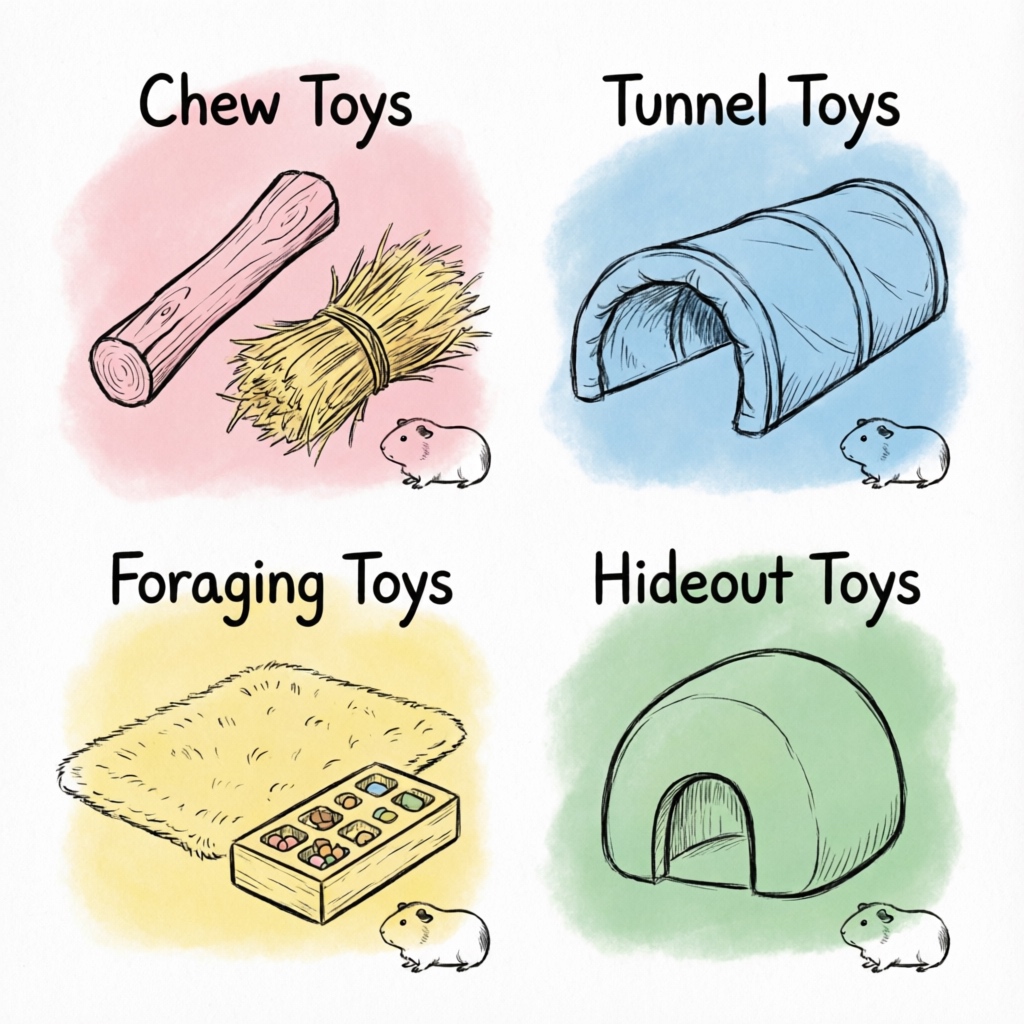
- Chew toys are non-negotiable for dental health — natural wood and hay products work best
- Tunnels and hideouts satisfy your guinea pig’s need for security and exploration
- Foraging toys provide mental stimulation and encourage natural behaviors
- Safety first: always choose natural, untreated materials and avoid plastic and toxic substances
- Rotation keeps toys interesting: switch out toys weekly to maintain novelty
For more guinea pig care information, explore our guides on guinea pig food, health, and bedding.