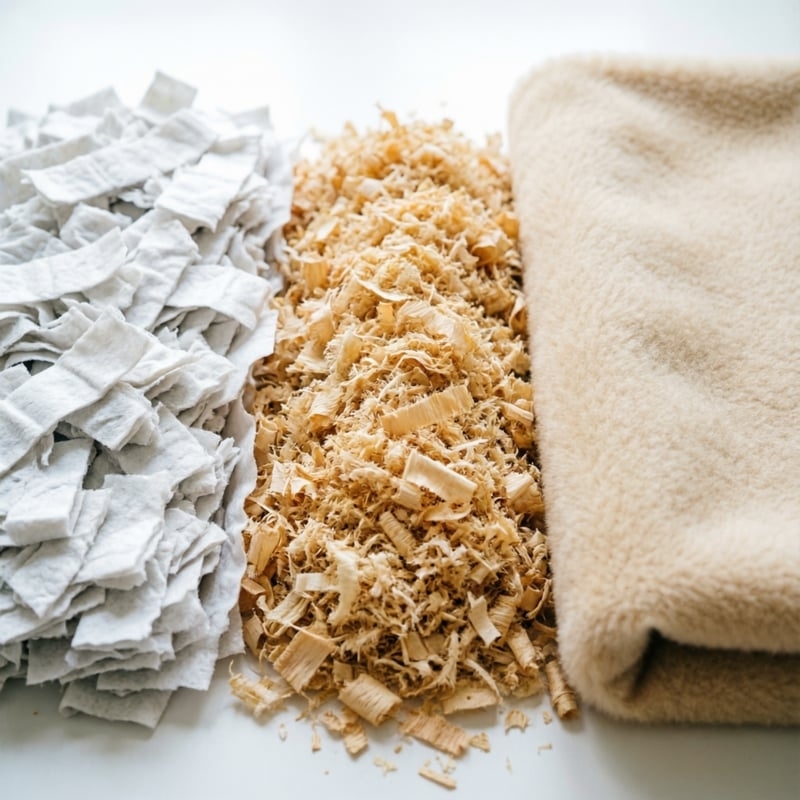
With so many bedding options available, choosing the right one for your guinea pig can feel overwhelming. This comprehensive guide examines every type of guinea pig bedding, helping you understand the pros, cons, costs, and safety considerations of each option.
Quick Navigation
- Paper-Based Bedding
- Fleece Liners
- Wood Bedding
- Hemp Bedding
- Specialty Options
- Unsafe Options to Avoid
- Comparison Chart
1. Paper-Based Bedding
Overview
Paper bedding is made from recycled paper and is one of the most popular choices among guinea pig owners. It’s soft, absorbent, and widely available.
Types
Carefresh
- Material: 100% recycled paper
- Texture: Soft, fluffy, fiber-like
- Varieties: Natural, colored, ultra, complete
- Price: $20-25/85L
Kaytee Clean & Cozy
- Material: Recycled paper
- Texture: Soft and fluffy
- Varieties: Natural, scented (avoid), colored
- Price: $15-20/85L
Oxbow Pure Comfort
- Material: Recycled paper
- Texture: Soft, shredded paper
- Price: $18-22/60L
Small Pet Select Paper
- Material: Recycled paper
- Texture: Shredded, natural
- Price: $20-25/55L
Pros
- ✅ Excellent absorbency
- ✅ Very low dust
- ✅ Soft and comfortable
- ✅ Good odor control
- ✅ Safe if ingested
- ✅ Eco-friendly (recycled)
Cons
- ❌ More expensive than wood
- ❌ Can be tracked out of cage
- ❌ Quality varies by brand
- ❌ Some brands are dusty
Best For
- Most guinea pig owners
- Pigs with respiratory sensitivities
- Owners who want convenience
- First-time guinea pig owners
Cost Analysis
- Initial cost: $15-25 per bag
- Monthly cost: $40-60 (2x4 cage)
- Annual cost: $480-720 Carefresh Paper Bedding ($18.99, 4.6⭐, 🔥)
2. Fleece Liners
Overview
Fleece bedding is a reusable fabric system consisting of fleece top layer, absorbent middle layer, and optional waterproof bottom layer.
Types
DIY Fleece
- Materials: Anti-pill fleece + U-Haul pads
- Customizable: Any size, pattern, color
- Price: $25-40 per set
Pre-Made Liners
- Brands: GuineaDad, Benekeek, PiggyBedSpa
- Features: Complete layered system
- Price: $40-80 per set
Pros
- ✅ Saves money long-term
- ✅ Extremely soft and comfortable
- ✅ Zero dust
- ✅ Eco-friendly (reusable)
- ✅ Attractive appearance
- ✅ Customizable
Cons
- ❌ Requires frequent washing
- ❌ High upfront cost
- ❌ No natural odor control
- ❌ More maintenance
- ❌ Learning curve
Best For
- Long-term owners
- Environmentally conscious owners
- Pigs with respiratory issues
- Owners willing to do laundry
Cost Analysis
- Initial cost: $40-80 per set
- Monthly cost: $10-15 (laundry)
- Annual cost: $120-180 + initial purchase
- Long-term savings: $300-500/year vs. disposable GuineaDad Fleece Liner ($29.99, 4.6⭐, 🔥)
3. Wood Bedding
Aspen Shavings
Overview
Hardwood shavings from aspen trees, safer than cedar or pine.
Pros
- ✅ Affordable
- ✅ Natural appearance
- ✅ Safe (no toxic phenols)
- ✅ Good absorbency
- ✅ Widely available
Cons
- ❌ Can be dusty
- ❌ Less absorbent than paper
- ❌ Can be tracked out
- ❌ Not as soft as other options
Best For
- Budget-conscious owners
- Owners who prefer natural materials
- Outdoor hutches (in combination)
Cost
- Monthly: $20-30
- Annual: $240-360
Wood Pellets
Overview
Compressed wood pellets, often sold as horse bedding.
Pros
- ✅ Very affordable
- ✅ Highly absorbent
- ✅ Good odor control
- ✅ Low dust
- ✅ Long-lasting
Cons
- ❌ Hard texture (not comfortable alone)
- ❌ Must be used with soft layer
- ❌ Heavy when wet
- ❌ Less available
Best For
- Very tight budgets
- Use as base layer
- Multiple pig households
Cost
- Monthly: $8-15
- Annual: $96-180 Note: Only use kiln-dried pine pellets. Never use cedar. Andy Wood Pellet Bedding ($14.99, 4.5⭐, 🔥)
4. Hemp Bedding
Overview
Made from hemp stalks, this is a premium natural bedding option with excellent performance.
Types
- Aubiose: Premium brand from France
- Small Pet Select Hemp: US-based option
- American Hemp: Another quality brand
Pros
- ✅ Superior absorbency
- ✅ Excellent odor control
- ✅ Very low dust
- ✅ Naturally antibacterial
- ✅ Long-lasting
- ✅ Sustainable crop
Cons
- ❌ Expensive
- ❌ Less available
- ❌ Coarser texture
- ❌ Must order online
Best For
- Owners prioritizing odor control
- Multiple pig households
- Small apartments/spaces
- Long-term cost-conscious owners
Cost Analysis
- Initial: $30-40/33lb bag
- Monthly: $25-35
- Annual: $300-420
- Value: Lasts 2x longer than paper Kaytee Clean & Cozy Paper Bedding ($19.95, 4.6⭐, 🔥)
5. Specialty Options
Straw
Overview
Dried grass stalks, traditionally used in outdoor hutches.
Pros
- ✅ Very cheap
- ✅ Provides warmth
- ✅ Natural
Cons
- ❌ Poor absorbency
- ❌ Can be sharp (eye injury risk)
- ❌ Molds easily
- ❌ Low comfort
Best For
- Outdoor hutches (with other bedding)
- Not recommended for indoor use
Hay (Not Recommended)
Overview
Dried grass fed to guinea pigs, sometimes used as bedding.
Why Avoid
- Should be food, not bedding
- Expensive to use as bedding
- Molds when wet
- Pigs will eat soiled hay (unhealthy)
Newspaper
Overview
Shredded or layered newspaper.
Pros
- ✅ Free or very cheap
- ✅ Recyclable
Cons
- ❌ Not absorbent enough alone
- ❌ Ink may be harmful
- ❌ Gets soggy quickly
- ❌ Not comfortable
Best For
- Emergency/temporary use only
- Under other bedding as liner
Corn Cob Bedding
Overview
Ground corn cob material.
Why Avoid
- ❌ Molds when wet
- ❌ Bacterial growth risk
- ❌ Sharp particles
- ❌ Not absorbent enough
Paper Pellets (Yesterday’s News)
Overview
Compressed paper pellets, originally cat litter.
Pros
- ✅ Very absorbent
- ✅ Low dust
- ✅ Good odor control
Cons
- ❌ Hard texture
- ❌ Expensive
- ❌ Not comfortable alone
Best For
- Litter boxes (not main bedding)
Unsafe Options to Avoid
❌ Cedar Shavings
- Danger: Contains phenols (toxic oils)
- Effects: Liver damage, respiratory issues
- Never use: Under any circumstances
❌ Pine Shavings (Non-Kiln-Dried)
- Danger: Contains phenols
- Effects: Respiratory damage, allergies
- Exception: Kiln-dried pine pellets are safe
❌ Clumping Cat Litter
- Danger: Clumps when wet
- Effects: Intestinal blockage if ingested
- Never use: Dangerous
❌ Scented Bedding
- Danger: Artificial fragrances
- Effects: Respiratory irritation, allergies
- Avoid: All scented products
❌ Sawdust
- Danger: Extremely dusty
- Effects: Respiratory infections
- Never use: Too fine
❌ Cat Litter (Clay)
- Danger: Dust, chemical additives
- Effects: Respiratory issues, impaction
- Never use: Not designed for guinea pigs
Complete Comparison Chart
| Type | Absorbency | Odor Control | Comfort | Dust | Monthly Cost | Rating |
|---|---|---|---|---|---|---|
| Paper (Carefresh) | ⭐⭐⭐⭐⭐ | ⭐⭐⭐⭐ | ⭐⭐⭐⭐⭐ | Very Low | $40-60 | ⭐⭐⭐⭐⭐ |
| Fleece | ⭐⭐⭐⭐ | ⭐⭐⭐ | ⭐⭐⭐⭐⭐ | None | $10-15 | ⭐⭐⭐⭐ |
| Aspen | ⭐⭐⭐ | ⭐⭐⭐ | ⭐⭐⭐ | Medium | $20-30 | ⭐⭐⭐ |
| Wood Pellets | ⭐⭐⭐⭐⭐ | ⭐⭐⭐⭐ | ⭐⭐ | Low | $8-15 | ⭐⭐⭐⭐ |
| Hemp | ⭐⭐⭐⭐⭐ | ⭐⭐⭐⭐⭐ | ⭐⭐⭐⭐ | Very Low | $25-35 | ⭐⭐⭐⭐⭐ |
| Straw | ⭐⭐ | ⭐⭐ | ⭐⭐ | Medium | $5-10 | ⭐ |
Choosing the Right Bedding
By Budget
Very Tight Budget:
- Pine pellets (base) + aspen (top)
- Monthly: $10-15 Moderate Budget:
- Paper bedding or quality aspen
- Monthly: $20-40 Flexible Budget:
- Hemp or premium paper
- Monthly: $30-60 Long-Term Savings:
- Fleece liners
- Initial: $50-80, then $10-15/month
By Lifestyle
Busy/Convenient:
- Paper bedding
- Change weekly, minimal maintenance Environmentally Conscious:
- Fleece or hemp
- Reusable or sustainable Multiple Guinea Pigs:
- Hemp (best odor control)
- Or paper with frequent changes Small Living Space:
- Hemp (odor control)
- Or fleece with frequent washing
By Guinea Pig Needs
Respiratory Issues:
- Fleece (zero dust)
- Or ultra-low-dust paper Sensitive Feet/Bumblefoot Risk:
- Fleece or paper
- Avoid hard materials Post-Surgery:
- Fleece (no particles)
- Or paper towels temporarily Baby Guinea Pigs:
- Fleece (safest)
- Or low-dust paper
Hybrid Approaches
Paper + Wood Pellets
- Pellets as base layer for absorbency
- Paper on top for comfort
- Best of both worlds
Fleece + Litter Box
- Fleece in main area
- Paper bedding in litter box
- Reduces overall washing
Different Areas for Different Needs
- Fleece in sleeping areas
- Paper in play areas
- Customize for your setup
Bedding Depth Guidelines
| Bedding Type | Minimum | Recommended | Ideal |
|---|---|---|---|
| Paper | 1-2” | 2-3” | 3-4” |
| Aspen | 1-2” | 2-3” | 3-4” |
| Wood Pellets | 1” | 1-2” | 2-3” |
| Hemp | 1-2” | 2-3” | 3-4” |
| Fleece | N/A | Flat | Flat |
Maintenance Schedule
| Bedding Type | Spot Clean | Full Change | Wash (Fleece) |
|---|---|---|---|
| Paper | Daily | 5-7 days | N/A |
| Aspen | Daily | 5-7 days | N/A |
| Hemp | Daily | 7-10 days | N/A |
| Wood Pellets | Daily | 7-10 days | N/A |
| Fleece | Daily | N/A | 3-4 days |
FAQ
Q: Can I mix different bedding types?
A: Yes! Many owners successfully combine types (pellets + paper, fleece + litter box).
Q: Which bedding is best for beginners?
A: Paper-based bedding like Carefresh. Safe, effective, and easy to use.
Q: How do I transition to new bedding?
A: Gradually mix new bedding with old over 1-2 weeks to let your pigs adjust.
Q: Can bedding affect my guinea pig’s health?
A: Absolutely. Poor bedding choices can cause respiratory infections, skin irritations, and foot problems.
Q: Is expensive bedding worth it?
A: Often yes. Higher quality bedding lasts longer, controls odor better, and is safer for health.
Q: How much bedding do I need?
A: For a 2x4 C&C cage: 30-40L of paper bedding, or one set of fleece liners.
Conclusion
The best bedding for your guinea pig depends on your:
- Budget - Pine pellets to hemp
- Time - Disposable vs. fleece
- Space - Odor control importance
- Guinea pig’s needs - Health considerations Our Top Recommendations:
- Overall: Paper bedding (Carefresh) - Best balance
- Budget: Wood pellets + aspen - Most economical
- Eco-Friendly: Fleece - Reusable and zero waste
- Odor Control: Hemp - Superior performance
- Health: Fleece - Zero dust Avoid cedar, pine shavings, clumping litters, and scented products. Invest in quality bedding - your guinea pigs’ health depends on it.