Introduction
The question every prospective ferret owner asks first: how long will my ferret live? The answer matters — it determines the level of commitment, the veterinary costs you’ll face, and the bond you’ll build over the years.
The average pet ferret lifespan is 6–10 years, with well-cared-for ferrets commonly reaching 7–8 years. Some exceptional individuals have lived to 14 or 15 years, though this is extremely rare. Understanding what affects ferret longevity — from genetics and diet to exercise and veterinary care — gives you the power to maximize your ferret’s years and quality of life.
This guide covers everything you need to know: average lifespan data, a ferret-to-human age conversion chart, common health problems by age, and practical steps to help your ferret live a longer, healthier life.
Average Ferret Lifespan — What to Expect
How Long Do Ferrets Live as Pets?
Pet ferrets typically live 6–10 years, with most reaching 7–8 years with standard care. Compared to other small pets, ferrets have a relatively long lifespan — significantly longer than hamsters (1.5–3 years) and comparable to guinea pigs (4–8 years).
Several factors influence where your ferret falls within this range:
- Genetics: Bloodline and breeding history play a significant role
- Diet: Species-appropriate nutrition is the single biggest controllable factor
- Veterinary care: Regular check-ups catch problems early
- Environment: Clean, safe, temperature-controlled living conditions
- Exercise: Daily out-of-cage activity prevents obesity and related diseases
Ferret Life Expectancy by Source
Different sources report slightly different numbers, but the consensus is clear:
| Source | Reported Lifespan | Notes |
|---|---|---|
| Veterinary references | 7–8 years (average) | Based on clinical data |
| Experienced owners | 5–9 years (typical) | Accounts for varying care levels |
| Shortest recorded | Under 2 years | Disease, accident, or neglect |
| Longest recorded | 14–15 years | Extremely rare, exceptional care |
The wide range reflects how dramatically care quality affects outcomes. A ferret with excellent diet, regular vet visits, and plenty of exercise can live nearly twice as long as one receiving minimal care.
Ferret Lifespan in Captivity vs in the Wild
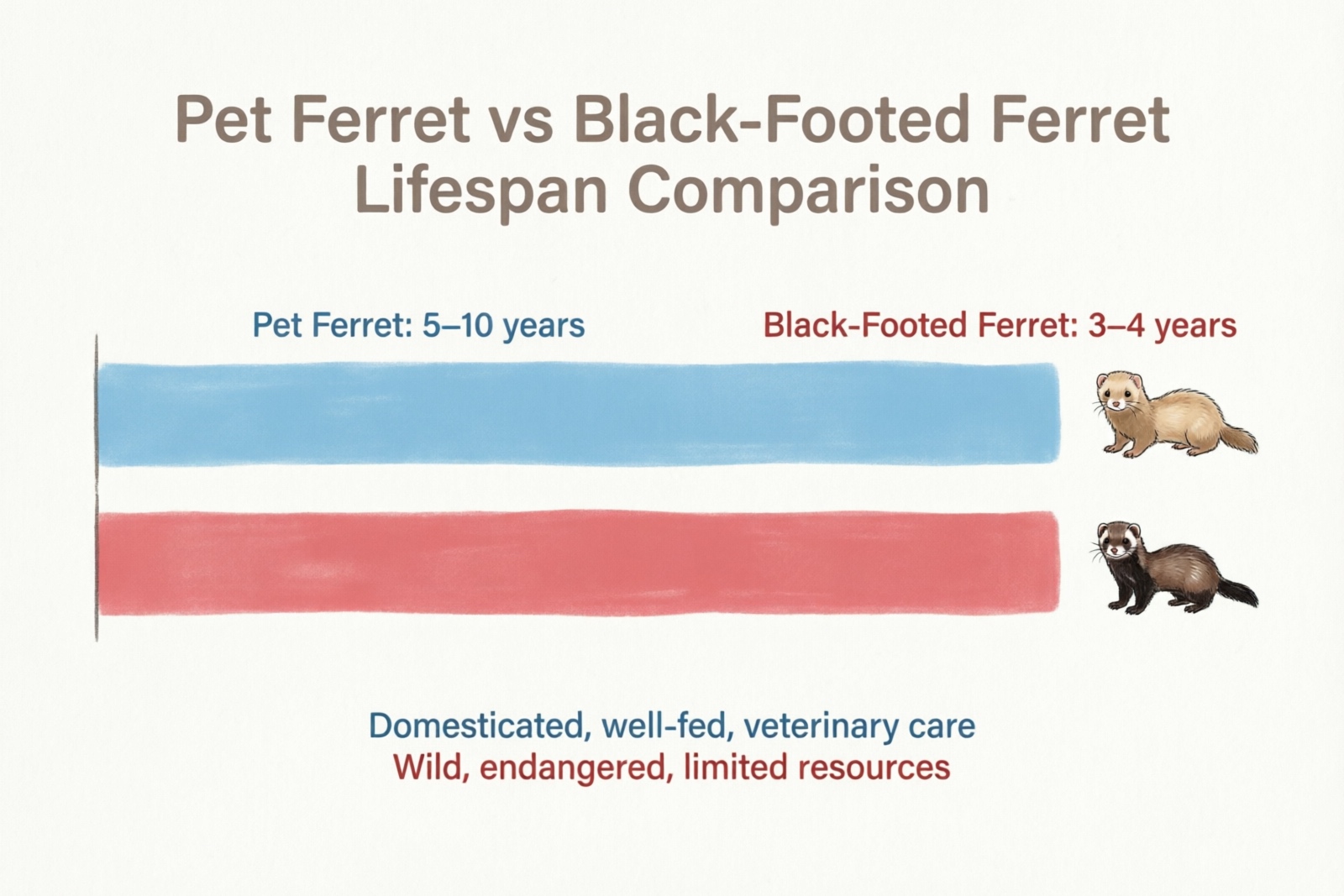
Pet Ferrets vs Wild Black-Footed Ferrets
It’s important to distinguish between pet ferrets (Mustela putorius furo) and wild black-footed ferrets (Mustela nigripes). These are completely different species:
- Pet ferrets: 6–10 years in captivity
- Wild black-footed ferrets: 1–3 years in the wild
Wild black-footed ferrets face extreme challenges that dramatically shorten their lives. They are one of North America’s most endangered mammals, and their survival in the wild is threatened by habitat loss, disease (especially sylvatic plague), and limited prey availability.
Why Captivity Extends Lifespan
The difference between wild and captive ferret lifespans comes down to four key advantages:
- Stable food supply: No risk of starvation
- Veterinary care: Disease treatment and prevention
- Safe environment: No predators
- Climate control: Protection from extreme temperatures
Ferret Age in Human Years — Conversion Chart
How to Calculate Ferret Age in Human Years
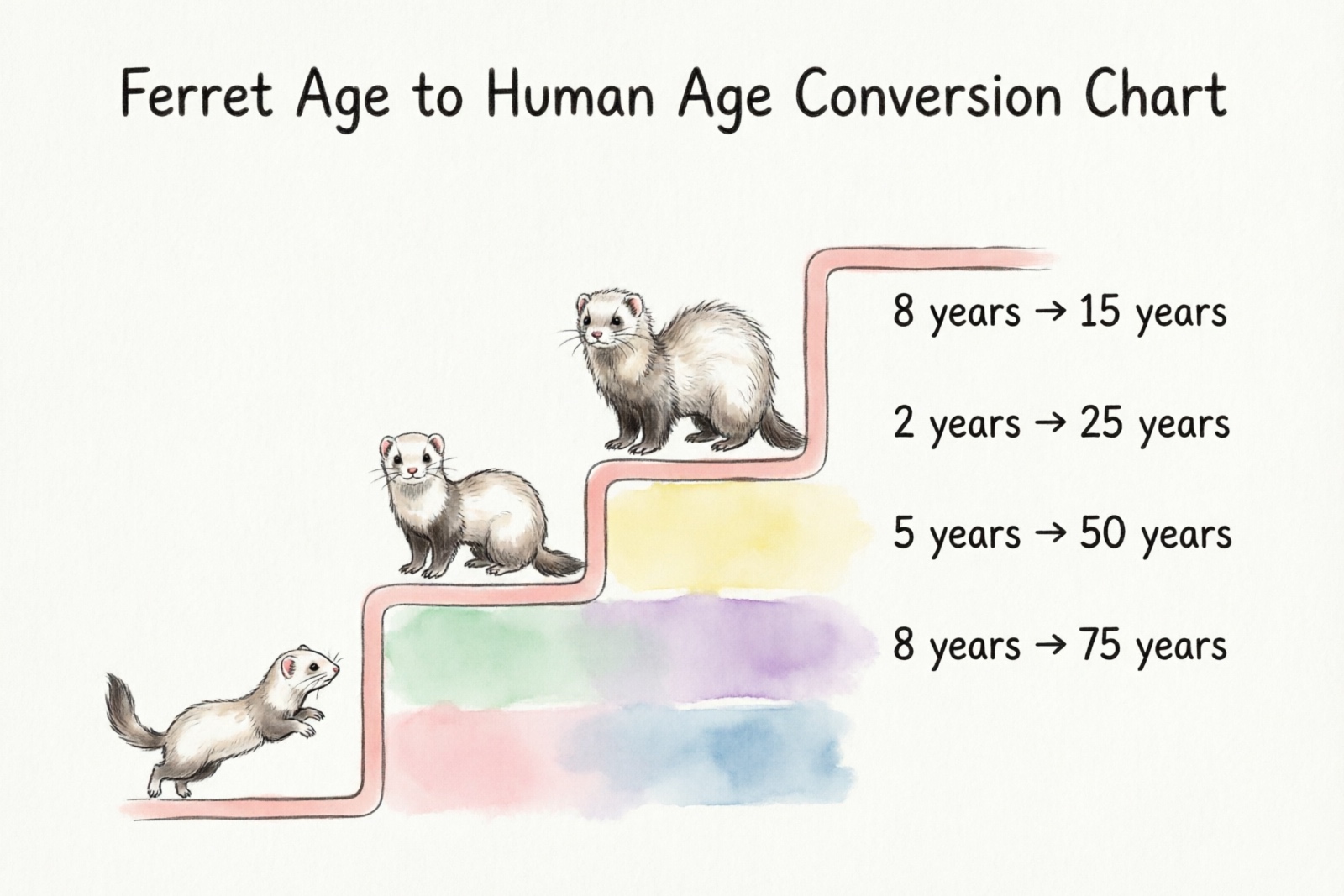
Ferrets age much faster than humans, especially in their first two years. A one-year-old ferret is already physiologically equivalent to a young adult human. By age four, most ferrets are considered senior citizens.
Understanding your ferret’s age in human terms helps you anticipate their health needs and adjust care accordingly.
Ferret Age Conversion Table
| Ferret Age | Human Equivalent | Life Stage |
|---|---|---|
| 1 month | 2–3 years | Baby (kit) |
| 6 months | 10–12 years | Juvenile |
| 1 year | 15–20 years | Young adult |
| 2 years | 25–30 years | Adult |
| 3 years | 35–40 years | Middle-aged |
| 4 years | 45–50 years | Senior |
| 5 years | 55–60 years | Senior |
| 6 years | 65–70 years | Elder |
| 7+ years | 75+ years | Elder (remarkable) |
Key insight: A ferret’s first two years represent roughly the first 30 years of a human life. This rapid early development means health problems can emerge surprisingly quickly — which is why early veterinary screening matters so much.
Factors That Affect Ferret Lifespan
Understanding what impacts your ferret’s longevity helps you focus on the factors you can control.
Genetics and Breeding
When looking at ferret lifespan by breed, genetics play a significant role. Ferrets from certain breeding operations (most notably Marshall Farms, which supplies the majority of U.S. pet ferrets) are typically spayed or neutered very early. Early neutering may influence disease risk — particularly adrenal gland disease, which affects an estimated 70% of ferrets by age 4.
Ferrets from private breeders may have different health profiles, as breeding practices vary. When choosing a ferret, ask about the breeding history and any known health issues in the bloodline.
Diet and Nutrition
Ferrets are obligate carnivores — their bodies are designed to process animal protein and fat, not carbohydrates or plant matter. Diet is arguably the most important controllable factor in ferret longevity.
A proper ferret diet should be:
- High in animal protein (minimum 35–40%)
- High in fat (15–20%)
- Very low in carbohydrates and fiber
- Free of sugar, fruits, vegetables, and grains
Feeding inappropriate foods — treats with sugar, kibble with plant fillers, or dairy products — stresses the pancreas and liver, contributing to insulinoma and other metabolic diseases.
We recommend Oxbow Essentials Ferret Food ($31.09, 4.8 stars) as a quality staple diet. It’s specifically formulated for ferrets with high animal protein and no added sugars. For a complete dietary breakdown, see our ferret diet guide.
Exercise and Mental Stimulation
Ferrets are high-energy animals that need 2–4 hours of supervised out-of-cage activity daily. In the wild, ferrets travel considerable distances while hunting — this instinct remains strong in domesticated ferrets, and denying them activity leads to both physical and psychological problems.
Without adequate exercise, ferrets become obese, depressed, and prone to behavioral problems such as cage biting and excessive scratching. Obesity itself shortens lifespan by contributing to insulinoma, heart disease, and joint problems.
Lack of mental stimulation leads to chronic stress, which suppresses the immune system and shortens lifespan. Ferrets are intelligent problem-solvers who need new challenges — rotate toys weekly, create obstacle courses, and hide treats for them to find. Provide tunnels, climbing structures, interactive toys, and opportunities for exploration. The Marshall Super Thru-Way 15-Foot Tunnel ($21.33, 4.3 stars) is a favorite among ferret owners — 15 feet of tunnel that satisfies natural burrowing instincts and provides excellent cardiovascular exercise. For more toy ideas, see our ferret toys guide.
Veterinary Care
Regular veterinary care is essential. Ferrets should have:
- Annual wellness exams with blood work (especially after age 3)
- Vaccinations for canine distemper and rabies
- Early disease screening for adrenal disease and insulinoma (blood glucose and adrenal panels)
Ferrets hide illness well, so routine blood work often catches problems before symptoms appear. For a complete care overview, see our ferret care guide.
Living Environment
A clean, appropriately sized cage with proper ventilation and temperature control directly affects longevity. Ferrets are sensitive to heat — temperatures above 80°F (27°C) can be dangerous. They also need clean litter boxes to prevent respiratory and skin infections from ammonia buildup.
For cage setup recommendations, see our ferret cage guide and our large ferret cage guide for owners who want to maximize living space.
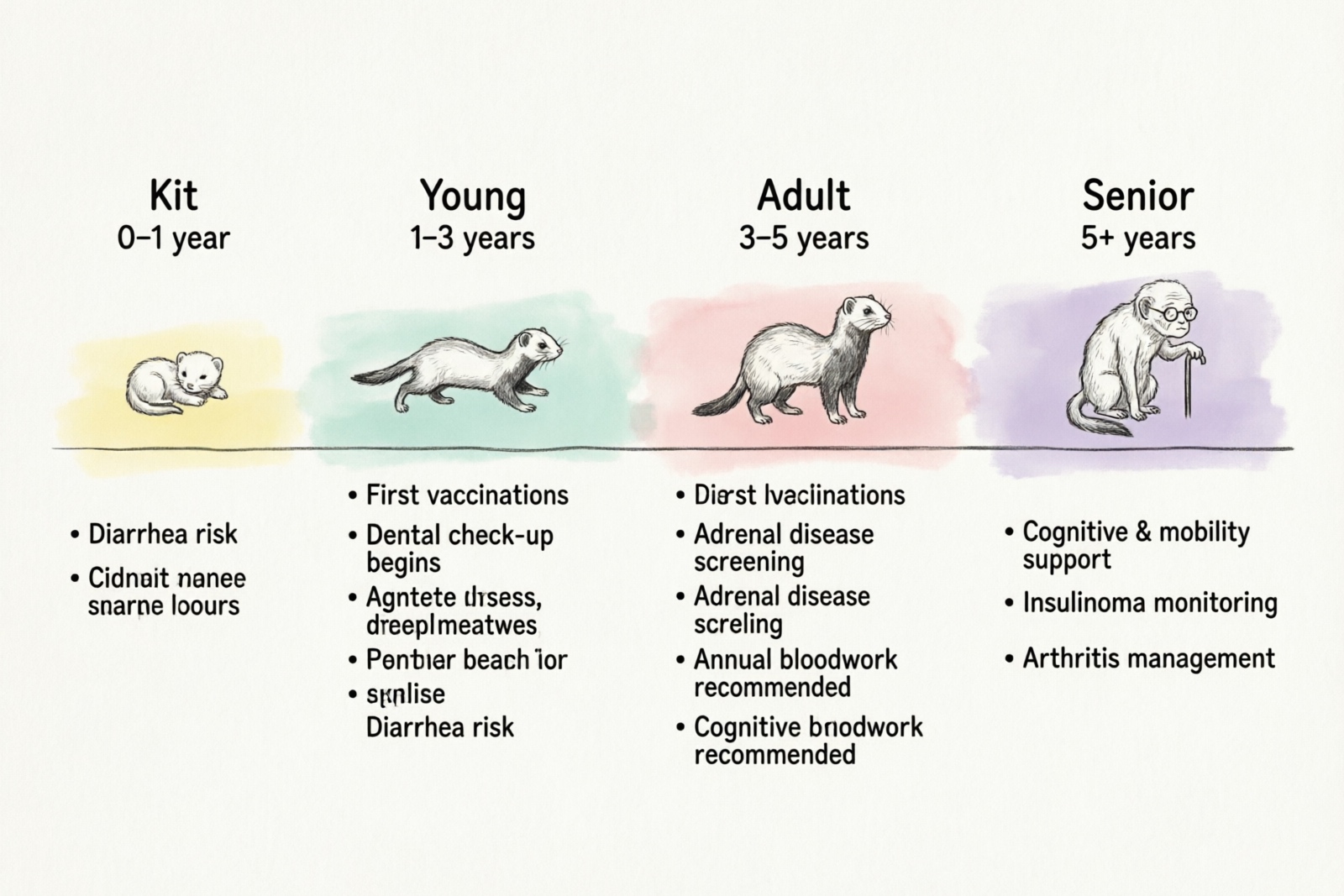
Common Ferret Health Problems by Age
Understanding which health problems affect ferrets at different life stages helps you watch for early warning signs and seek treatment promptly.
Young Ferrets (0–2 years)
Young ferrets are generally healthy but face specific risks:
- Canine distemper: Nearly 100% fatal in unvaccinated ferrets. Vaccination is essential.
- Foreign body ingestion: Ferrets chew on and swallow everything — rubber, foam, fabric. Intestinal blockages require emergency surgery.
- Epizootic catarrhal enteritis (ECE): Also called “green slime disease,” a viral infection causing severe, often bloody diarrhea. Highly contagious among ferrets.
Middle-Aged Ferrets (2–4 years)
This is when the most common ferret diseases emerge:
- Adrenal gland disease: The most prevalent ferret illness, affecting an estimated 70% of ferrets by age 4. Symptoms include hair loss (starting at the tail), swollen vulva in females, and aggressive behavior in males.
- Insulinoma: Pancreatic tumors that cause low blood sugar (hypoglycemia). Symptoms include lethargy, drooling, glazed eyes, and seizures.
- Lymphoma: Cancer of the lymphatic system, which can appear at any age but is most common in middle-aged ferrets.
Senior Ferrets (4+ years)
Senior ferrets face cumulative health challenges. By this stage, many ferrets have already been treated for at least one chronic condition. The focus shifts to comfort management and quality of life:
- Multiple organ decline: Liver and kidney function gradually decrease. Blood work every 6 months helps track these changes.
- Heart disease: Cardiomyopathy (enlarged heart) is common in older ferrets. Symptoms include lethargy, coughing, and exercise intolerance.
- Arthritis: Reduced mobility, difficulty climbing ramps or entering tubes. Provide ramps with gentle angles and easy access to food, water, and litter boxes.
- Dental problems: Tooth loss and gum disease make eating difficult. Softer food may be needed.
- Weight loss: Gradual decline despite normal appetite is common in senior ferrets and should be monitored closely with weekly weigh-ins.
The key to senior ferret care is vigilance. Small changes in behavior, appetite, or energy level often signal a developing problem. The sooner you catch these changes, the more treatment options your vet can offer.
How to Help Your Ferret Live Longer
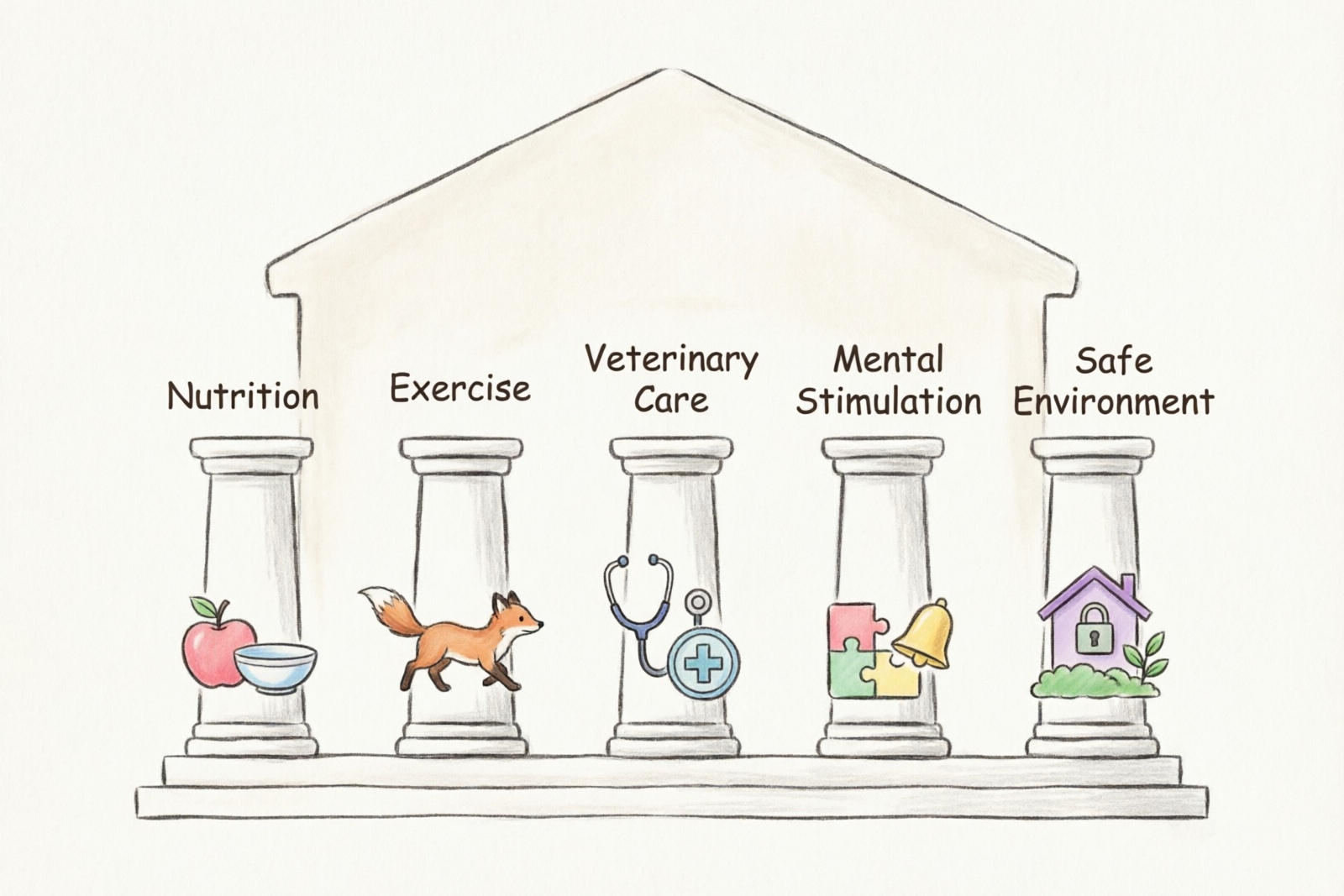
While you can’t change your ferret’s genetics, these five pillars of care are key if you want to know how to extend ferret lifespan and improve quality of life.
Feed a High-Quality Diet
Nutrition is the foundation of ferret longevity. Feed a species-appropriate, meat-based diet and avoid all sugary treats.
Oxbow Essentials Ferret Food ($31.09, 4.8 stars) provides balanced nutrition formulated specifically for ferrets. Some owners add a multivitamin supplement for additional nutritional support, though this should be discussed with your vet first. The Oxbow Natural Science Multi-Vitamin Supplement ($7.74, 4.8 stars) can fill nutritional gaps — but note that this supplement is designed for rabbits and guinea pigs, so consult your exotic vet before using it for ferrets.
Provide Daily Exercise and Enrichment
Ferrets need substantial daily activity to stay physically and mentally healthy:
- 2–4 hours minimum of supervised out-of-cage time daily
- Tunnels and tubes for burrowing instinct — the Marshall 15ft Tunnel ($21.33) provides excellent exercise
- Outdoor walks using a proper ferret harness — the Marshall Ferret Harness & Lead Set ($12.99, 4.2 stars) is designed specifically for ferrets’ body shape
- Interactive toys — the Bouncy Rubber Balls with Bell ($9.99, 4.5 stars) keep ferrets entertained and mentally stimulated
Maintain a Clean Living Environment
A clean cage prevents respiratory infections, skin problems, and stress-related illness:
- Scoop litter boxes daily, fully clean weekly
- Use a corner litter box — the Rat Small Litter Box (10”x8”) ($22.99, 4.3 stars) fits well in ferret cages and its corner design saves space — although marketed for rats, this compact size works well for ferrets too.
- Control temperature — keep below 75°F (24°C) year-round
- Provide fresh water daily and wash bowls regularly
For cage setup ideas, see our ferret cage setup guide.
Regular Grooming and Health Checks
Consistent grooming keeps your ferret’s skin, coat, and teeth healthy:
- Bathing: Once every 1–2 months with ferret-safe shampoo. Over-bathing strips natural oils. The Petpost Ferret Shampoo ($19.99, 4.6 stars) is designed for ferret skin pH — however, many user reviews mention using it on dogs, so verify it meets your ferret’s needs before purchasing.
- Nail trimming: Every 2–3 weeks
- Ear cleaning: Check weekly, clean as needed
- Dental checks: Monitor for tartar and tooth loss, especially in seniors
Schedule Regular Vet Visits
- Annual exams with blood glucose and adrenal panels (starting at age 3)
- Vaccination updates for canine distemper and rabies
- Immediate vet visit if you notice hair loss, weight changes, lethargy, or seizures — these can indicate adrenal disease or insulinoma
Male vs Female Ferret Lifespan
Do Male or Female Ferrets Live Longer?
The difference between male (hob) and female (jill) ferret lifespans is small but measurable:
- Males: Average 7–10 years
- Females: Average 6–9 years
Males tend to live slightly longer, but both sexes face serious breed-specific health risks.
Key Differences
| Factor | Male (Hob) | Female (Jill) |
|---|---|---|
| Average Lifespan | 7–10 years | 6–9 years |
| Weight | 2–4 lbs | 1.5–2.5 lbs |
| Major Health Risks | Prostate disease | Aplastic anemia (unspayed) |
| Behavioral Trait | More laid-back | More active, curious |
Critical warning for females: Unspayed female ferrets that go into heat but do not mate develop aplastic anemia, a life-threatening condition caused by sustained high estrogen levels. This is fatal without veterinary intervention. All pet female ferrets should be spayed — and in the U.S., most are spayed before leaving the breeder or pet store.
Oldest Ferrets Ever Recorded
Record-Breaking Ferrets
The longest verified ferret lifespans reach 14–15 years. While extremely uncommon, these cases demonstrate what’s possible with exceptional care.
Common factors among long-lived ferrets include:
- Species-appropriate diet — high-quality meat-based food throughout life
- Large living space — roomy cages with daily free-roaming time
- Regular veterinary care — annual exams and prompt treatment of health issues
- Low-stress environment — stable routine, minimal environmental stressors
- Genetic luck — no predisposition to early-onset adrenal disease or insulinoma
What We Can Learn from Long-Lived Ferrets
The longest-lived ferrets tend to have owners who are deeply committed to preventive care. They don’t wait for symptoms to appear — they schedule regular blood work, maintain strict diets, and catch problems early. This proactive approach is the single biggest differentiator between ferrets that live 5 years and those that live 10+.
What Do Ferrets Usually Die From?
Most Common Causes of Death
Understanding the leading causes of ferret death helps you focus on prevention:
- Adrenal gland disease: The most common cause of death in pet ferrets. Tumors on the adrenal glands produce excess hormones, leading to hair loss, weight loss, and eventually organ failure.
- Insulinoma: Pancreatic tumors cause dangerous drops in blood sugar, leading to seizures, coma, and death if untreated.
- Lymphoma: Cancer of the lymphatic system, which can appear at any age.
- Heart disease: Cardiomyopathy becomes increasingly common in ferrets over age 5.
- Organ failure: Multi-organ decline in senior ferrets.
Preventable Causes
Several common ferret deaths are entirely preventable with proper care and awareness:
- Heatstroke: Ferrets cannot tolerate temperatures above 80°F (27°C). They lack sweat glands and cannot cool themselves effectively. Never leave a ferret in a hot car or unventilated room. Signs of heatstroke include panting, lethargy, bright red gums, and collapse. This is a medical emergency — cool the ferret gradually with cool (not cold) water and seek immediate veterinary care.
- Intestinal blockages: Ferrets chew on and swallow almost anything — rubber, foam erasers, fabric, plastic bags. Swallowed objects can cause fatal intestinal blockages. Ferret-proof your home by removing small objects, keeping shoes secured, and supervising play time. Blockages require emergency surgery and are often fatal if not caught within hours.
- Canine distemper: Nearly 100% fatal in unvaccinated ferrets. This preventable disease spreads through airborne exposure and contaminated surfaces. Vaccinate on the schedule your vet recommends.
- Accidents: Ferrets are small, quiet, and curious — they can be stepped on, crushed under reclining furniture, or escape through surprisingly small gaps. Always know where your ferret is when they’re out of their cage.
Do Ferrets Make Good Pets?
The Reality of Ferret Ownership
Ferrets can make wonderful pets for the right owner — but they are not for everyone. Their combination of intelligence, energy, and specific care requirements means they demand more time, attention, and money than many people expect.
Pros: Highly intelligent, playful and entertaining, form strong bonds with owners, can be litter-box trained, and have a relatively long lifespan for a small pet.
Cons: Require 2–4 hours of daily out-of-cage time, veterinary costs are high (especially for adrenal surgery and insulinoma treatment), they have a distinct musky odor, and their 6–10 year lifespan means saying goodbye sooner than with a dog or cat.
Time and Financial Commitment
Consider these realistic costs before getting a ferret:
- Daily time commitment: 2–4 hours of supervised activity and interaction
- Annual veterinary costs: $200–500 for routine care
- Emergency surgery costs: $500–2,000+ for adrenal surgery or foreign body removal
- Lifespan commitment: 6–10 years of consistent care
Ferrets are rewarding pets for owners who have the time, budget, and understanding of their needs. If you can provide that, a ferret will be one of the most entertaining and affectionate small pets you’ll ever own.
Common Questions About Ferret Lifespan (FAQ)
How long do ferrets live as pets?
The average pet ferret lifespan is 6–10 years, with most living 7–8 years. With excellent care, some ferrets reach 10–12 years, and the rarest cases exceed 14 years.
What Is the Oldest Ferret on Record?
The oldest verified ferrets reached 14–15 years. These exceptional cases involved ferrets receiving top-tier diet, veterinary care, and environmental enrichment throughout their lives.
Do male or female ferrets live longer?
Males live slightly longer on average (7–10 years vs. 6–9 years for females). However, the difference is small, and individual genetics and care quality matter far more than sex.
How can I tell if my ferret is getting old?
Common signs of aging in ferrets include reduced activity levels, gradual weight loss, thinning or dulling coat, increased sleeping, difficulty climbing or navigating, and changes in appetite. Annual blood work after age 3 is the best way to monitor internal aging.
What Do Ferrets Die From?
The most common causes of death are adrenal gland disease and insulinoma, followed by lymphoma, heart disease, and organ failure in senior ferrets. Many deaths from intestinal blockages and heatstroke are preventable.
How long do ferrets live in captivity vs in the wild?
Pet ferrets live 6–10 years in captivity, while wild black-footed ferrets survive only 1–3 years in the wild due to predators, disease, and food scarcity. Note that these are different species — domestic ferrets should never be released into the wild.
Conclusion
Ferrets live an average of 6–10 years, with their quality of life depending heavily on the care they receive. While genetics play a role, the five pillars of longevity — proper diet, daily exercise, clean environment, regular grooming, and consistent veterinary care — are entirely within your control.
Five actions to start today:
- Feed a high-quality, meat-based diet with no sugar or plant fillers
- Provide 2–4 hours of supervised out-of-cage activity daily
- Keep the cage clean and temperature-controlled (below 75°F)
- Schedule annual vet exams with blood work starting at age 3
- Learn the early warning signs of adrenal disease and insulinoma
A well-cared-for ferret can be one of the most rewarding small pets you’ll ever own. While their years are shorter than a dog’s or cat’s, the bond you build and the joy they bring make every day count.