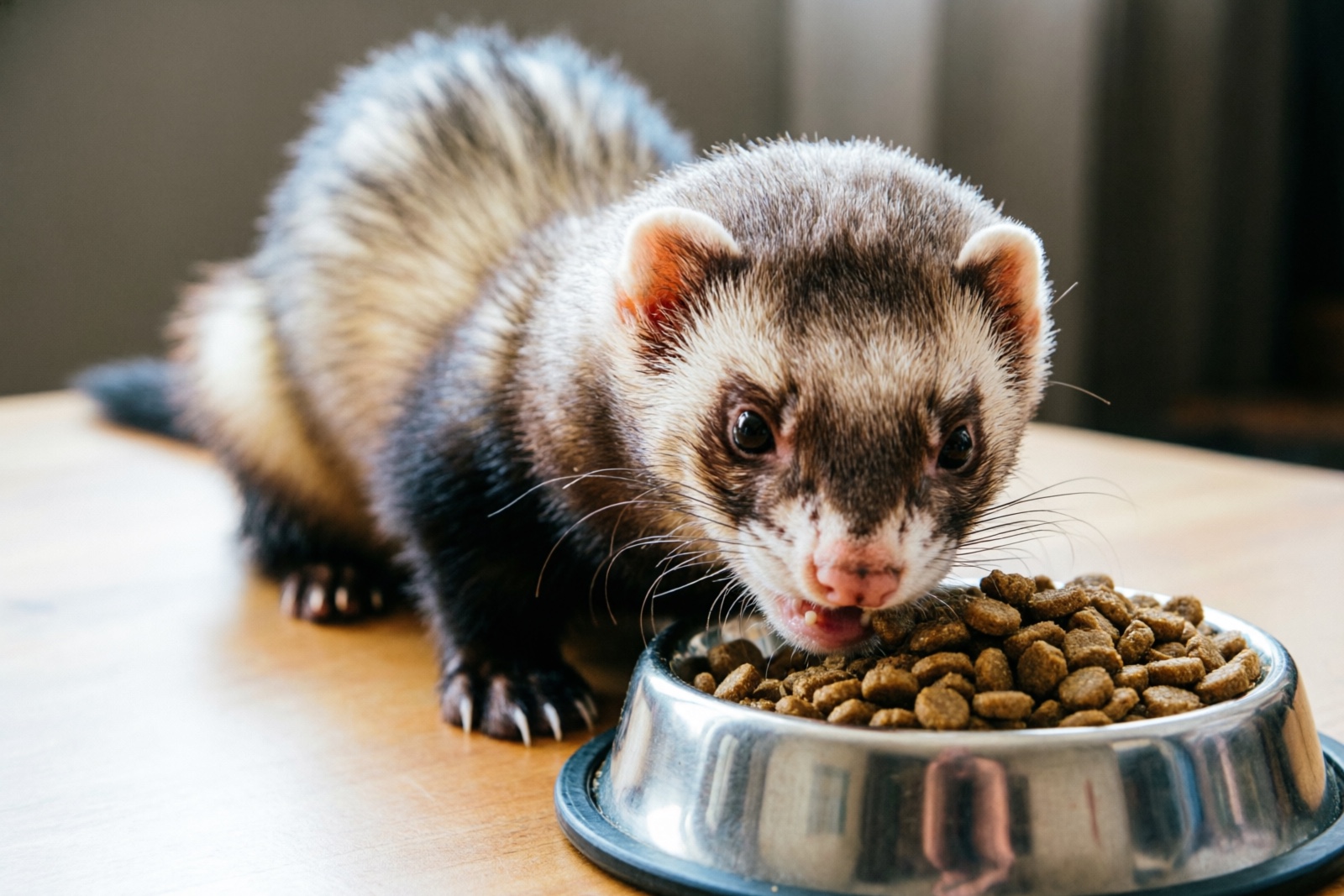
Ferrets are obligate carnivores—they require a diet based entirely on animal protein and fat. Unlike omnivores (like humans or dogs) that can eat plants and meat, ferrets are designed to eat only meat. Understanding their unique nutritional needs is essential for keeping your ferret healthy.
Check our Ferret Toys Guide for play ideas after feeding time.
What Is an Obligate Carnivore?
Dietary requirements are the same for all ferret color varieties — a Sable Ferret needs the same meat-based diet as any other ferret.
Ferret Digestive System
Ferrets are designed to eat meat:
- Short digestive tract: Food passes through quickly (3-4 hours)
- No cecum: Cannot digest plant matter or fiber
- Simple stomach: Designed for meat, not grains
- High metabolic rate: Need frequent feeding
What this means:
- Cannot digest fruits, vegetables, grains, dairy
- Require high protein, high fat diet
- Need frequent meals (high metabolism)
Key: Ferrets are NOT like dogs or cats. Their digestive system is specialized for meat-only diet. Feeding inappropriate foods causes serious health problems.
Natural Diet
Wild ancestors (European polecat):
- Hunt rabbits, rodents, birds
- Eat entire prey: meat, organs, bones
- High protein, high fat, low carbohydrate
Pet ferrets:
- Don’t hunt live prey (usually)
- Need diet that mimics natural prey composition
Nutritional Requirements
Protein
Requirement: 30-40% of diet (minimum 32%, ideally 35-40%) Source: Animal protein only (meat, organs, eggs)
Why it matters:
- Muscle maintenance and growth
- Immune function
- Organ health
- Enzyme production
Best sources:
- Chicken, turkey, duck — chicken is a key protein source; learn can ferrets eat chicken safely for preparation tips
- Rabbit, game birds
- Beef, lamb (occasionally)
- Eggs (cooked or raw)
- High-quality meat-based kibble
Quality matters: Not all protein is equal. Animal-based protein is digestible; plant protein is not.
Fat
Requirement: 15-20% of diet (minimum 18%, ideally 18-22%) Source: Animal fat, fatty meats
Why it matters:
- Primary energy source (ferrets use fat, not carbs, for energy)
- Healthy skin and coat
- Organ function
- Hormone production
Best sources:
- Chicken fat, turkey fat
- Fatty meats (duck, dark chicken)
- Fish oil (supplement)
- High-quality kibble with animal fat
Ferrets need fat: Don’t choose “low-fat” foods. Fat is their main energy source.
Carbohydrates
Requirement: MINIMAL (less than 3-5%)
Why limit carbs:
- Ferrets cannot digest carbohydrates efficiently
- Excess carbs → blood sugar spikes → insulinoma (pancreatic tumor) risk
- Fiber cannot be digested (no nutritional value)
Sources to AVOID:
- Grains (corn, wheat, rice)
- Vegetables
- Fruits
- Sugars
Critical: High-carb diets are linked to insulinoma (cancer of pancreas) in ferrets. Keep carbs to absolute minimum.
Fiber
Requirement: NONE
Reality: Ferrets have no cecum and cannot digest fiber
- Fiber provides no nutrition
- High fiber foods reduce absorption of nutrients
- Ferrets don’t need “roughage”
Taurine
Requirement: Essential amino acid (must be in diet) Source: Meat, especially heart meat
Why it matters:
- Heart function
- Eye health
- Reproduction
Note: Most meat-based diets contain adequate taurine. Supplement only if diet is deficient.
Food Options
1. High-Quality Ferret Kibble
Most common choice for pet ferrets
What to look for:
- Protein: 35-40%+ (from animal sources)
- Fat: 18-22%
- Fiber: Less than 3%
- First 3-5 ingredients: Named meats (chicken, turkey, etc.)
- No grains or minimal grains
- No vegetables, fruits, or sugars
Recommended Kibbles:
- Wysong Ferret Epigen 90
- Protein: 60%, Fat: 16%, Fiber: 3%
- Grain-free, starch-free
- Price: $25-35/bag
- Buy on Amazon - $31.09
- Orijen Cat & Kitten (Yes, cat food—but high quality)
- Protein: 40%+, Fat: 20%
- Grain-free, high meat content
- Price: $30-45/bag
- Buy on Amazon - $32.99
- Stella & Chewy’s Freeze-Dried Raw (rehydrated)
- High protein, grain-free
- Can be fed dry or rehydrated
- Price: $25-40/bag
- Buy on Amazon - $9.97
- Marshall Premium Ferret Diet
- Protein: 38%, Fat: 18%
- Common, available
- Price: $15-25/bag
- Buy on Amazon - $29.99
Tip: Some high-quality cat foods are better than cheap ferret foods. Look at ingredients, not the label “ferret food”.
2. Raw Diet (Whole Prey or frankenprey)
Most natural diet
What it is:
- Whole prey: Mice, chicks, rats (entire animal)
- Frankenprey: Mix of meat, organs, bones to mimic whole prey
Benefits:
- Most natural
- Optimal nutrition
- Dental health (chewing bones)
- No fillers, grains, or carbs
What to feed:
- Meat (60-70%): Chicken, turkey, rabbit, duck
- Organs (10-15%): Liver, kidney, heart
- Bones (15-25%): Raw bones for calcium and chewing
- Supplements: As needed (consult knowledgeable vet)
Example diet:
- Day 1: Chicken thigh with bone
- Day 2: Chicken liver + chicken heart
- Day 3: Whole prey mouse or chick
- Day 4: Turkey meat + bone
- Day 5: Rabbit meat + organs
Safety:
- Use only human-grade or reputable prey supplier
- Handle raw meat safely (wash hands, surfaces)
- Marshall DUK Soup is a convenient supplement for ferrets needing to gain weight or as a topper for picky eaters
- Freeze prey 2 weeks before feeding (kills parasites)
- Thaw in refrigerator before feeding
Pros:
- Optimal nutrition
- Dental health
- Natural
Cons:
- More work
- Need freezer space
- Squeamish factor
- Need to balance correctly
Research required: Raw feeding requires knowledge to ensure balanced diet. Consult with ferret-savvy vet or experienced raw feeders.
For sick or recovering ferrets, Oxbow Carnivore Care is a critical care formula that provides complete nutrition when your ferret can’t eat solid food.
3. Freeze-Dried Raw
Convenient raw alternative
What it is: Raw meat freeze-dried to preserve nutrients
How to feed:
- Dry (some brands)
- Rehydrated with water (recommended)
Benefits:
- Raw nutrition, convenient form
- Long shelf life
- No freezer needed
Recommended:
-
Wysong Archetype Chicken (freeze-dried chicken, grain-free)
-
Price: $25-40
-
Primal Freeze-Dried
-
Price: $30-45
4. Wet/Canned Food
Occasional or supplemental
What to look for:
- High meat content
- Grain-free
- No vegetables/fruits added
Pros:
- Hydration
- Palatable
Cons:
- Doesn’t clean teeth
- More expensive per calorie
- Spoils quickly if left out
Recommended:
- High-quality grain-free cat wet food
- ZiwiPeak (air-dried, very high quality)
Foods to AVOID
Never feed these:
- ❌ Fruits: Grapes/raisins (toxic), all fruits (sugar, carbs)
- ❌ Vegetables: All vegetables (indigestible, some toxic)
- ❌ Dairy: Milk, cheese, yogurt (lactose intolerant)
- ❌ Grains: Bread, cereal, rice, pasta (indigestible, carbs)
- ❌ Sugary foods: Candy, chocolate (toxic), sweets
- ❌ Dog food: Not enough protein, too many carbs
- ❌ Cheap ferret foods: High in grains, low in quality meat
- ❌ Cooked bones: Splinter, cause internal injury
- ❌ Onions, garlic: Toxic to ferrets
- ❌ Xylitol: Artificial sweetener (toxic)
Chocolate and grapes/raisins are TOXIC and can be fatal. Keep all sweets away from ferrets.
Feeding Schedule
How Often to Feed
Ferrets have fast metabolism:
- Food passes through in 3-4 hours
- Need frequent access to food
Kibble-fed ferrets:
- Free-feed: Leave kibble available 24/7
- Ferrets eat small amounts frequently
- Monitor to ensure eating
Raw-fed ferrets:
- 2-3 meals per day
- Don’t leave raw meat out (spoilage)
- Remove uneaten after 30-60 minutes
Wet food:
- 2-3 times per day
- Remove uneaten after 1-2 hours (spoilage)
How Much to Feed
Varies by ferret:
- Age (young ferrets eat more)
- Activity level
- Metabolism
- Size
Kibble:
- Average adult: 1/4 - 1/2 cup per day
- Monitor weight, adjust as needed
Raw:
- 5-7% of body weight per day
- Example: 1.5 lb (680g) ferret: 34-48g food per day
- Adjust based on body condition
Monitor weight: Feel ribs—should be palpable with slight fat covering. If too thin, increase food. If overweight, decrease slightly.
Water
Fresh water always available:
- Water bottle or heavy ceramic bowl
- Change daily
- Some ferrets prefer bowls (easier to drink)
- Check bottle daily that it works
Treats
Safe Treats (Occasional)
In moderation (treats should be less than 5% of diet):
- ✅ Cooked egg (scrambled, hard-boiled)
- ✅ Small pieces of cooked meat (chicken, turkey)
- ✅ Freeze-dried meat treats
- ✅ Marshall Furo-Vite (ferret vitamin supplement, use sparingly)
- ✅ Raw egg (occasionally, from trusted source)
- ✅ Small piece of raw meat (if feeding raw)
Unsafe Treats
- ❌ Fruits (sugar, carbs)
- ❌ Vegetables (indigestible)
- ❌ Dairy (lactose intolerance)
- ❌ Commercial treats with sugar/grains
- ❌ Chocolate, candy (toxic)
- ❌ Dog treats (usually grain-based)
Rule: If it’s not meat or egg, don’t feed it.
Transitioning Foods
How to Switch Foods
Ferrets imprint on food young:
- What they eat as kits is what they prefer as adults
- Can be stubborn about new foods
Transitioning to new kibble:
- Gradual transition over 2-4 weeks:
- Week 1: 75% old food, 25% new food
- Week 2: 50% old food, 50% new food
- Week 3: 25% old food, 75% new food
- Week 4: 100% new food
- Mix foods thoroughly
- Some ferrets refuse new food: Be patient, try moistening new kibble with water or bone broth
Transitioning to raw:
- More challenging (ferrets may not recognize raw as food)
- Gradual introduction:
- Try small pieces of raw meat alongside kibble
- Try different proteins (chicken, turkey, rabbit)
- Some never switch—don’t force if ferret is healthy on kibble
- Patience is key
If ferret refuses to eat new food: Don’t let them go more than 12-24 hours without eating. Ferrets can develop hepatic lipidosis (fatty liver) if they don’t eat. Seek vet help if needed.
Emergency Feeding
When Your Ferret Won’t Eat
Ferrets can develop hepatic lipidosis (fatty liver) if they don’t eat for more than 12-24 hours. This is a medical emergency.
If your ferret stops eating:
Step 1: Try to entice eating (within first 12 hours)
- Warm food slightly (makes it smell stronger)
- Try different protein (if normally fed chicken, try turkey)
- Offer high-value treat (egg, favorite meat)
- Hand-feed tiny amounts
- Add bone broth or water to kibble
Step 2: Syringe feeding (if not eating after 12 hours)
- Use meat-based baby food (no onion/garlic) or blended kibble + water
- Use small syringe (1-3ml)
- Feed small amounts frequently (5-10ml every 2-4 hours)
- Be gentle—don’t force, let ferret swallow at their pace
Step 3: See vet immediately if:
- Not eating for 12+ hours
- Lethargic, weak, unresponsive
- Vomiting, diarrhea
- Signs of pain (hunched posture, grinding teeth)
Duck Soup Recipe for Sick Ferrets:
- 1/4 cup high-quality canned food or cooked chicken
- 1-2 tablespoons water or low-sodium broth
- Optional: 1 raw egg yolk
- Blend to soup consistency
- Serve warm (not hot)
- Syringe feed if needed
Emergency: If ferret hasn’t eaten in 24 hours, this is a medical emergency. Get to vet immediately.
Special Considerations
Individual Variations
Every ferret is different:
- Some are picky eaters, others eat anything
- Some prefer kibble, others love raw
- Some eat quickly, others graze throughout the day
- Metabolism varies (some stay thin, others gain weight easily)
Adapt to your ferret:
- Monitor weight and body condition monthly
- Adjust food amount based on activity level and age
- If ferret is healthy and maintaining weight, you’re doing it right!
Remember: There’s no one-size-fits-all diet. What matters is that your ferret is healthy, active, and at a good weight.
Baby Ferrets (Kits)
Higher calorie needs:
- Growing rapidly
- Feed high-quality kitten or ferret kibble (higher protein/fat)
- Free-feed (always available)
- Can transition to adult food at 6-12 months
Senior Ferrets (5+ years)
May need adjustments:
- Slower metabolism, less active
- Monitor weight (may gain weight)
- May need slightly less food
- Continue high protein (critical for seniors)
- If dental issues, soften kibble with water
Ill or Recovering Ferrets
May need:
- Duck soup: High-calorie meat-based soup (for sick ferrets)
- Soft food: If mouth pain or dental issues
- Assisted feeding: If not eating (vet guidance)
- Increased frequency: Small meals more often
Duck soup recipe (basic):
- High-quality canned food or cooked chicken
- Water or broth to blend
- Optional: egg, baby food (meat only, no onion/garlic)
- Blend to soup consistency
- Feed warm, not hot
For sick ferrets: See vet. Appetite loss in ferrets is serious—don’t wait more than 24 hours.
Common Health Issues Related to Diet
1. Insulinoma
What it is: Tumor on pancreas, causes low blood sugar Link to diet: High carbohydrate diets increase risk Symptoms:
- Lethargy, weakness
- Staggering, hind leg weakness
- Excessive salivation
- Seizures (severe)
Prevention: Low-carb, high-protein, high-fat diet
If symptoms occur: See vet immediately. Rub corn syrup or honey on gums if seizing, then go to vet.
2. Dental Disease
Cause: Wet food only, no chewing action Prevention:
- Dry kibble or raw bones (chewing cleans teeth)
- Dental treats designed for ferrets
- Regular dental checkups
3. Obesity
Cause: Too much food, not enough exercise, wrong food (high carb) Solution:
- Measure food
- Increase exercise (out-of-cage time)
- Switch to high-protein, high-fat, low-carb food
- Monitor treats
4. Gastrointestinal Blockage
Cause: Eating foreign objects, hairballs Prevention:
- Ferret-proof environment
- Hairball remedy (cat hairball paste) during shedding season
- High-moisture diet helps pass hair
Symptoms: Not eating, not pooping, lethargy, vomiting Action: Vet immediately—blockages are life-threatening
Reading Ferret Food Labels
How to Choose the Right Food
Step 1: Check the Guaranteed Analysis
Look for these numbers on the package:
- Protein: 35% minimum (40%+ is better)
- Fat: 18% minimum (20%+ is better)
- Fiber: Less than 3% (lower is better)
- Moisture: 10-12% for kibble
Step 2: Read the Ingredients List
First 5 ingredients should be:
- Named meats (chicken, turkey, duck, etc.)
- Meat meals (chicken meal, turkey meal)
- Animal fats (chicken fat)
- Eggs
Avoid if you see:
- Corn, wheat, rice, or other grains in first 5 ingredients
- “Meat by-products” (vague, low quality)
- Vegetables or fruits
- Sweeteners (corn syrup, sugar, molasses)
- Artificial colors or preservatives (BHA, BHT, ethoxyquin)
Step 3: Check for Quality Indicators
-
✅ Good signs:
-
Named protein sources (chicken, not just “poultry”)
-
Multiple protein sources
-
Natural preservatives (mixed tocopherols, vitamin E)
-
Made in USA, Canada, or Europe (higher quality standards)
-
❌ Red flags:
-
Generic ingredients (“meat meal,” “animal fat”)
-
Excessive grains
-
Artificial colors (ferrets don’t care about color)
-
Cheap fillers (brewers rice, corn gluten meal)
Example: Good vs. Bad Ingredient Lists
Good Example (Wysong Ferret Epigen 90):
Ingredients: Chicken meal, chicken fat, natural flavors,
mixed tocopherols (preservative), rosemary extract- ✅ High protein, named ingredients, no grains
Bad Example (Generic Ferret Food):
Ingredients: Ground corn, chicken by-product meal,
corn gluten meal, animal fat, soybean meal, wheat middlings,
dried beet pulp, brewers rice.- ❌ Corn first (not meat), cheap fillers, low-quality ingredients
Rule: If you can’t pronounce it or don’t know what it is, don’t feed it.
Common Feeding Mistakes
Mistake 1: Feeding Fruits as Treats
Why it’s bad: Fruits are high in sugar, which ferrets can’t digest properly. Can lead to insulinoma. If you’ve been told apples for ferrets are safe in small amounts, that’s a myth — no fruit is appropriate for ferrets.
What to do instead: Use meat-based treats (cooked egg, freeze-dried meat)
Mistake 2: Free-Feeding Low-Quality Kibble
Why it’s bad: Cheap kibble is high in carbs, low in protein. Leads to obesity, poor health.
What to do instead: Invest in high-quality, grain-free kibble. It’s more expensive but worth it for your ferret’s health.
Mistake 3: Not Providing Fresh Water
Why it’s bad: Dehydration can occur quickly in ferrets.
What to do instead: Change water daily, check bottle works, consider using a bowl in addition to bottle.
Mistake 4: Overfeeding Treats
Why it’s bad: Treats should be less than 5% of diet. Too many treats = nutritional imbalance.
What to do instead: Use tiny treats for training, count treats as part of daily food.
Mistake 5: Feeding Dog Food
Why it’s bad: Dog food has too many carbs, not enough protein, lacks taurine.
What to do instead: Use only ferret food or high-quality grain-free cat food.
Real-World Feeding Examples
Example 1: Kibble-Fed Ferret
Morning:
- Fresh kibble in bowl (free-feed)
- Fresh water in bottle and bowl
Evening:
- Top off kibble if needed
- Small treat: piece of scrambled egg (size of pea)
Weekly:
- One raw egg as special treat
- Freeze-dried meat treat 2-3 times
Cost: $20-40/month for high-quality kibble
Example 2: Raw-Fed Ferret
Morning:
- Chicken thigh with bone (cut into pieces)
- Fresh water
Evening:
- Chicken liver + heart mix
- Fresh water
Weekly rotation:
- Day 1-2: Chicken meat + bone
- Day 3-4: Turkey meat + bone
- Day 5: Organ meat (liver, kidney, heart)
- Day 6-7: Whole prey (mouse or chick) or different protein
Cost: $30-50/month (depends on protein sources)
Example 3: Mixed Diet (Kibble + Raw)
Daily:
- High-quality kibble available 24/7
- One small raw meal (1-2 tablespoons)
Evening raw meal examples:
- Monday: Ground chicken + bone
- Wednesday: Small piece of chicken liver
- Friday: Scrambled egg
Cost: $25-45/month
Note: Mixed diets can work well, but ensure ferret gets enough nutrition from both sources.
Expert Tips
From Ferret Nutritionists
- Variety is good: Rotate proteins to prevent allergies and keep ferret interested
- Watch the poop: Healthy ferret poop is firm, dark, formed. Loose or light-colored poop may indicate diet problem
- Weight matters: Weigh your ferret monthly. Sudden weight loss or gain warrants vet visit
- Transition slowly: Ferrets are stubborn about food. Any diet change should be gradual
- Don’t force raw: If your ferret is healthy on kibble, you don’t have to switch to raw
From Ferret Owners with Long-Lived Ferrets
- “I’ve fed my ferrets high-quality cat food (Orijen) for 10+ years—no health issues” - Sarah, ferret owner
- “Switching to raw made my ferret’s coat incredibly soft and shiny” - Mike, ferret owner
- “Freeze-dried raw is the perfect compromise—raw nutrition with kibble convenience” - Jen, ferret owner
Signs Your Ferret’s Diet Is Working
Good Nutrition Indicators
- ✅ Healthy weight: Ribs palpable with slight fat covering
- ✅ Shiny coat: Soft, glossy fur
- ✅ Bright eyes: Clear, alert
- ✅ Good energy: Active during waking hours
- ✅ Firm stool: Well-formed, dark
- ✅ Healthy appetite: Eats regularly
- ✅ Good breath: Not excessively bad
- ✅ Clean teeth: Minimal tartar
Signs of Poor Nutrition
- ❌ Dull coat: Dry, brittle fur
- ❌ Weight loss or gain: Too thin or obese
- ❌ Lethargy: Low energy, sleeping more than usual
- ❌ Digestive issues: Diarrhea, constipation, unusual stool
- ❌ Bad breath: Could indicate dental disease
- ❌ Poor appetite: Not eating, picking at food
If you see signs of poor nutrition: Review diet, consult vet for health check.
Diet Summary
Quick Reference
| Requirement | Percentage | Source |
|---|---|---|
| Protein | 35-40%+ | Animal meat |
| Fat | 18-22% | Animal fat |
| Fiber | <3% | Minimal |
| Carbohydrates | <3-5% | Minimal |
What to Feed
Best: High-quality ferret kibble (grain-free, 35%+ protein, 18%+ fat) Alternative: Raw diet (requires knowledge and planning) Supplement: Freeze-dried raw, cooked egg, small meat pieces
What to Avoid
- ❌ All fruits and vegetables
- ❌ Dairy products
- ❌ Grains and breads
- ❌ Sugary foods
- ❌ Dog food
- ❌ Cheap, grain-filled ferret foods
Frequently Asked Questions (FAQ)
1. Can ferrets eat cat food?
High-quality grain-free cat food can be appropriate. Look for 35%+ protein, 18%+ fat, minimal carbs. Some cat foods are better than cheap ferret foods.
2. Do ferrets need fruits and vegetables?
No! Ferrets are obligate carnivores and cannot digest plant matter. Fruits and vegetables provide no nutrition and can cause digestive upset.
3. Why does my ferret eat so much?
Fast metabolism. Food passes through in 3-4 hours. Ferrets eat small amounts frequently.
4. Can I give my ferret milk?
No. Ferrets are lactose intolerant. Dairy causes diarrhea and digestive upset.
5. How do I switch my ferret to a better food?
Gradually over 2-4 weeks, mixing old and new food in increasing proportions. Some ferrets are stubborn—be patient.
6. Are raw eggs safe for ferrets?
Yes, occasionally, from trusted source. However, too many can cause biotin deficiency. Once or twice a week is fine.
7. Why is my ferret not eating?
Possible causes: Illness, dental pain, stress, food change. If more than 12-24 hours, see vet. Ferrets can develop fatty liver if they don’t eat.
8. Can ferrets eat dog food?
No. Dog food doesn’t have enough protein, has too many carbs, and lacks taurine. Use ferret or high-quality cat food only.
9. How much water should my ferret drink?
Varies, but fresh water should always be available. Check water bottle daily to ensure it’s working.
10. What treats can I give my ferret?
Cooked egg, small pieces of cooked meat, freeze-dried meat treats. Keep treats to less than 5% of diet. Avoid fruits, vegetables, dairy, and sugary treats.
11. How do I know if my ferret’s food is high-quality?
Check: First 5 ingredients should be named meats (chicken, turkey), protein 35%+, fat 18%+, fiber <3%, no grains in first ingredients, no artificial colors or preservatives.
12. Can ferrets eat fish?
Yes, but sparingly. Some ferrets don’t like fish, and too much can cause strong odor in litter box. Fish oil as supplement is fine.
13. Why does my ferret’s poop smell so bad?
Possible causes: Low-quality food (high in carbs, grains), food intolerance, digestive issues, or illness. Try switching to higher-quality, grain-free food. If smell persists, see vet.
14. How much should I feed my ferret per day?
Kibble: 1/4 to 1/2 cup per day (varies by ferret). Raw: 5-7% of body weight. Monitor weight and adjust accordingly.
15. Can I make homemade ferret food?
Yes, but requires careful planning. Must include correct ratio of meat, organs, and bones. Consult with ferret nutritionist or vet to ensure balanced diet. Easier option: high-quality commercial food.
16. Why is my ferret losing weight?
Possible causes: Not eating enough, illness (insulinoma, adrenal disease), dental problems, stress, or parasites. See vet if weight loss is sudden or more than 10% of body weight.
17. Can ferrets eat baby food?
Only meat-based baby food with no onion, garlic, or added vegetables. Useful for sick ferrets who won’t eat regular food. Not for long-term feeding.
18. How do I get my ferret to drink more water?
Tips: Provide both water bottle and bowl, change water daily, flavor with small amount of low-sodium broth (occasionally), ensure water is fresh and cool.
19. Can ferrets eat raw meat from the grocery store?
Yes, but with caution. Use human-grade meat, handle safely (refrigerate promptly, use within 2-3 days), be aware of bacterial risk (Salmonella). Some owners freeze meat for 2 weeks to reduce risk.
20. Is grain-free really necessary?
Yes. Ferrets cannot digest grains efficiently. Grains provide no nutrition and increase risk of insulinoma and other health problems. Always choose grain-free options.