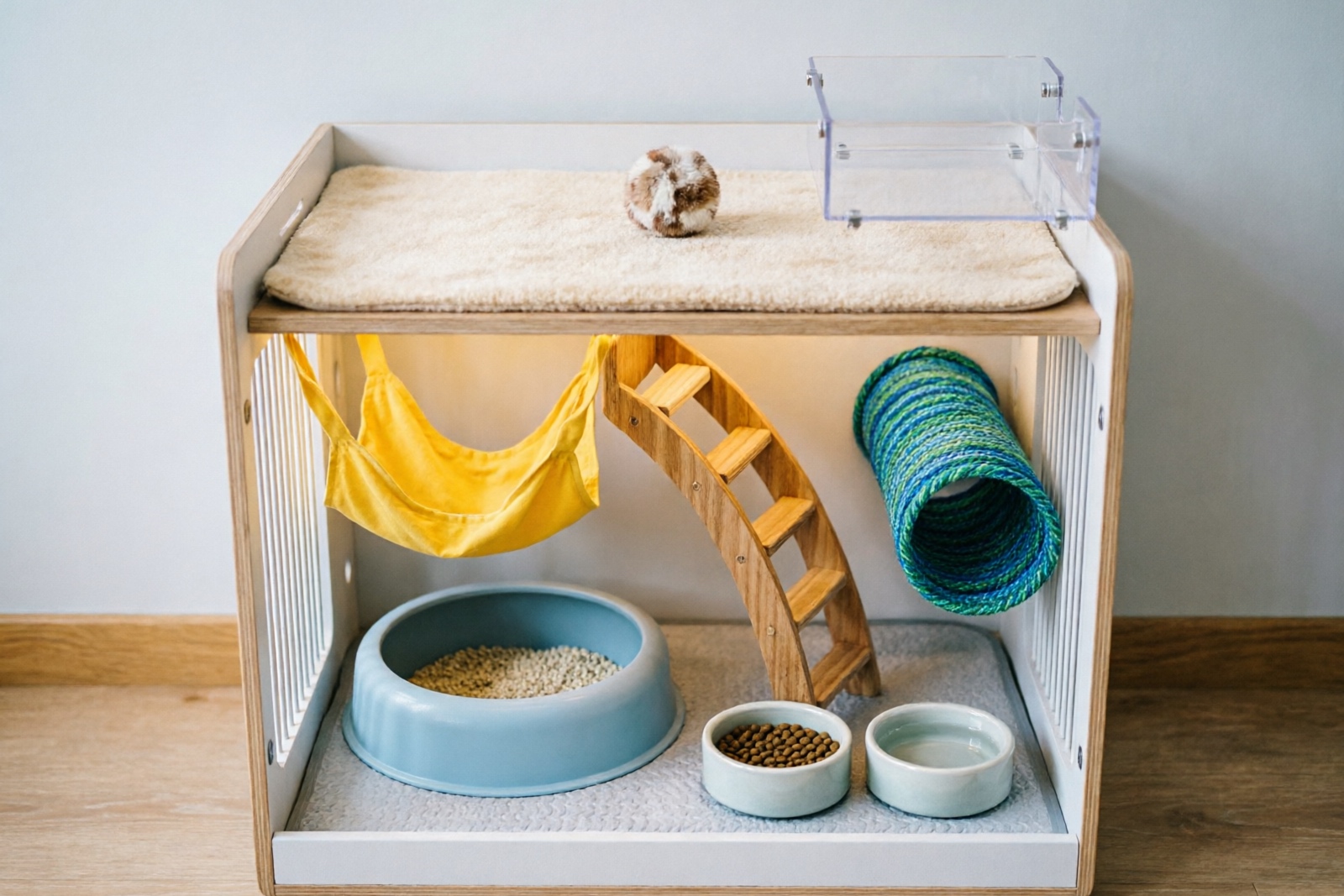
Why Ferret Cage Ideas Matter for Setup Success
Ferrets are among the most active small pets you can own. In the wild, they spend hours each day exploring underground tunnel systems, hunting prey, and covering significant distances. A pet ferret’s cage needs to reflect this energy—it’s their home base for sleep, meals, and bathroom breaks, not just a containment box. Proper ferret cage ideas and setup directly impacts your ferret’s physical health, mental wellbeing, and daily behavior. For a comprehensive ferret care guide, cage setup is one of the foundational pillars.
A well-designed cage using proven ferret cage ideas reduces stress-related behaviors, prevents health problems from poor sanitation, and gives your ferret a safe space to rest after their daily 4+ hours of out-of-cage playtime. The difference between a bare cage and a properly enriched one is immediately visible in your ferret’s behavior—they’ll be calmer, more confident, and visibly happier.
What Ferrets Need in Their Cage
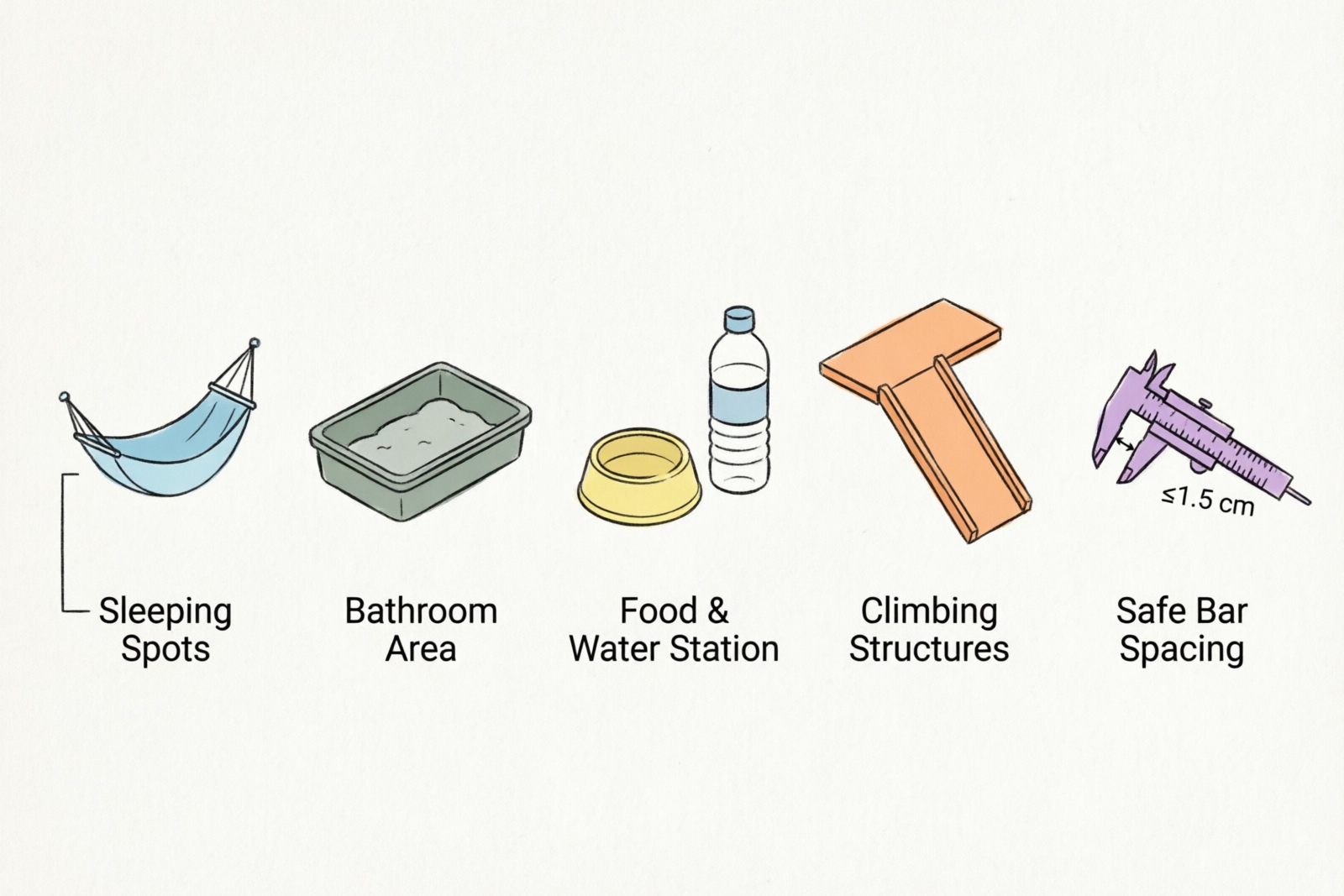
Every ferret cage must provide five essential elements regardless of size or budget:
Multiple Sleeping Spots: Ferrets sleep 14-18 hours daily and need at least two sleeping areas. Hammocks and enclosed hideouts in different cage levels let your ferret choose their preferred sleeping temperature—higher spots tend to be warmer, while lower spots stay cooler.
Dedicated Bathroom Area: Ferrets naturally prefer corner bathrooms. Place a litter pan in a cage corner away from sleeping and eating areas. Multiple ferrets need multiple litter pans.
Food and Water Station: Position food bowls and water bottles on a level separate from the bathroom. Ferrets are clean animals that avoid soiling near their food. For proper nutrition guidance, see our ferret diet guide.
Climbing and Play Structures: Ramps, tunnels, and platforms transform vertical space into usable territory. Ferrets are natural climbers who explore every inch of their environment.
Safe Bar Spacing: Cage bars must be spaced no more than 1 inch apart. Ferrets can squeeze through surprisingly small gaps—anything wider than 1 inch creates an escape risk, especially for young ferrets and small females.
Minimum Cage Size Guidelines
- Single ferret: At least 4 cubic feet of usable space (not just floor area)
- Two ferrets: At least 6 cubic feet (add 2 cubic feet per additional ferret)
- Bar spacing: Maximum 1 inch to prevent escapes
- Height: Minimum 2 feet; multi-level cages with 3+ feet of height are strongly preferred
- Flooring: Solid or half-solid floors—avoid wire-only flooring which causes foot injuries
For detailed cage selection criteria and comparisons, see our guide to the best ferret cages.
Ferret Cage Ideas by Budget
The best ferret cage ideas depend on your budget and the number of ferrets you own. Here are three ferret cage ideas organized by price range, each proven effective by experienced ferret owners.
The most practical way to approach ferret cage ideas is by budget tier. Whether you’re setting up your first ferret home or upgrading for multiple ferrets, there’s a quality option in every price range. These four cages represent the best available options based on customer reviews, construction quality, and ferret-specific design features.
Budget-Friendly: Under $100
Feisty Ferret Deluxe Two Tiers Cage — View on Amazon
The most affordable option that still meets ferret welfare standards. This two-tier cage includes 1/2-inch bar spacing (escape-proof), a hammock, water bottle, and food bowl—everything needed to get started. At 24” × 17.5” × 34”, it’s compact enough for apartments while providing essential vertical space.
Setup idea: Place the litter pan on the lower level in a back corner, food and water on the opposite lower corner, and the included hammock on the upper level. This simple two-zone layout separates bathroom from living areas effectively.
Best for: Single ferrets, kits (young ferrets), and owners with limited floor space. Not recommended for more than one adult ferret long-term due to space constraints.
Mid-Range: $100-200
Feisty Ferret Large 4-Tier Cage — View on Amazon
The best overall large ferret cage ideas choice for most owners. Four full levels provide maximum usable space for 2-3 ferrets, making this the ideal solution for multi-ferret households. The 24” × 17.5” × 53.5” footprint fits in most rooms while the 53.5-inch height gives your ferrets ample climbing territory. Users consistently rate this as an excellent value alternative to the more expensive Critter Nation cages, often describing it as “Critter Nation quality at half the price.” The 1/2-inch bar spacing prevents escapes, and the included hammock, water bottle, and food bowl mean you’re ready to go immediately. One common tip from reviewers: use a cordless screwdriver for assembly to save significant time and effort.
Setup idea: Dedicate each level to a specific function—Level 1 (bottom): litter pan and food/water; Level 2: play area with tunnel and toys; Level 3: second hammock and additional sleeping spot; Level 4 (top): primary sleeping hammock in the darkest, most secure location. This four-zone approach prevents waste contamination of sleeping areas and creates clear activity zones.
54” Wrought Iron 4-Level Cage — View on Amazon
The tallest option at 54 inches, ideal for rooms where floor space is limited but ceiling height is available. The 25” × 17” × 54” dimensions maximize vertical territory. Note that individual level heights are approximately 13.5 inches—sufficient for most ferrets but worth measuring if you have a particularly large male.
Setup idea: Similar four-zone layout to the Feisty 4-Tier, but with more emphasis on vertical climbing structures between levels. Add extra ramps or hanging toys to utilize the tall spaces between floors.
Best Value Multi-Ferret Cage
Feisty Ferret Double Unit Cage — View on Amazon
A compact two-full-story design at 20.5” × 20” × 45” that provides two complete floor levels connected by ramps. The full-floor design (rather than half-shelves found on cheaper cages) gives each level maximum usable area—no wasted space under partial shelves. The large 21” × 15” front door provides excellent access for cleaning and interacting with your ferrets. This is an excellent middle ground between the budget two-tier and the full four-tier options for owners who want quality without the full investment.
Setup idea: With only two full levels, the layout is simpler—lower level for bathroom and food, upper level for sleeping hammocks and play. Add a hanging tunnel between levels for additional enrichment.
Cage Comparison Summary:
| Cage | Price | Tiers | Dimensions |
|---|---|---|---|
| Feisty Two Tiers | $84.68 | 24×17.5×34” | Single ferret, budget |
| Feisty Double Unit | $114.68 | 2 full | 20.5×20×45” |
| 54” 4-Level | $119.75 | 25×17×54” | Vertical space, tall rooms |
| Feisty 4-Tier | $129.60 | 24×17.5×53.5” | -3 ferrets, best overall |
For detailed ferret cage reviews with assembly tips and long-term durability assessments, see our complete cage guide.
DIY Ferret Cage Ideas & Hacks
DIY ferret cage ideas have become increasingly popular among ferret owners for good reason—they transform affordable materials into spacious, customized enclosures. These ferret cage ideas often provide more space than commercial cages at a fraction of the cost. All three approaches below have been tested by experienced ferret owners and proven safe and effective.
Ferret cage ideas DIY approaches can save significant money while creating custom living spaces tailored to your specific room layout and your ferret’s preferences. These three proven projects range from simple conversions to more ambitious builds.
Closet-to-Cage Conversion
The closet-to-ferret-cage conversion has become one of the most popular DIY ferret cage ideas, inspired by viral videos showing impressive transformations. An old or unused closet provides instant walls, a door, and typically more floor space than most commercial cages.
Materials needed: Old closet (minimum 2’ × 3’), hardware cloth or wire mesh panels, zip ties or screws, hooks for hanging hammocks, ventilation fan (optional)
Cost: $30-50 (wire mesh + hardware) vs. $100+ for commercial cages
Steps:
- Remove all shelving and clothing rods
- Install wire mesh over any openings (windows, vents) using screws or heavy-duty zip ties
- Line the floor with waterproof material (coroplast, linoleum, or washable fleece liners)
- Hang hammocks from existing closet rod mounts or install new hooks
- Place litter pan in a back corner
- Add food/water on the opposite side
- Ensure the door latches securely—ferrets are escape artists
Critical safety notes: Ensure adequate ventilation by keeping the closet door open or installing a screened panel. Check all wire mesh attachment points regularly—ferrets test every weakness. Never use a closet that contains chemicals, cleaning products, or anything toxic if accessed.
Cube Organizer Cage (IKEA Hack)
The IKEA KALLAX cube organizer is another standout among DIY ferret cage ideas.
Using an IKEA KALLAX or similar cube organizer as a ferret enclosure is an increasingly popular approach that combines functionality with attractive home decor.
Materials needed: KALLAX shelf unit (2×4 or 3×3 configuration), zip ties, coroplast or plastic liners, fleece fabric, cable ties for hammock attachment
Cost: $40-60 (shelf unit + liners + fleece)
Advantages: Customizable number of “rooms,” blends with home decor, easy to modify, significantly cheaper than multi-level commercial cages. The individual cubbies create natural separate zones for sleeping, eating, and bathroom areas.
Assembly: Connect cubbies with openings cut between adjacent squares, line each cubby with washable fleece, hang hammocks using zip ties attached to the shelf frame, and place litter pans in designated bathroom cubbies.
PVC Pipe & Coroplast Enclosure
For the most customized ferret cage ideas, PVC pipe frames with Coroplast (corrugated plastic) walls offer unlimited design flexibility.
For owners with available wall space, a custom PVC and coroplast enclosure provides the largest possible floor area for ferrets who prefer horizontal space over vertical climbing. This approach is particularly popular among ferret rescues and owners of senior ferrets with limited mobility.
Materials needed: 1/2” PVC pipes and connectors (available at any hardware store), 4mm coroplast sheets (sign shops sell this inexpensively), zip ties, non-slip liner material
Cost: $50-80
This approach creates a large, single-level enclosure that can span an entire wall—easily providing 8-12 square feet of floor space. It’s particularly effective for older ferrets who may have difficulty climbing ramps, or for ferret groups of 3+ that prefer open floor space for group sleeping and play. The coroplast walls are lightweight, easy to clean with a damp cloth, and can be cut to any shape or size. Add PVC elbow joints to create interesting corner formations and change the layout periodically to prevent boredom.
Best Cage Accessories & Ferret Cage Ideas
The right accessories transform basic ferret cage ideas into fully functional homes. Every ferret cage ideas setup should include these essential accessories:
Accessories transform a basic cage into a comfortable, stimulating home. The right ferret cage ideas prioritize function—every accessory should serve a specific behavioral need. Hammocks are non-negotiable for ferrets, and proper litter placement prevents daily cleaning headaches.
Ferret Hammocks: Essential Sleep Gear
Ferrets spend the majority of their lives sleeping, making quality hammocks one of the most important purchases you’ll make. Three hammocks at different price points cover every need:
Niteangel Hanging Hammock Nap Sack — View on Amazon
The most popular ferret hammock on Amazon. The soft fleece lining provides warmth while the breathable outer fabric prevents overheating. It accommodates two ferrets comfortably and attaches securely with spring clips. Hang it in the upper portion of the cage where ferrets naturally prefer to sleep—higher positions feel safer to them.
Petonfun Hammock Set with Tunnel — View on Amazon
An exceptional value 2-in-1 design combining a sleeping hammock with an attached tunnel. Ferrets love tunnels, and this dual-purpose accessory serves as both a bed and a play structure. At $9.49, it’s the most affordable option and perfect for mid-level cage placement where ferrets transition between sleeping and active areas.
Niteangel Cozy Swing Hammock — View on Amazon
The cube-shaped design creates an enclosed sleeping space that ferrets find deeply comforting. The polar fleece interior provides excellent insulation, making this ideal for cooler rooms or winter months. Ferrets enter through the 3.9-inch opening and can curl up completely hidden inside. This works best as the primary sleeping spot in a dark, upper cage location.
Litter Box Placement
Marshall High Back Litter Pan — View on Amazon
The Marshall High Back is the industry standard ferret litter pan for good reason. The high back panel prevents urine from splashing outside the cage (a common problem with low-sided pans), while the low front entry makes it easy for ferrets to climb in and out. At 12” × 14”, it fits in most cage corners.
Placement tips: Always place litter pans in cage corners—ferrets naturally seek corners for bathroom use. Use one pan per ferret plus one extra. Position pans on the lowest cage level, as far from sleeping and eating areas as possible. Secure the pan to the cage bars with clips or bolts to prevent ferrets from flipping it over.
Complete Accessory Setup Plan
Every well-designed ferret cage ideas setup should follow this accessory checklist:
For 2-tier cages: 1 hammock (upper level) + 1 litter pan (lower corner) + 1 food bowl + 1 water bottle. Total accessory budget: ~$35-50.
For 4-tier cages: 2-3 hammocks (top level + middle level) + 1 tunnel hammock + 1 litter pan + 1 food bowl + 1 water bottle. Total accessory budget: ~$50-80.
For additional toy and enrichment ideas to complement your cage setup, see our ferret toys guide.
Multi-Level & Indoor Ferret Cage Ideas
Multi-level ferret cage ideas maximize vertical space, giving your ferrets more room to explore without increasing the cage’s floor footprint. These ferret cage ideas are especially valuable for indoor setups where floor space is limited.
Ferret cage ideas indoor setups benefit from understanding how ferrets naturally use vertical space. Multi-level cages are the most popular choice for indoor ferret housing because they maximize usable territory within a compact floor footprint.
How to Arrange a Multi-Level Cage
Multi-level ferret cage ideas work best when each level serves a specific purpose:
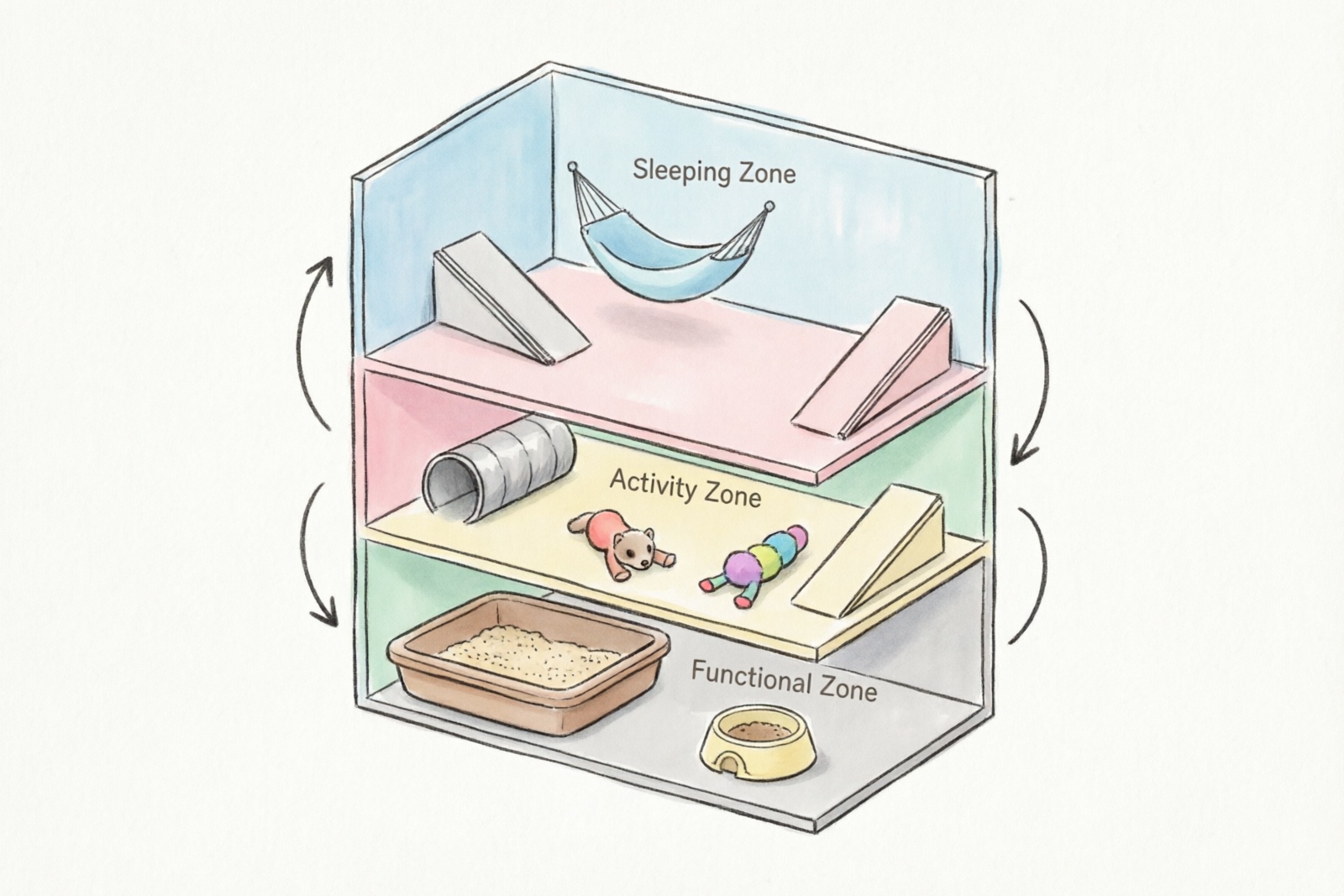
The key principle for ferret enclosure ideas in multi-level cages is zone separation—each level should have a clear primary purpose:
Top level (sleeping zone): This is the darkest, most secure area of the cage. Place the primary hammock or cozy swing here. Ferrets instinctively seek elevated, enclosed spaces for deep sleep. Keep this level quiet and free from food or bathroom items.
Middle level(s) (activity zone): This is the play and transition area. Hang tunnel hammocks, add ramps between levels, and place a few interactive toys. The middle level serves as the highway connecting sleeping areas above with functional areas below.
Bottom level (functional zone): Place the litter pan, food bowls, and water bottle here. This is the messiest level by necessity, so keeping it separate from sleeping areas is essential for hygiene and ferret comfort.
Between levels: Every level transition needs at least one ramp or climbing structure. Ferrets navigate levels constantly—without adequate ramps, they may attempt dangerous jumps or become frustrated.
Best Indoor Locations for a Ferret Cage
Choosing the right indoor location is an often-overlooked aspect of ferret cage ideas.
Choosing the right room placement matters as much as cage setup:
- Temperature: Maintain 55-80°F year-round. Ferrets are extremely sensitive to heat—temperatures above 80°F can be fatal
- Light: Avoid direct sunlight, which creates dangerous heat buildup. Ferrets prefer dim, quiet sleeping areas
- Airflow: Position away from heating vents, air conditioning units, and drafty windows
- Moisture: Avoid bathrooms and kitchens where humidity fluctuates
- Noise: Place away from televisions, speakers, and high-traffic areas during sleeping hours
Cage-to-Playpen Connections
Connecting your ferret’s cage to a playpen creates an expanded ferret cage ideas setup that gives your ferrets more freedom without full free-roaming.
Connecting your ferret’s cage to a playpen creates an expanded territory that significantly improves quality of life. Use a flexible tunnel to connect the cage door to the playpen entrance, creating a secure corridor that your ferret can freely traverse. Always ensure playpen walls are at least 24 inches tall and the connection point is secure. Close all room doors and windows before opening the cage-to-playpen corridor.
For more on choosing the right cage for your space, explore our ferret cage options.
Outdoor Ferret Cage Ideas
Outdoor ferret cage ideas give your ferrets safe access to fresh air and natural sunlight. These ferret cage ideas require extra attention to safety, but they’re rewarding for both you and your ferrets when done correctly.
Outdoor ferret cage ideas require additional safety considerations that indoor setups don’t face. While ferrets can enjoy supervised outdoor time, their enclosures must address temperature extremes, predators, and escape risks that don’t exist indoors.
Safe Outdoor Play Areas
When planning outdoor ferret cage ideas, safety is the top priority.
Portable playpens provide temporary outdoor access. Set up a large exercise pen on grass or a patio, add a hammock for shade, and always supervise directly. These work best for short sessions of 15-30 minutes.
Permanent outdoor enclosures offer more substantial outdoor living space but require significant investment in safety features. A properly built outdoor ferret enclosure includes wire mesh on all six sides (including buried mesh underground), a solid roof, shade structures, and a secure entrance.
Temperature limits: Only allow outdoor access when temperatures are between 50-80°F. Ferrets cannot pant to cool themselves and are extremely susceptible to heatstroke. Morning and evening hours are safest during warmer months. Always provide a shaded retreat and fresh water.
Outdoor Safety Checklist
- Wire mesh buried at least 6 inches underground to prevent digging escapes
- Secure roof covering to protect from birds of prey and climbing predators
- Shaded area covering at least 50% of the enclosure floor space
- Fresh water available at all times
- Maximum outdoor session: 30 minutes, with direct supervision
- No outdoor access during rain, extreme heat (above 80°F), or cold (below 50°F)
- Check enclosure for gaps, loose wire, or damage before each use
Common Ferret Cage Ideas Mistakes
Even experienced ferret owners make mistakes when implementing ferret cage ideas. Avoiding these common pitfalls ensures your ferret cage ideas work as intended.
Even experienced ferret owners sometimes make setup errors that compromise their pets’ welfare. Recognizing and correcting these six common mistakes significantly improves your ferret’s quality of life. For a complete ferret care guide covering all aspects of ferret ownership, cage setup is just the beginning.
Top 6 Cage Setup Mistakes
These are the most common mistakes that undermine otherwise good ferret cage ideas:
1. Cage too small (under 4 cubic feet): This is the most common and most harmful mistake. A cramped cage leads to stress, aggression, muscle atrophy from lack of movement, and depression. If your ferret can’t stretch fully horizontal and vertical, the cage is too small.
2. Single-level cages: Ferrets are natural climbers that need vertical space. Single-level cages waste the most valuable dimension of indoor housing. Even adding a simple shelf or hanging platform significantly improves a single-level setup.
3. Bar spacing wider than 1 inch: This creates an escape hazard, especially for young ferrets, small females, and ferrets that have lost weight due to illness. Always measure bar spacing before purchase—manufacturers sometimes overstate spacing specifications.
4. Food placed near the litter box: Ferrets avoid eating near their bathroom. Placing food bowls adjacent to or above the litter pan causes reduced food intake and potential digestive problems. Maintain maximum separation between these areas.
5. Insufficient sleeping spots (fewer than two): Ferrets change sleeping locations based on temperature and preference throughout the day. A single sleeping option forces your ferret to choose between comfort and security. Two hammocks at different heights solve this affordably.
6. Using wood shavings or pine/cedar bedding: These materials release phenols and aromatic oils that cause respiratory damage in ferrets. The volatile oils in pine and cedar irritate the delicate respiratory tract and can cause chronic respiratory disease over time. Use paper-based bedding, fleece liners, or washable cage liners instead. This is a health issue, not just a preference—cedar and pine bedding are actively harmful to ferrets and should never be used. If you’re currently using wood shavings, switch to fleece immediately and monitor your ferret for any signs of respiratory distress (wheezing, sneezing, nasal discharge).
Quick Fixes for Common Ferret Cage Ideas Problems
Each of these problems has a straightforward solution that can be implemented immediately:
- Cage too small: Add a playpen attachment for temporary extra space, or start budgeting for a multi-level upgrade
- Single-level: Install a hanging platform or shelf using zip ties and coroplast—costs under $10
- Wide bar spacing: Attach wire mesh panels (1/2-inch hardware cloth) to the inside of cage walls with zip ties
- Food near bathroom: Relocate food bowls to the opposite end of the cage immediately—your ferret will eat more as a result
- One sleeping spot: Add a second hammock for under $15 (the Petonfun set at $9.49 is an excellent budget option)
- Wrong bedding: Replace wood shavings with fleece liners or paper bedding today—your ferret’s respiratory health depends on it