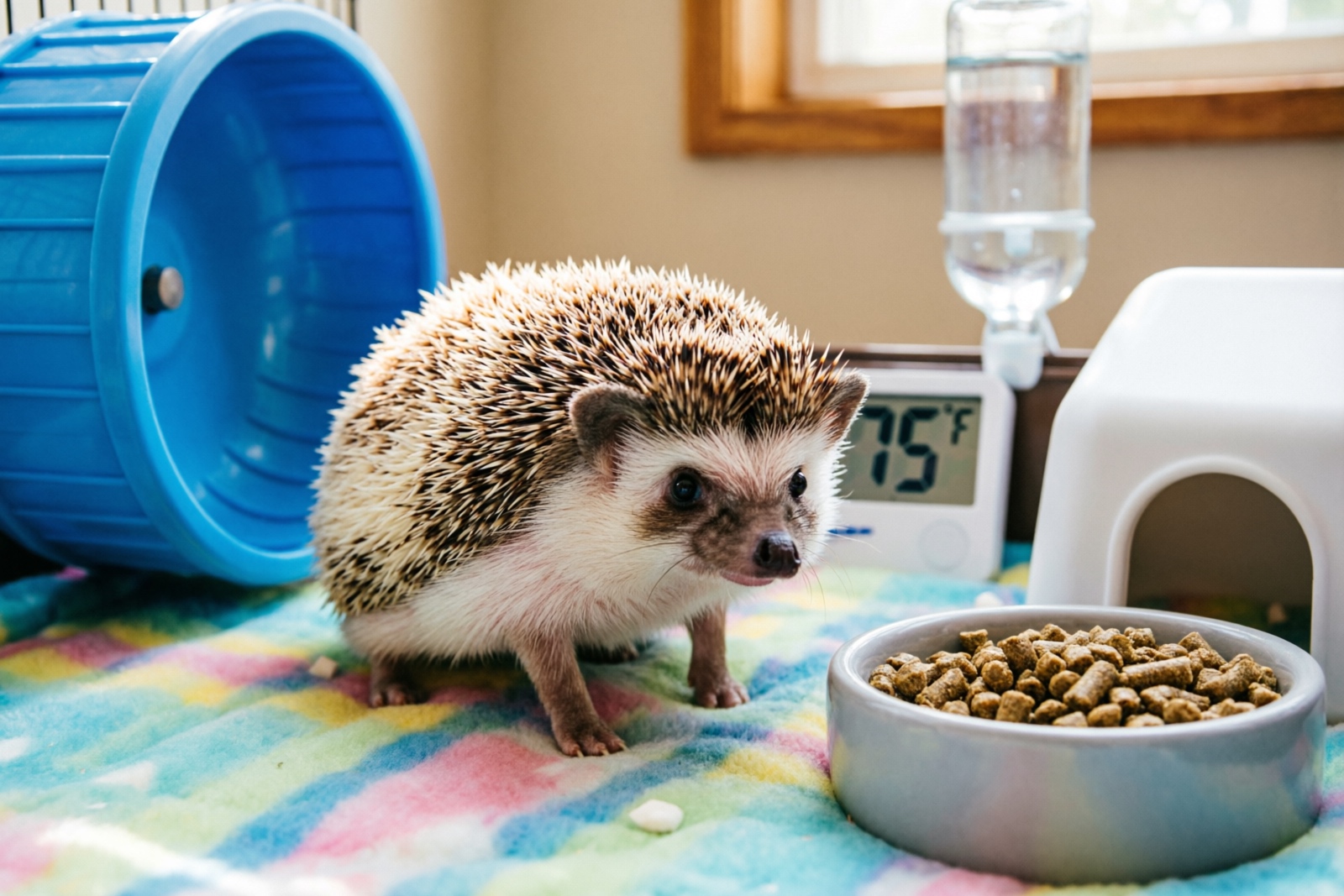
Thinking about getting a pet hedgehog? These unique, nocturnal mammals can make wonderful companions when their specialized needs are met. With proper hedgehog care, hedgehogs can live 3-5 years in captivity, providing years of enjoyment for dedicated owners.
This comprehensive hedgehog care guide covers everything you need to know: from diet and habitat setup to health monitoring and daily handling. Whether you’re a first-time hedgehog owner or looking to improve your current hedgehog care routine, this guide provides practical, expert-backed advice for keeping your hedgehog healthy and happy.
Quick Navigation:
For detailed information on specific topics, see our related guides:
Understanding Hedgehog Care Basics
Proper hedgehog care begins with understanding these unique animals. Before bringing a hedgehog home, you need to know their basic characteristics, care requirements, and whether they’re the right pet for your lifestyle.
What is a Pet Hedgehog?
The most common pet hedgehog is the African Pygmy Hedgehog (Atelerix albiventris), also known as the four-toed hedgehog. Native to central and eastern Africa, these small mammals have been domesticated since the 1980s and are now popular exotic pets worldwide. Understanding their natural history helps you provide better hedgehog care.
Key Characteristics:
- Size: 6-9 inches (15-23 cm) body length
- Weight: 0.5-1.5 lbs (250-700 grams)
- Lifespan: 3-5 years with proper hedgehog care (some reach 6-7 years)
- Coat: 5,000-7,000 spines (modified hairs) covering back and sides
- Activity: Nocturnal/crepuscular (most active at night and dawn/dusk)
- Social behavior: Solitary in the wild (prefer living alone)
Hedgehogs are insectivores by nature but are considered omnivores in captivity, requiring a varied diet of high-protein foods and insects—this is a fundamental aspect of hedgehog care.
Are Hedgehogs Good Pets?
Hedgehogs can make excellent pets for the right owners. Understanding their unique hedgehog care needs helps determine if they’re a good fit for your lifestyle.
Advantages:
- ✅ Quiet: Rarely vocalize (except when annoyed or during courtship)
- ✅ Low odor: Minimal smell when cage is kept clean
- ✅ Hypoallergenic: No dander, good for allergy sufferers
- ✅ Unique: Fascinating behaviors (self-anointing, curling into balls)
- ✅ Compact size: Suitable for apartments and small spaces
- ✅ Independent: Can be left alone during the day
Challenges:
- ❌ Nocturnal: Active at night (7 PM - 7 AM), may disturb light sleepers
- ❌ Temperature-sensitive: Require consistent 72-80°F (22-27°C) for proper hedgehog care
- ❌ Specialized diet: Need high-protein food and live insects
- ❌ Initial defensiveness: May ball up and huff when first handled
- ❌ Veterinary costs: Exotic pet vets are expensive and harder to find
- ❌ Illegal in some areas: Check local laws before getting a hedgehog
Ideal Owner Profile: Hedgehogs are best suited for:
- Adults or families with older children (8+ years)
- People with patience for taming (2-4 weeks of daily interaction)
- Those who can afford $100-180/month in hedgehog care costs
- Night owls who enjoy interacting with pets in the evening
- Owners willing to maintain specific temperature conditions
How Much Does Hedgehog Care Cost?
Initial Setup Costs:
| Item | Cost Range | Notes |
|---|---|---|
| Cage | $100-300 | Wire cage with solid bottom, minimum 2’ x 3’ |
| Exercise wheel | $30-50 | 11”+ diameter, solid surface required |
| Heating setup | $50-100 | CHE (Ceramic Heat Emitter) + thermostat |
| Hide box | $15-30 | Igloo, snuggle sack, or wooden hide |
| Food dish & water bottle | $10-20 | Ceramic dish, 8oz+ water bottle |
| Bedding/liners | $20-40 | Fleece liners or paper bedding |
| Total Initial | $225-540 | One-time investment |
Monthly Costs:
| Item | Cost Range | Notes |
|---|---|---|
| High-quality food | $30-50 | Cat food (30%+ protein) or hedgehog food |
| Live insects | $10-20 | Mealworms, crickets (2-3x/week) |
| Bedding/laundry | $20-30 | Fleece liners (washable) or paper bedding |
| Electricity | $10-20 | Heating equipment 24/7 |
| Emergency vet fund | $50-100/month | Save $600-1200/year for unexpected illness |
| Total Monthly | $120-220 | Ongoing hedgehog care costs |
Annual Total: $1,665-3,180 (including initial setup + first year monthly costs)
Hedgehog Diet and Nutrition
Proper nutrition is critical for hedgehog care and long-term health. In the wild, hedgehogs eat primarily insects, supplemented with small vertebrates and plant matter. In captivity, replicating this high-protein diet requires careful food selection—a key part of your hedgehog care routine.
For a detailed breakdown of hedgehog nutritional needs, see our complete Hedgehog Diet Guide.
What Do Hedgehogs Eat?
Primary Diet (75-80% of intake):
- High-Quality Cat Food
- Protein: 30-35% minimum (preferably 35%+)
- Fat: 10-15% (avoid high-fat foods)
- Fiber: 3-5%
- No grains or fillers as primary ingredients
- Recommended brands: Blue Buffalo, Wellness CORE, Orijen
- Commercial Hedgehog Food
- Specially formulated for hedgehog nutritional needs
- Brands: SunSeed, 8in1, Mazuri Hedgehog Diet
- Can be used alone or mixed with cat food
Supplementary Foods (15-20% of intake):
Live/Freeze-Dried Insects (essential for protein and enrichment):
- Mealworms: 2-3 worms, 2-3x/week
- Crickets: 2-3 crickets, 2-3x/week — use cricket quencher to keep feeder crickets hydrated
- Waxworms: Occasional treat (high fat)
- Dubia roaches: Excellent protein source
Fresh Vegetables (small amounts, 1-2x/week):
- Cooked sweet potato (small cube)
- Cooked carrot (small piece)
- Peas (1-2)
- Green beans (small piece)
Fruits (very small amounts, once/week):
- Apple (small cube, no seeds)
- Banana (small slice)
- Berry (1-2 blueberries or strawberry piece)
Foods to Avoid
Toxic Foods (never feed—violates basic hedgehog care principles):
- ❌ Chocolate: Contains theobromine, can be fatal
- ❌ Avocado: Contains persin, toxic to many animals
- ❌ Grapes/Raisins: Can cause kidney failure
- ❌ Onions/Garlic: Causes anemia
- ❌ Citrus fruits: Too acidic
- ❌ Raw meat: Bacteria risk
- ❌ Dairy products: Lactose intolerant
- ❌ Nuts/Seeds: Choking hazard, high fat
- ❌ Mushrooms: Some are toxic
Unhealthy Foods (avoid or limit severely):
- ❌ Fatty meats (bacon, sausage)
- ❌ Sugary foods (candy, cookies)
- ❌ Salty foods (chips, processed foods)
- ❌ Junk food (fast food, fried foods)
Feeding Schedule
| Age | Feeding Frequency | Amount per Feeding | Notes |
|---|---|---|---|
| Baby (< 6 months) | 2-3 times daily | 1-2 tablespoons | Growing, needs more food |
| Adult (6 months - 3 years) | 1 time daily (evening) | 2-3 tablespoons | Active adults |
| Senior (3+ years) | 1 time daily (evening) | 1.5-2 tablespoons | Monitor weight, reduce if obese |
Feeding Tips for Proper Hedgehog Care:
- Feed in the evening (7-9 PM) when hedgehogs wake up
- Always provide fresh water
- Remove uneaten fresh food after 4 hours
- Monitor weight weekly (weigh on kitchen scale)
- Adjust portions based on activity level and body condition
Hedgehog Habitat and Cage Setup
Creating the right environment is crucial for hedgehog care and wellbeing. Temperature control is the most critical factor—improper temperatures can trigger dangerous hibernation attempts. This is why proper hedgehog care always includes temperature monitoring.
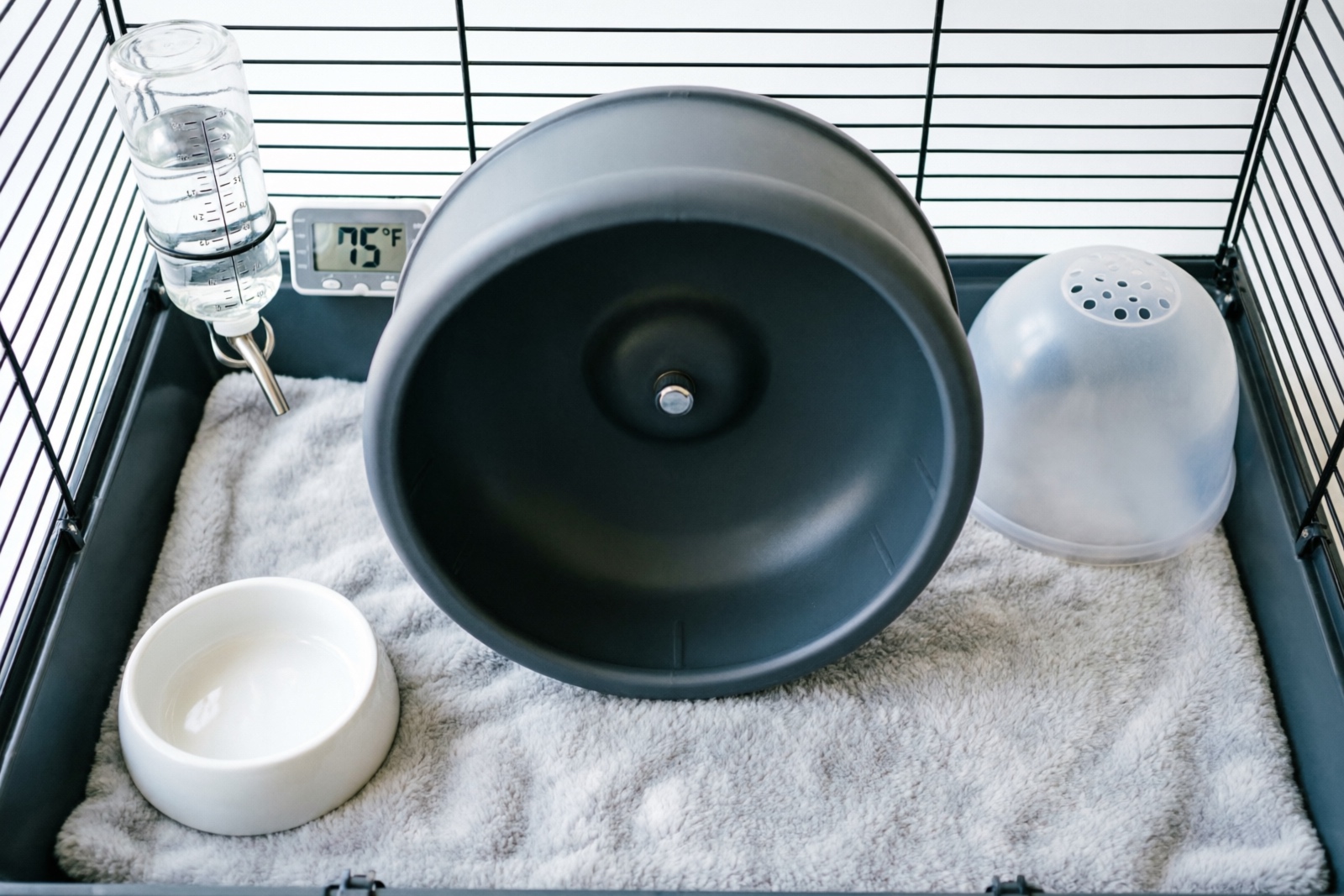
For detailed cage setup instructions, see our Hedgehog Cage Setup Guide.
Cage Size and Type
Minimum Requirements for Proper Hedgehog Care:
- Floor space: 2’ x 3’ (6 sq ft) - larger is always better
- Height: 12”+ (ensure secure lid)
- Material: Wire cage with solid bottom (no wire floors)
- Bar spacing: 1” or less (prevent escape)
Recommended Cage Types:
- Wire Cage with Plastic Base ($100-200)
- Good ventilation
- Easy to clean
- Example: Midwest Guinea Pig Habitat, C&C Cage
- Large Plastic Storage Bin (DIY, $25-40)
- 105+ quart bin with modified lid
- Solid sides (no drafts)
- Requires ventilation holes
- Glass Aquarium (30+ gallons)
- Good heat retention
- Heavy, harder to clean
- Requires mesh lid for ventilation
Cage Placement:
- Quiet location away from high traffic
- Away from windows (drafts and temperature fluctuations)
- Away from direct sunlight
- Near electrical outlet (for heating equipment)
Essential Cage Accessories
Must-Have Items for Complete Hedgehog Care:
- Exercise Wheel ($30-50)
- Diameter: 11”+ (minimum), 12” preferred
- Surface: Solid running surface (no mesh/wire)
- Type: Bucket wheel or Carolina Storm wheel
- Critical: Hedgehogs run 5-8 miles nightly in the wild
- Hide Box ($15-30)
- Enclosed space for sleeping
- Options: Plastic igloo, wooden box, snuggle sack
- Place in quiet cage corner
- Food Dish ($5-15)
- Heavy ceramic (won’t tip)
- Shallow (easy access)
- 4-6” diameter
- Water Bottle ($10-15)
- 8oz+ capacity
- Glass preferred (harder to chew)
- Check daily for clogs
- Litter Box (optional, $10-20)
- Small shallow pan
- Place in corner where hedgehog eliminates
- Use paper-based litter (not clay)
Enrichment Items:
- Tunnels: PVC pipes, ferret tubes
- Digging box: Shallow container with safe substrate
- Climbing platforms: Low ramps, shelves (avoid high falls)
- Toys: Cat balls (no catnip), small stuffed animals
Temperature Requirements
Critical Temperature Range: 72-80°F (22-27°C)
This is the most important aspect of hedgehog care. Temperature issues can be fatal.
| Temperature | Hedgehog Response | Risk Level |
|---|---|---|
| Below 70°F (21°C) | Hibernation attempt | ⚠️ DANGEROUS - Can be fatal |
| 70-72°F (21-22°C) | Lethargy, decreased activity | ⚠️ Risk of hibernation |
| 72-80°F (22-27°C) | Normal activity | ✅ OPTIMAL |
| 80-85°F (27-29°C) | Heat stress, lethargy | ⚠️ Monitor closely |
| Above 85°F (29°C) | Heat stroke | 🚨 EMERGENCY - Life-threatening |
Heating Equipment:
- Ceramic Heat Emitter (CHE) ($30-50)
- Emits heat without light (won’t disturb nocturnal cycle)
- Requires ceramic socket lamp fixture
- 60-100 watt bulb for most setups
- Thermostat ($30-50)
- Essential for temperature regulation in hedgehog care
- Plug CHE into thermostat
- Set to 75-77°F for safety margin
- Thermometer ($10-15)
- Place at cage floor level (where hedgehog sleeps)
- Digital thermometer with probe
- Check temperature daily
Heating Safety:
- Never use heat rocks (can cause burns)
- Avoid heating pads (fire hazard, uneven heat)
- Space heaters (risk of fire, uneven heating)
- Always have backup heating plan for power outages — a SnuggleSafe microwave heat pad is a safe, reusable option
Bedding Options
Recommended Bedding for Hedgehog Care:
- Fleece Liners ($20-40 for multiple sets)
- Washable, reusable
- Soft on feet
- Economical long-term
- Change every 3-5 days
- Paper-Based Bedding ($15-25/month)
- Carefresh, Yesterday’s News
- Absorbent, low dust
- Safe if ingested
- Aspen Shavings ($10-15/month)
- Natural, safe
- Avoid cedar and pine (toxic phenols)
Avoid These Beddings:
- ❌ Cedar shavings: Toxic phenols cause respiratory damage
- ❌ Pine shavings: Contains harmful phenols
- ❌ Sawdust: Respiratory hazard
- ❌ Newspaper: Ink toxicity
- ❌ Straw/hay: Not suitable for hedgehogs
Hedgehog Handling and Bonding
Once you’ve set up the perfect habitat, the next step in hedgehog care is learning how to handle your hedgehog properly. Hedgehogs are naturally defensive animals. With patience and consistent handling, most hedgehogs become tame and enjoy interaction with their owners.

How to Pick Up a Hedgehog
Step-by-Step Guide:
- Let your hedgehog smell your hand
- Slowly approach from the side (not above—predators attack from above)
- Place your hand near the hedgehog’s nose
- Wait 5-10 seconds for them to recognize your scent
- Scoop from below
- Place one hand on each side of the hedgehog
- Slide both hands underneath the body
- Support the entire body, including feet
- Lift gently and hold close
- Lift smoothly (avoid sudden movements)
- Hold close to your body for security
- Keep hands low over a soft surface (bed, sofa)
- Stay calm and still
- Hedgehogs sense nervousness
- Avoid jerky movements
- Speak softly
What to Expect:
- New hedgehogs may ball up and huff
- Quills may be sharp—gloves are okay initially
- Most hedgehogs uncurl within 1-5 minutes
- Patience is key—don’t force uncurling
Taming Your Hedgehog
Timeline: 2-4 weeks of daily interaction (some take longer)
Taming Schedule:
Week 1: Scent Bonding
- Place worn t-shirt in cage (your scent)
- Talk softly near cage daily
- Offer treats from your hand through bars
- Don’t attempt to pick up yet
Week 2: Introduction to Handling
- Pick up for 5-10 minutes daily (evening)
- Use gloves if needed
- Offer mealworms while holding
- End on positive note
Week 3-4: Building Trust
- Increase handling time to 15-30 minutes
- Remove gloves (if using)
- Let hedgehog explore on you (lap time)
- Offer belly rubs if hedgehog allows
Tips for Success in Hedgehog Care:
- ✅ Handle at the same time daily (evening)
- ✅ Use treats to create positive associations
- ✅ Be patient—some hedgehogs take months
- ✅ Never punish or yell
- ✅ Respect boundaries (some hedgehogs are less cuddly)
Signs of a Tame Hedgehog:
- Doesn’t ball up when approached
- Explores actively on your lap
- Relaxed quills (laying flat)
- May crawl into your hand or pocket
Hedgehog Health and Common Issues
Beyond daily handling and proper hedgehog care, monitoring your hedgehog’s health is crucial. Hedgehogs are masters at hiding illness due to their prey animal instinct. Regular health monitoring and knowing warning signs is essential for early intervention in your hedgehog care routine.
Common Health Problems
1. Obesity
- Cause: Overfeeding, lack of exercise, high-fat diet
- Symptoms: Round body, can’t roll into ball, difficulty walking
- Prevention: Measure food, provide wheel, weekly weigh-ins
- Treatment: Reduce portions, increase exercise, consult vet
2. Dental Disease
- Cause: Lack of chewing, soft diet, genetics
- Symptoms: Drooling, difficulty eating, bad breath, weight loss
- Prevention: Provide crunchy food, occasional hard treats
- Treatment: Veterinary dental cleaning, possible extraction
3. Respiratory Infections
- Cause: Bacterial infection, drafts, cold temperatures
- Symptoms: Sneezing, nasal discharge, wheezing, lethargy
- Prevention: Maintain temperature, avoid drafts, clean cage
- Treatment: See vet immediately—antibiotics required
4. Wobbly Hedgehog Syndrome (WHS)
- Cause: Genetic neurological disease
- Symptoms: Wobbling, falling over, progressive paralysis
- Onset: Usually 2-3 years old
- Prevention: Buy from reputable breeders who test for WHS
- Treatment: No cure—supportive care only
- Note: Fatal condition, typically progresses over 6-18 months
5. Mites and Skin Issues
- Cause: Parasites (mites), fungal infection, poor hygiene
- Symptoms: Quill loss, excessive scratching, dry skin, bald patches
- Prevention: Clean cage regularly, quarantine new hedgehogs
- Treatment: See vet for mite treatment (Revolution, Ivermectin)
6. Cancer
- Cause: Unknown, age-related
- Symptoms: Lumps, weight loss, lethargy, appetite changes
- Risk: Increases with age (common in 3+ year old hedgehogs)
- Treatment: Surgical removal, supportive care
7. Eye Injuries
- Cause: Sharp cage objects, fighting, self-trauma
- Symptoms: Squinting, discharge, cloudiness, bulging
- Treatment: See vet immediately—can lead to infection/loss of eye
8. GI Stasis/Bloat
- Cause: Stress, poor diet, obstruction, illness
- Symptoms: Not eating, not pooping, swollen belly, lethargy
- Treatment: Emergency—see vet within 24 hours
Warning Signs (See Vet Immediately)
🚨 Emergency Symptoms Requiring Immediate Hedgehog Care:
- Not eating for 24+ hours
- Not drinking for 12+ hours
- Lethargy (not moving when normally active)
- Difficulty breathing
- Bloated abdomen
- Unable to walk or stand
- Bleeding
- Severe quill loss (>20 quills/day)
- Discharge from eyes/nose
- Sudden aggression or extreme lethargy
⚠️ Schedule Vet Visit Soon:
- Decreased appetite (>2 days)
- Changes in poop (diarrhea, no poop)
- Excessive scratching
- Weight loss (>10% body weight)
- Behavioral changes
Finding an Exotic Pet Vet
Before You Need One:
- Locate exotic pet vets in your area
- Confirm they treat hedgehogs
- Save contact info and emergency hours
- Have a backup vet option
What to Look For:
- Experience with hedgehogs specifically
- Emergency/after-hours availability
- Reasonable pricing
- Good reviews from exotic pet owners
Annual Vet Costs for Hedgehog Care:
- Wellness exam: $50-100
- Emergency visit: $100-300+
- Dental cleaning: $200-400
- Mite treatment: $50-100
Exercise and Enrichment
Hedgehogs are active animals that need daily exercise and mental stimulation as part of proper hedgehog care. In the wild, they travel several miles nightly. Captive hedgehogs require opportunities to express natural behaviors.
Exercise Needs
Exercise Wheel (most important):
- Use: Most hedgehogs run 3-5 miles nightly
- Type: Solid surface wheel, 11”+ diameter
- Placement: In cage, always available
- Maintenance: Clean weekly (some hedgehogs poop while running)
Out-of-Cage Time:
- Duration: 30-60 minutes daily
- Environment: Hedgehog-proofed room or playpen
- Supervision: Always (hedgehogs can squeeze into tiny spaces)
- Temperature: Maintain 72-80°F in play area
Safe Play Activities:
- Exploring hedgehog-proofed room
- Foraging for treats
- Climbing low platforms
- Digging in supervised digging box
- Tunnel exploration
Enrichment Ideas
Mental Stimulation for Better Hedgehog Care:
- Foraging: Hide mealworms around cage for hunting
- Puzzle feeders: Make hedgehog work for treats
- New scents: Introduce safe new smells (herbs, clean leaves)
- Rotate toys: Change cage layout weekly
Safe Toys:
- Cat balls (without catnip)
- Small stuffed animals
- PVC tunnels
- Cardboard tubes (toilet paper rolls—cut lengthwise to prevent head trapping)
- Digging box with safe substrate
Avoid These:
- ❌ Exercise balls (overheating, toe injuries)
- ❌ Wheels with mesh/wire surface (foot injuries)
- ❌ Toys with small parts (choking hazard)
- ❌ Toys with sharp edges
- ❌ Catnip toys (can be harmful)
Out-of-Cage Time
Safety Checklist:
- Block all escape routes (under furniture, doors)
- Remove electrical cords or secure them
- No access to toxic plants
- No other pets in area
- Temperature 72-80°F
- Supervise constantly
Playpen Setup:
- Use small animal playpen (wire or fabric)
- Include hide box, water, wheel
- Add toys and tunnels
- Place on floor (hedgehogs can fall from heights)
Daily Hedgehog Care Routine
Consistency is key for hedgehog care and happiness. This hedgehog care sheet provides a structured routine for daily, weekly, and monthly tasks.
Daily Tasks (5-10 minutes)
Evening (7-9 PM):
- Feed: Provide fresh food (2-3 tablespoons cat food)
- Water: Check water bottle, refill if needed
- Spot clean: Remove visible waste, soiled bedding
- Interaction: Handle for 30+ minutes
- Health check: Observe behavior, check for abnormalities
- Temperature: Verify cage temperature (72-80°F)
Morning (optional):
- Remove uneaten fresh food (if any)
- Quick visual check
Weekly Tasks (30-60 minutes)
Cage Cleaning:
- Full bedding change: Replace all fleece liners or bedding
- Clean cage: Wipe down cage floor, walls with vinegar/water solution
- Wash accessories: Clean wheel, hide box, food dish, water bottle
- Check wheel: Ensure spins freely, no damage
- Rotate toys: Introduce new items, remove old ones
Health Monitoring:
- Weigh hedgehog: Record weight (track trends)
- Check feet: Look for injuries, sores
- Check quills: Normal quill loss is 1-5/day
- Check eyes/nose: No discharge, clear eyes
- Check teeth: Look for overgrowth, breaks
Monthly Tasks (1-2 hours)
Deep Cleaning:
- Deep clean entire cage: Disinfect with hedgehog-safe cleaner
- Replace worn accessories: Wheel, hide box, etc.
- Check cage integrity: No rust, sharp edges, escape routes
Health Maintenance:
- Nail trim: If nails are long (every 2-4 weeks typically)
- Skin check: Look for mites, dry skin, lumps
- Body condition: Feel for ribs (should be able to feel but not see)
- Dental check: Look for broken teeth, gum issues
- Update vet records: Track weight, health issues, vet visits
Record Keeping
Keep a Log Of:
- Daily food intake
- Weekly weight
- Monthly health observations
- Vet visits and treatments
- Behavioral changes
- Shedding cycles (normal seasonal quill loss)
Frequently Asked Questions
Q1: Are hedgehogs good pets for beginners?
Yes—but only for owners willing to do their research and commit to proper hedgehog care. Hedgehogs are suitable for beginners who can provide:
- Temperature-controlled environment (72-80°F year-round)
- Daily interaction (30+ minutes to maintain tameness)
- Specialized diet (high-protein cat food + insects)
- Exotic veterinary care (access to hedgehog-knowledgeable vet)
- Patience during taming process (2-4 weeks minimum)
Hedgehogs are not good pets for young children or owners seeking a cuddly, low-maintenance companion. These exotic pets have specific hedgehog care requirements and unique needs that demand dedication.
Q2: How much does hedgehog care cost per month?
$100-180 per month for ongoing hedgehog care:
- Food: $30-50 (high-quality cat food + insects)
- Bedding: $20-30 (fleece liners or paper bedding)
- Electricity: $10-20 (heating equipment 24/7)
- Vet care (annualized): $50-100/month savings for emergencies
Annual total: $1,200-2,160 (not including initial setup)
Emergency vet visits can cost $300-1,000+, so maintaining a savings fund is essential for responsible hedgehog care.
Q3: Do hedgehogs smell?
No, if properly cared for. Hedgehogs themselves have minimal odor. Cage smell depends on your hedgehog care routine:
Preventing Odors:
- ✅ Clean cage weekly (full bedding change)
- ✅ Spot clean daily (remove waste)
- ✅ Use fleece liners (less odor than bedding)
- ✅ Feed appropriate diet (avoid fish-based foods—stronger smell)
- ✅ Provide litter box (many hedgehogs use one area)
If your hedgehog or cage smells strongly, it usually indicates:
- Cage needs cleaning
- Diet issues (poor quality food)
- Health problem (see vet)
Q4: Can hedgehogs be litter trained?
Yes, most hedgehogs can be trained. Hedgehogs naturally eliminate in one area, making litter training relatively easy with proper hedgehog care.
Litter Training Tips:
- Observe: Watch where hedgehog eliminates (usually a corner)
- Place litter box: Put small pan in that corner
- Use safe litter: Paper-based pellets (Yesterday’s News)
- Be patient: Training takes 2-4 weeks
- Move waste: Place poop in litter box to establish scent
Success Rate: 70-80% of hedgehogs learn to use litter box consistently. Some never fully train but will use one area.
Q5: How long do hedgehogs sleep?
14-18 hours per day. Hedgehogs are nocturnal/crepuscular, meaning they’re most active at night and during dawn/dusk. Understanding this is key to proper hedgehog care.
Typical Schedule:
- Sleep: 7 AM - 7 PM (12 hours)
- Active: 7 PM - 7 AM (with rest periods)
- Peak activity: 9 PM - 12 AM, 5 AM - 7 AM
Important: Never wake a sleeping hedgehog for play. This causes stress and can lead to biting.
Q6: Why is my hedgehog losing quills?
Quill loss is normal in certain situations with proper hedgehog care:
Normal Quill Loss:
- Adult hedgehogs: Lose 1-5 quills daily (natural shedding)
- Baby hedgehogs (6-12 weeks): “Quilling”—lose baby quills, grow adult quills
- Seasonal: Mild increased shedding in spring/fall
Abnormal Quill Loss (See Vet):
- Losing 20+ quills/day
- Bald patches appearing
- Excessive scratching
- Red/irritated skin
- Quills falling out in clumps
Causes of Abnormal Loss:
- Mites (most common)
- Fungal infection
- Poor nutrition
- Stress
- Allergies
- Hormonal issues
Q7: Can hedgehogs live together?
Generally, no. Hedgehogs are solitary animals in the wild and prefer living alone. This is an important aspect of hedgehog care to understand.
Risks of Housing Together:
- Fighting (serious injuries can occur)
- Stress (leading to health issues)
- Competition for resources
- Cannibalism (rare but possible)
Exceptions:
- Mothers with babies: Until babies are 6-8 weeks old
- Breeding pairs: Temporary, supervised
- Siblings: Sometimes tolerate each other if never separated (still risky)
Recommendation: One hedgehog per cage. If you want multiple hedgehogs, house them separately.
Q8: What temperature is too cold for hedgehogs?
Below 72°F (22°C) is dangerous and violates basic hedgehog care requirements.
Temperature Risks:
| Temperature | Risk | Symptoms |
|---|---|---|
| 70-72°F | ⚠️ Warning | Lethargy, cool to touch, decreased activity |
| 65-70°F | 🚨 Dangerous | Stumbling, slow movements, not eating |
| Below 65°F | 🚨 EMERGENCY | Hibernation attempt (can be fatal), unresponsive |
What is Hibernation Attempt?
- Wild hedgehogs hibernate in cold weather
- Pet hedgehogs (African Pygmy) cannot survive hibernation
- Body systems slow down, leading to death if not warmed
- Immediate action required: Warm gradually over 30-60 minutes
Emergency Response:
- Place hedgehog on heating pad (low setting) or wrapped in towel on warm (not hot) water bottle
- Warm gradually—don’t shock system
- Monitor breathing
- Call vet immediately
Prevention: Always maintain 72-80°F with thermostat-controlled heating. This is the most critical aspect of hedgehog care.
Conclusion
Successful hedgehog care requires attention to five key areas:
-
Temperature Control (72-80°F): The most critical factor in hedgehog care—use ceramic heat emitter with thermostat to prevent deadly hibernation attempts.
-
Proper Diet: High-protein cat food (30%+ protein) supplemented with live insects (mealworms, crickets) 2-3x weekly. Avoid toxic foods like chocolate, avocado, and grapes.
-
Daily Interaction: Handle your hedgehog 30+ minutes nightly to maintain tameness and build trust. Be patient—taming takes 2-4 weeks of consistent effort.
-
Exercise Opportunity: Provide solid-surface wheel (11”+ diameter) for nightly exercise. Hedgehogs run 3-5 miles nightly in the wild.
-
Regular Health Monitoring: Watch for warning signs (not eating, lethargy, quill loss), maintain vet fund for emergencies ($300-1000+), and find an exotic pet vet before you need one.
Getting Started Checklist for Hedgehog Care:
- Set up cage with proper heating (72-80°F)
- Purchase solid-surface wheel (11”+ diameter)
- Buy high-quality cat food (30%+ protein)
- Locate exotic pet vet in your area
- Establish daily handling routine (evening)
With proper hedgehog care, your hedgehog can live a healthy, happy 3-5 years (or longer). These unique pets reward dedicated owners with fascinating behaviors and charming personalities.
For more detailed information, explore our related guides:
For other small pet care, see our Chinchilla Care Guide.
Remember: Consistent hedgehog care, patience, and proper temperature control are the foundations of successful hedgehog ownership. Your hedgehog depends on you for everything—provide the best hedgehog care possible, and you’ll be rewarded with years of companionship.