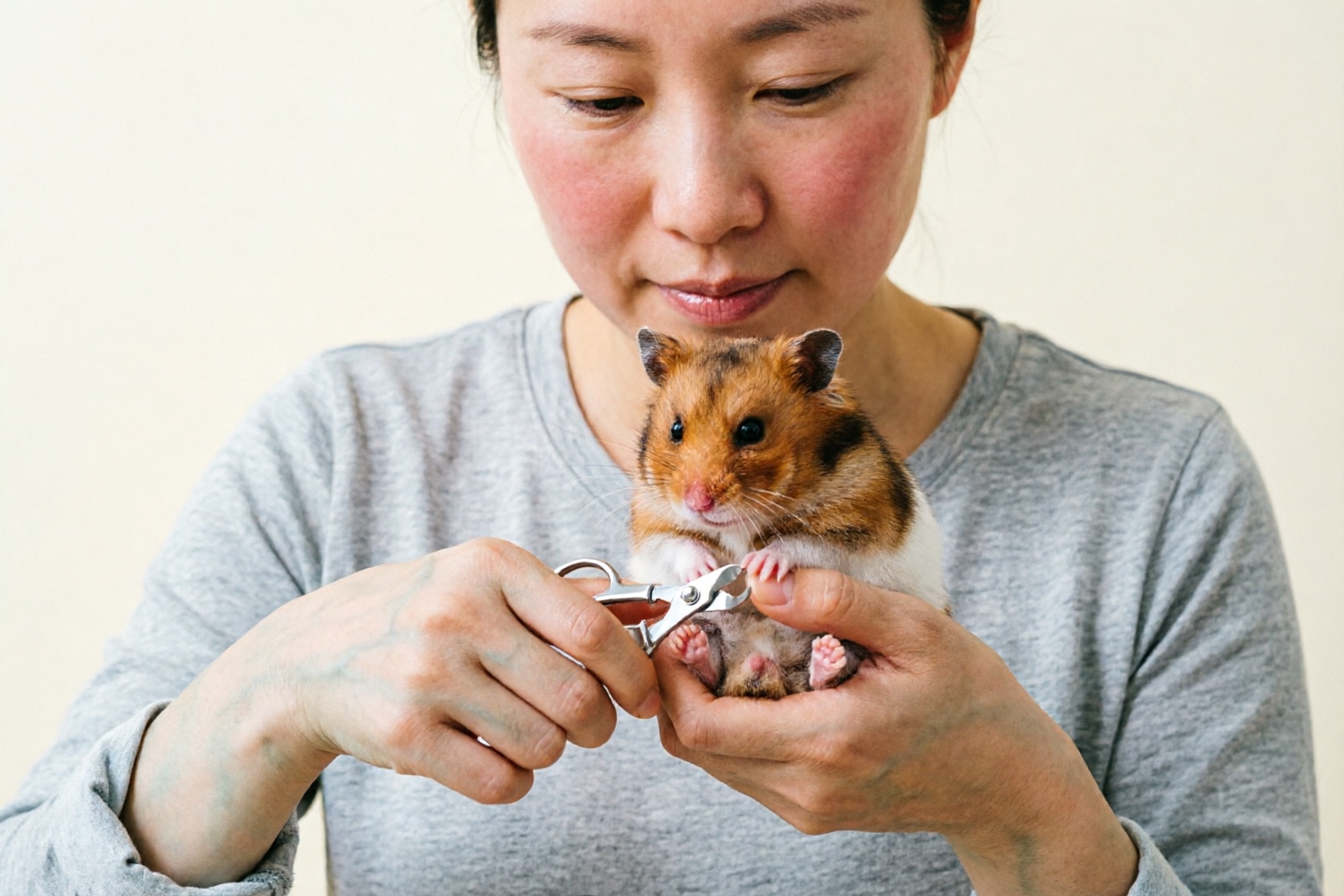
Why Hamster Nail Trimming Matters
Hamster nail trimming is one of the most overlooked aspects of hamster ownership, yet it directly affects your pet’s comfort and health. In the wild, hamsters naturally wear down their nails through constant digging, running on varied terrain, and climbing rough surfaces. A captive hamster living in a smooth-bottomed cage with soft bedding never encounters these natural filing opportunities, so their nails continue growing unchecked. Regular nail maintenance prevents these problems.
Overgrown nails cause real problems. They curl into hooks that snag on fabric, fleece liners, and cage bars, potentially causing painful tears. They alter your hamster’s gait, forcing them to walk on their heels to avoid pressure on overlong nails. In severe cases, nails can curve completely around and embed into the paw pad—a painful condition that requires veterinary treatment. This is why regular nail care is essential.
Why Wild Hamsters Don’t Need Hamster Nail Trimming
Wild hamsters maintain nail length through their daily activities. Digging complex burrow systems in hard soil files nails down naturally. Running several miles each night across varied terrain—rocks, roots, dry earth—provides constant abrasion. Climbing rough surfaces during foraging further wears nail tips.
Cage environments eliminate almost all of these natural filing mechanisms. Smooth plastic or metal cage floors, soft paper or aspen bedding, and enclosed exercise wheels create a friction-free environment where nails grow without resistance. This is why regular nail maintenance becomes necessary for every pet hamster, regardless of breed or age. For more on providing natural exercise opportunities, see our hamster exercise guide.
How Often to Check & Trim
Check nails every 2 weeks by gently holding your hamster and examining each paw. You don’t need to trim at every check—simply assess whether nails are extending beyond the toe pads or starting to curve.
Most hamsters need actual trimming every 3-4 weeks, but individual variation is significant. Active hamsters with access to natural grinding surfaces may need trimming less frequently, while sedentary hamsters in smooth-bottomed cages may need attention every 2-3 weeks. Young hamsters’ nails grow faster than adults, and senior hamsters may develop irregular growth patterns.
Signs Your Hamster’s Nails Need Trimming
Recognizing when nail trims are needed prevents discomfort and injury. Watch for these signs:
Recognizing the signs of overgrown nails early prevents discomfort and potential injury. Both visual and behavioral indicators tell you when it’s time for trimming.
Visual Signs
Curled hooks: Nails that curve downward or sideways into hook shapes need immediate attention. Healthy nails should extend straight past the toe pad, not curve under the paw.
Length beyond toe pads: If nails extend visibly beyond the soft toe pad when your hamster stands on a flat surface, they’re too long. The nail tip should barely reach the edge of the pad.
Visible catching: When you can see nails snagging on fabric, fleece, or cage bar covers as your hamster walks, the nails have exceeded a safe length.
Behavioral Signs
Fabric snagging: The most obvious sign—your hamster’s nails repeatedly catch on towels, clothing, fleece liners, or hammocks. This indicates nails have become hooked and pose a real tearing risk.
Altered walking gait: Watch for your hamster walking on the heels of their paws rather than flat-footed. This compensatory behavior relieves pressure from overlong nails but strains leg joints over time.
Reduced wheel activity: If your previously active hamster suddenly spends less time on their exercise wheel, check their nails. Overlong nails make the smooth wheel surface uncomfortable or painful.
Toe swelling or redness: Nails that have grown into paw pads cause localized inflammation. This requires immediate veterinary attention—do not attempt to trim embedded nails yourself.
Best Tools for Hamster Nail Trimming
Choosing the right hamster nail trimming tools makes the process safer and less stressful for both you and your pet. Here are the top-rated options: A proper hamster nail trimming kit doesn’t need to be expensive—reliable options start under $5. The key is selecting tools designed for small animals, not human nail clippers which are too large and imprecise.
Nail Clippers Compared
Kaytee Pro-Nail Trimmer — View on Amazon ($4.89, 4.7⭐, 🔥)
The best overall choice for small pet nail care. Kaytee is a trusted small-animal brand, and this trimmer is specifically designed for hamsters, guinea pigs, rabbits, and similar pets. years of consistent performance. The small, precise blades fit comfortably around tiny hamster toes without risk of crushing the nail. At $4.89, it’s an affordable investment that will last through years of trimming sessions.
OneCut Pet Nail Clippers — View on Amazon ($4.74, 4.8⭐, 🔥)
The highest-rated option at 4.8 stars and the lowest price at $4.74. Features non-slip handles for secure grip and a safety lock for storage. The stainless steel blades stay sharp through many trimming sessions. The slightly different blade angle compared to the Kaytee makes this a matter of personal preference—both work well.
Pet Nail Clippers for Small Animals — View on Amazon ($12.99, 4.6⭐, 🔥)
it the most-purchased small animal nail clipper on Amazon. The precision-angled blades make clean cuts that don’t crush or split nails. The higher price reflects more durable construction suited for frequent use—ideal for owners with multiple small pets.
Xyembu Small Animal Nail Clippers — View on Amazon ($5.39, 5.0⭐)
A perfect 5.0-star rating from a product designed specifically for hamsters, chinchillas, guinea pigs, and rabbits. The ultra-lightweight design offers maximum control during precision trimming. Best for owners who prioritize the most comfortable grip and most precise cuts.
Nail Files: A Quiet Alternative
Bona Fide Beauty Czech Glass Nail File — View on Amazon ($7.99, 🔥)
A hamster nail file provides a completely different approach—instead of clipping, you gradually file nails down. The Czech glass surface is gentle, produces no sound (less startling than clippers), and eliminates the risk of cutting the quick entirely. This is the best option for hamsters that panic at the sound or sensation of clippers. Use it for final smoothing after clipping, or as a complete alternative for patient owners.
Recommended Starter Kit: Kaytee Pro-Nail Trimmer ($4.89) + Bona Fide Nail File ($7.99) = $12.88 total. This combination gives you precision clipping with backup filing capability for nervous hamsters.
| Tool | Price | Rating | Reviews | Best For |
|---|---|---|---|---|
| Kaytee Pro-Nail Trimmer | $4.89 | 4.7⭐ | 8,025 | ⭐ Best overall |
| OneCut Clippers | $4.74 | 4.8⭐ | 5,103 | Budget pick |
| Pet Nail Clippers | $12.99 | 4.6⭐ | 20,079 | Frequent use |
| Xyembu Clippers | $5.39 | 5.0⭐ | — | Precision |
| Bona Fide Nail File | $7.99 | — | 1,500+ | Sensitive hamsters |
How to Trim Hamster Nails: Step-by-Step Guide
This hamster nail trimming guide walks you through each step. The process doesn’t have to be stressful when you follow a proven method.
This is the core nail care procedure. Follow these steps exactly, and don’t rush. Most hamster owners need several sessions to build confidence—both theirs and their hamster’s. For detailed guidance on handling your hamster before attempting nail trims, see our hamster handling guide.
Preparation (Before You Start)
Gather everything before touching your hamster: nail clippers, styptic powder (in case of bleeding), cotton balls, a small towel, and treat rewards. Choose a time when your hamster is naturally calm—late evening during their active period works best, but avoid the moment they wake up (they’re startled easily) or right after eating (they may struggle more).
Work in a well-lit area with a non-slip surface. Place a clean towel on your lap or a table to prevent your hamster from slipping. Have your styptic powder open and ready—fumbling for it during an emergency wastes precious seconds.
Step-by-Step Trimming Guide
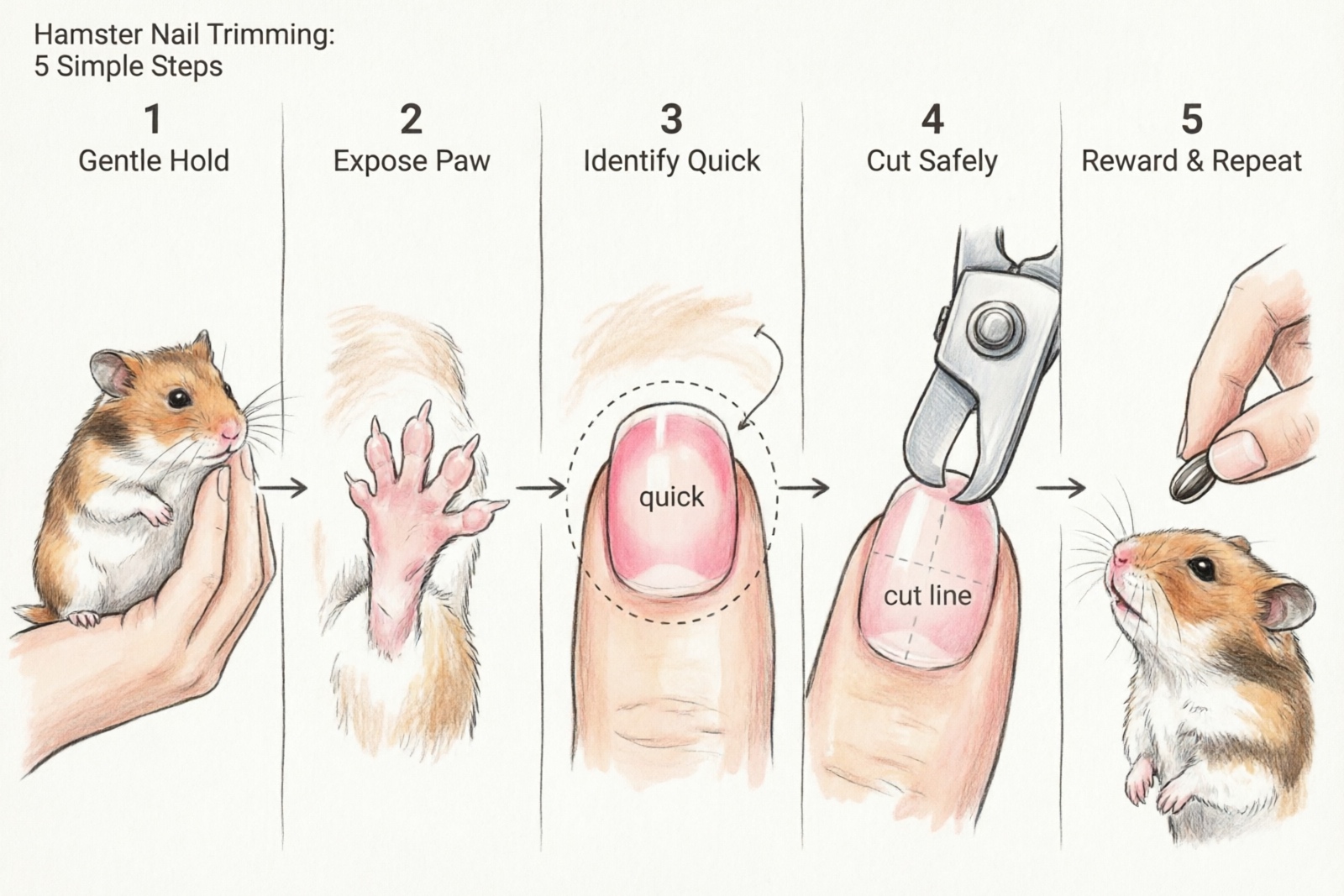
Step 1: Secure and calm your hamster
Gently hold your hamster in your non-dominant hand, supporting their body weight. Offer a treat (sunflower seed or small piece of vegetable) with your dominant hand to establish trust. Wait until your hamster is focused on the treat before proceeding.
Step 2: Expose one paw
Gently press the toe pad of one paw with your thumb. This extends the toes outward, making individual nails visible. Don’t squeeze—steady, gentle pressure is sufficient. If your hamster pulls away, release immediately and try again after offering another treat.
Step 3: Identify the quick
Look at each nail in good light. Hamster nails are semi-transparent, and you should be able to see a pink line running through the nail—this is the quick, which contains blood vessels and nerves. On dark-nailed hamsters, the quick may be harder to see. When in doubt, trim less rather than more.
Step 4: Make the cut
Position the clippers perpendicular to the nail, approximately 2mm in front of the quick tip. Make one clean, decisive snip—hesitating or making partial cuts crushes the nail and causes pain. Cut at a slight angle to match the natural nail shape.
Step 5: Repeat for all nails
Hamsters have 5 toes on each front paw and 4 toes on each back paw (18 nails total). Trim 2-3 nails per session if your hamster is anxious, rather than forcing all 18 at once. Multiple short sessions over 2-3 days are better than one stressful marathon session.
Syrian vs Dwarf Hamster Differences
How to trim Syrian hamster nails is slightly easier than dwarf breeds. Syrians are larger (5-7 oz vs 1-2 oz), their toes are more accessible, and their nails are thicker and more visible. Syrians can often tolerate 5-8 nails per session.
Dwarf hamsters (Campbell’s, Winter White, Roborovski) have extremely small, delicate toes. Their nails are thin and sometimes nearly transparent. Many experienced owners prefer using a hamster nail file instead of clippers for dwarf breeds—the precision required for clippers on toes this small creates significant quick-cutting risk. If using clippers on dwarfs, choose the Xyembu for its lightweight precision.
Tips for Uncooperative Hamsters
For owners who prefer DIY hamster nail trimming at home, persistence is key. If your hamster struggles persistently, try these approaches:
- One or two nails at a time: Trim during daily handling sessions, doing just 1-2 nails each time
- Towel wrap: Gently wrap your hamster in a small towel, exposing one paw at a time
- Two-person method: One person holds the hamster securely while the other trims
- Sleepy timing: Try trimming when your hamster is drowsy during daytime sleeping hours
- Desensitization: Practice simply holding and touching paws without trimming for several days before attempting actual cuts
How to Hold Your Hamster for Nail Trimming
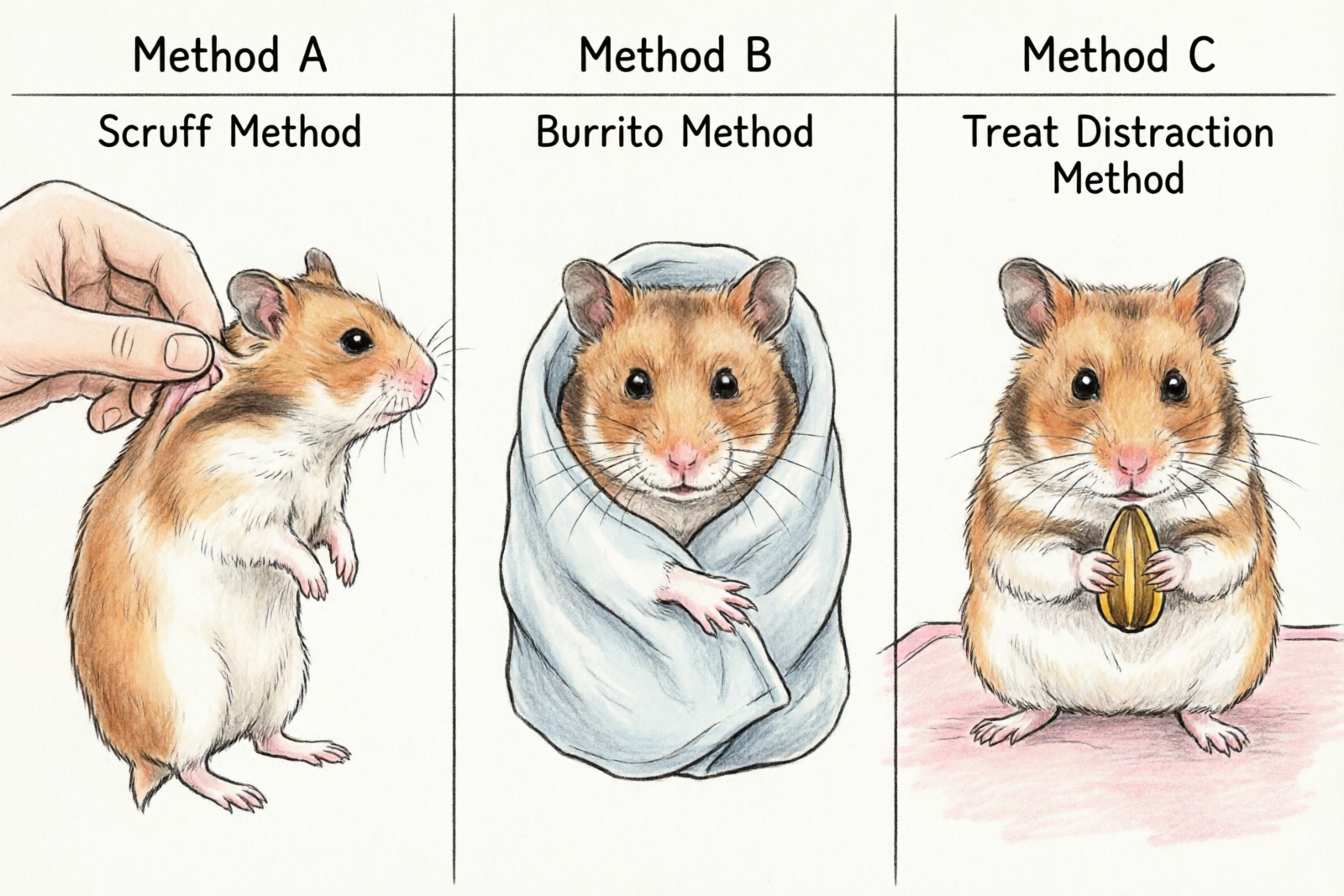
Proper restraint is the most important skill in hamster nail trimming. A secure, calm hold keeps both you and your hamster safe during the process.
Proper holding technique is the foundation of safe nail trimming. The right grip keeps your hamster secure while minimizing stress. Choose the method that matches your hamster’s temperament and your comfort level. For comprehensive taming techniques that make nail trimming easier, see our hamster handling guide.
The Scruff Method (Vet Technique)
Pinching the loose skin behind the hamster’s neck (scruffing) immobilizes them by triggering a natural reflex—this simulates how mother hamsters carry their babies. Most veterinarians use this technique because it provides complete control for quick procedures.
How to do it: Gently grasp the skin behind the neck between thumb and forefinger, lifting slightly. The hamster will go still. Use your other hand to extend one paw and trim.
Caution: This method requires practice. Too much pressure causes discomfort, and some hamsters panic more when scruffed. Start with very gentle pressure and release immediately if your hamster shows extreme distress.
The Burrito Method (Towel Wrap)
Wrap your hamster snugly in a small hand towel, leaving one paw exposed. This prevents scratching and struggling while keeping your hamster feeling secure.
How to do it: Place your hamster on the towel’s edge, wrap one side over, then the other, tucking the end underneath. Gently extend one paw from the wrapping and trim.
Best for: Anxious hamsters, first-time owners, and hamsters that bite when held. The towel also protects your hands from scratches.
The Treat Distraction Method (Beginner Friendly)
Hold your hamster normally in one hand while offering a high-value treat (sunflower seed, mealworm) with the other. While your hamster is focused on eating, gently extend a paw and trim one or two nails before they finish the treat.
Best for: Tame hamsters, building positive associations with nail trimming, and first-time owners who want the gentlest approach. This method takes longest but causes the least stress.
Natural Alternatives to Hamster Nail Trimming
If your hamster tolerates regular hamster nail trimming poorly, these natural alternatives can help maintain nail length between trims. These methods work as supplements to regular trimming, not complete replacements.
If you’re wondering how to trim hamster nails naturally, these alternatives can significantly reduce or even eliminate the need for clipping. While no natural method works as completely as trimming, combining multiple approaches can keep nails manageable for owners who struggle with the procedure.
Nail Grinding Stones
Thereisno Natural Lava Grinding Stone — View on Amazon ($6.99, 4.9⭐)
This natural volcanic stone serves double duty as both a teeth-wearing surface and one of the most effective hamster nail trimming toys available. Place it in your hamster’s cage where they naturally walk or climb over it. The rough volcanic texture gradually files nails down during normal activity. At $6.99, it’s the lowest-effort solution available—zero hands-on interaction required.
Important caveat: Grinding stones slow nail growth but rarely keep up with it completely. Most owners find stones extend the interval between necessary trimmings from 3-4 weeks to 5-6 weeks, rather than eliminating the need entirely. Still, this reduction in trimming frequency makes the process less stressful for everyone.
Bathing Sand for Natural Wear
Sand bath particles provide gentle abrasive action on nails during digging. A large sand bath with 3-4 inches of bath sand encourages extended digging sessions that naturally file nail tips. The key is providing a generously sized bath area—small sand dishes don’t provide enough digging surface for meaningful nail wear. Pair a large sand bath container with quality bath sand for the best results.
Rough Surfaces & Exercise
Adding natural stone slabs, clean bricks, or rough-textured platforms to the cage creates additional filing surfaces your hamster encounters during normal movement. Place these in high-traffic areas—near the wheel entrance, between levels, or along frequently traveled cage routes. Ensure all added surfaces have no sharp edges that could injure paws. Combined with adequate hamster exercise, these surfaces help maintain nail length between manual trims.
What to Do If You Cut the Quick During Hamster Nail Trimming
Cutting the quick—the blood vessel inside the nail—is the most common hamster nail trimming accident. While it looks alarming, it’s manageable with the right supplies and technique. Every hamster owner performing nail trims should be prepared for this possibility.
Cutting the quick—the blood vessel inside the nail—is the most common fear among hamster owners, and it does happen. The important thing is knowing exactly how to respond. Stay calm, act quickly, and remember that a nicked quick looks dramatic but is rarely dangerous.
Immediate First Aid Steps
Step 1: Don’t panic. Your hamster will likely squeak and pull away. Remain calm—your hamster senses your emotional state.
Step 2: Apply styptic powder immediately. Dip the bleeding nail into the powder, or apply with a cotton swab. The powder contains astringent compounds that constrict blood vessels and stop bleeding within seconds.
Step 3: Apply gentle pressure. Hold a clean cotton ball against the nail for 30 seconds. This aids clotting while the styptic powder takes effect.
Step 4: Clean the area. Gently wipe away excess powder and blood with a damp cotton ball. Avoid getting the paw wet.
Step 5: Comfort your hamster. Return your hamster to their cage with a favorite treat. Monitor the nail for 24 hours to ensure bleeding doesn’t restart.
Styptic Powder: An Essential Supply
Kwik Stop Styptic Powder (~$9, available on Amazon) is the industry-standard product for pet nail bleeding emergencies. Kwik Stop contains benzocaine, a mild local anesthetic that numbs pain alongside stopping blood flow. Every hamster owner should keep this in their pet first-aid kit. The powder has a long shelf life and works for all small animals.
When to See a Vet
Most quick cuts resolve within minutes with proper first aid. However, seek veterinary attention if:
- Bleeding continues beyond 5 minutes despite styptic powder application
- The nail is torn rather than cleanly cut (may need professional removal of the remaining piece)
- Signs of infection develop within 48 hours: redness spreading up the toe, swelling, discharge, or your hamster refusing to use the paw
For more on recognizing and responding to hamster health issues, our health guide covers common conditions and when veterinary care is necessary. Regular nail maintenance is part of overall health care—keeping nails at proper length prevents paw injuries that can lead to infections.
How Often to Trim Hamster Nails
The hamster nail trimming frequency depends on your hamster’s environment, activity level, and nail growth rate. Most hamsters need nail trims every 2-4 weeks.
Recommended Trimming Schedule
- Young hamsters (under 6 months): Check every 2 weeks, trim as needed every 2-3 weeks. Young hamsters’ nails grow quickly and may need more frequent attention.
- Adult hamsters (6 months to 1.5 years): Check every 2 weeks, trim every 3-4 weeks. This is the most stable period for nail growth.
- Senior hamsters (over 1.5 years): Check weekly, trim every 2-3 weeks. Senior nail growth becomes irregular—some nails may grow faster than others.
Best Time to Trim
- Evening or nighttime: Hamsters are naturally most active and alert during evening hours, making them more receptive to handling.
- Avoid immediately after waking: Hamsters are disoriented and easily startled when first waking.
- Avoid right after meals: A full hamster is less motivated by treat rewards and may struggle more.
- During bonding time: Incorporating nail checks into regular handling sessions normalizes the process.
Professional Nail Trimming Service
A professional hamster nail clipping service is a valid option if you’re unable to trim at home. Here’s what’s available:
- Pet stores: $5-15 per session, varies by location
- Exotic vet clinics: $10-25 per session, most thorough option
- Mobile groomers: Some specialize in small exotic animals
- Search “hamster nail trimming near me” to find local options
Professional trimming is a valid option and preferable to letting nails become dangerously overgrown. Many first-time owners start with professional trims while they build the handling confidence needed to trim at home.