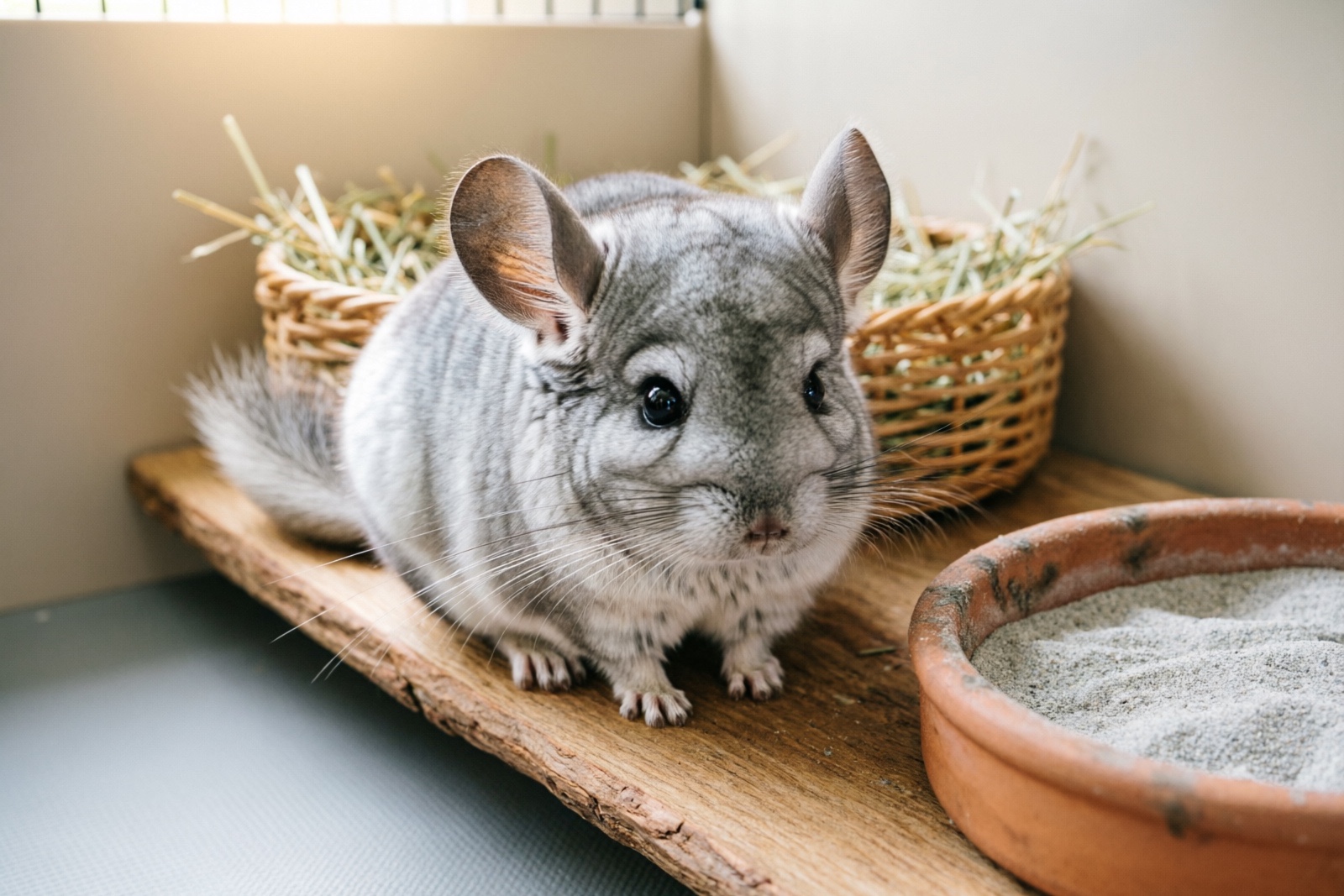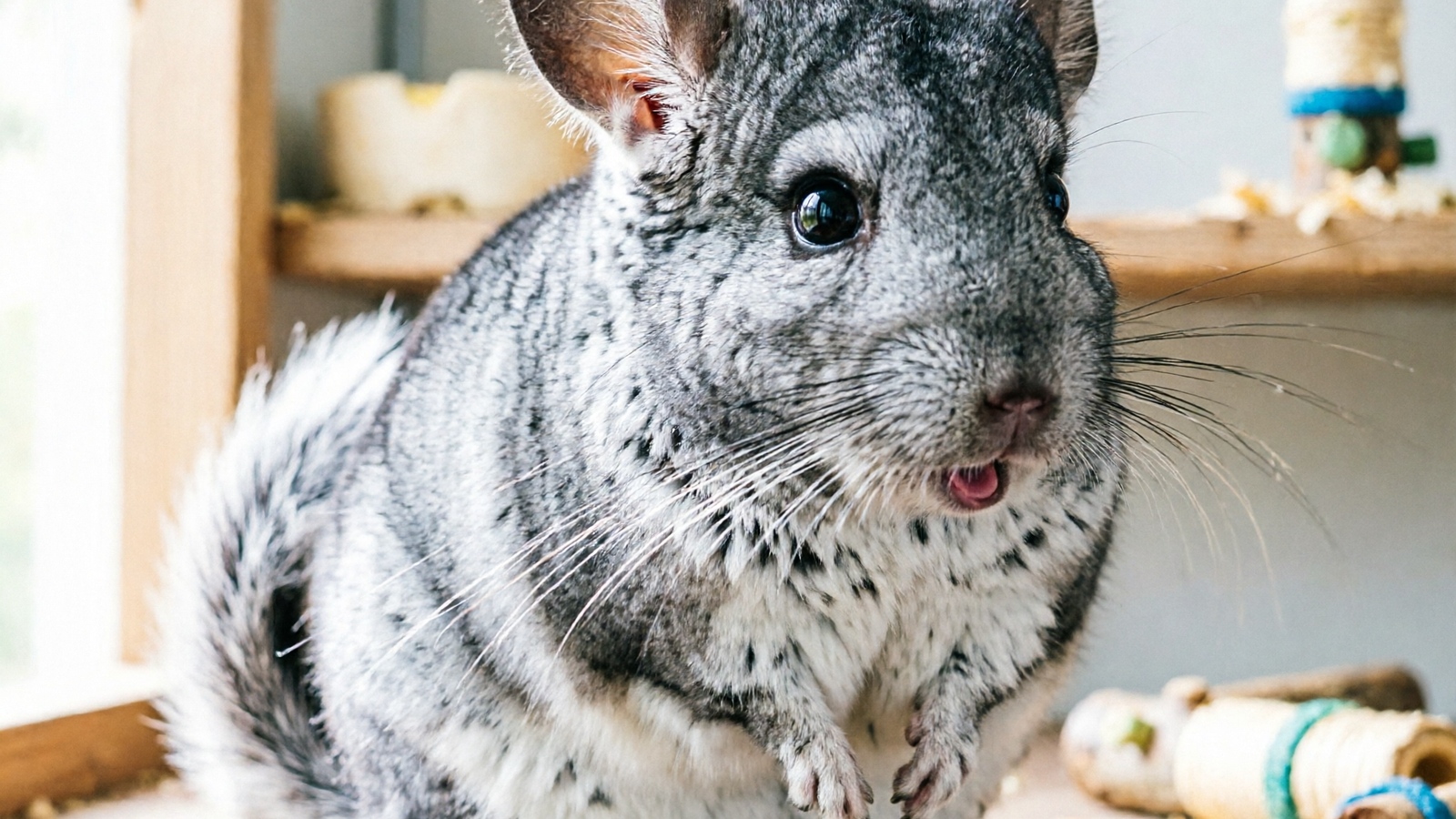
Chinchillas can live 15-20 years with proper care — making them one of the longest-lived small pets you can own. But that lifespan depends heavily on diet. Unlike dogs or cats that can tolerate dietary mistakes, chinchillas literally cannot vomit. Every food choice is permanent until digested — there is no safety net for toxic or inappropriate foods. Choosing the best chinchilla food from the start is one of the most impactful decisions for your pet’s longevity. A Standard Grey Chinchilla or any breed fed a poor diet will develop life-threatening health problems well before reaching old age. Pairing the right food with a proper chinchilla cage setup gives your pet the best foundation for a long, healthy life.
The chinchilla food market on Amazon is surprisingly limited. Search for “chinchilla food” and you’ll find mostly non-food items — harnesses, dust baths, chew toys — mixed in with a handful of actual food products. Many of the brands that exotic veterinarians recommend most highly — Oxbow Essentials, Supreme Science Selective, and Small Pet Select — are available through Chewy and Amazon, but some require a bit of searching to find. After sorting through everything available, five products met the quality threshold for a serious comparison. These represent the best chinchilla food options currently available to US buyers.
For the deeper science behind chinchilla nutrition, see our chinchilla food guide. For establishing a complete daily routine including hay, water, and supplement scheduling, our chinchilla care guide covers the full picture. Choosing quality chinchilla bedding and a good water bottle are also key parts of the daily setup. If your chinchilla’s suddenly refusing food, our guide on why your chinchilla isn’t eating can help you identify the cause.
Quick Comparison: 5 Best Chinchilla Food Brands
Before diving into details, here’s a snapshot of every chinchilla food worth considering. The most important distinction: four of these five products are uniform pellets (every piece has identical nutrition), and one is a mixed blend. The veterinary consensus strongly favors uniform pellets to prevent selective feeding. When evaluating the best chinchilla food, uniform pellets should always be your starting point.
| Product | Type | Price | Price/lb | Best For |
|---|---|---|---|---|
| Oxbow Garden Select | Uniform | $15.99 | $5.33 | Best Overall |
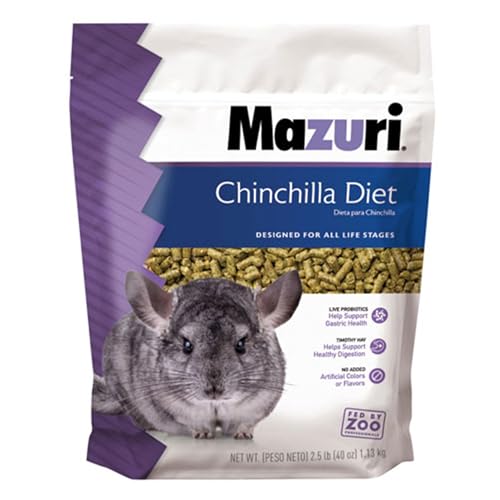
| Mazuri Chinchilla Diet | Uniform | $12.79 | $5.12 | Best Value |
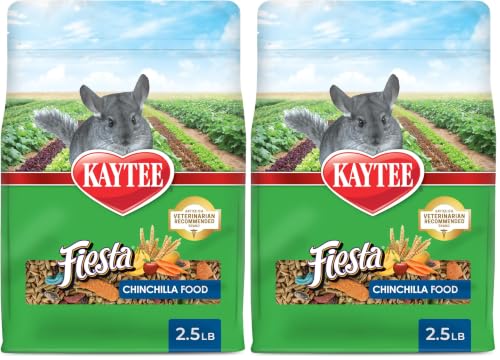
| Kaytee Fiesta | Mixed | $19.90 | $3.98 | Most Popular |
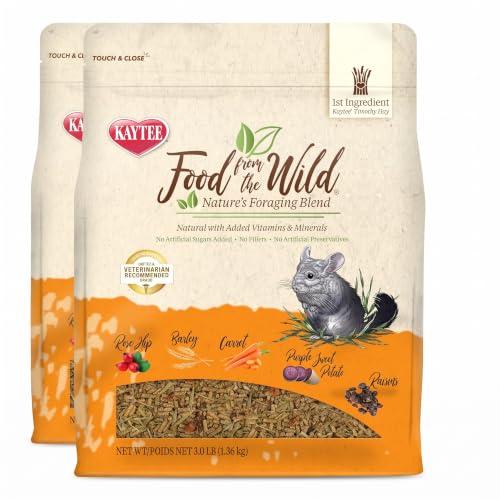
| Kaytee Food from the Wild | Uniform | $25.34 | $4.22 | Uniform Alternative |
| Oxbow Essentials Deluxe | Uniform | ~$30 | ~$7.50 | Vet Rec. |
| Science Selective | Uniform | ~$10 | ~$3.30 | High Fiber |
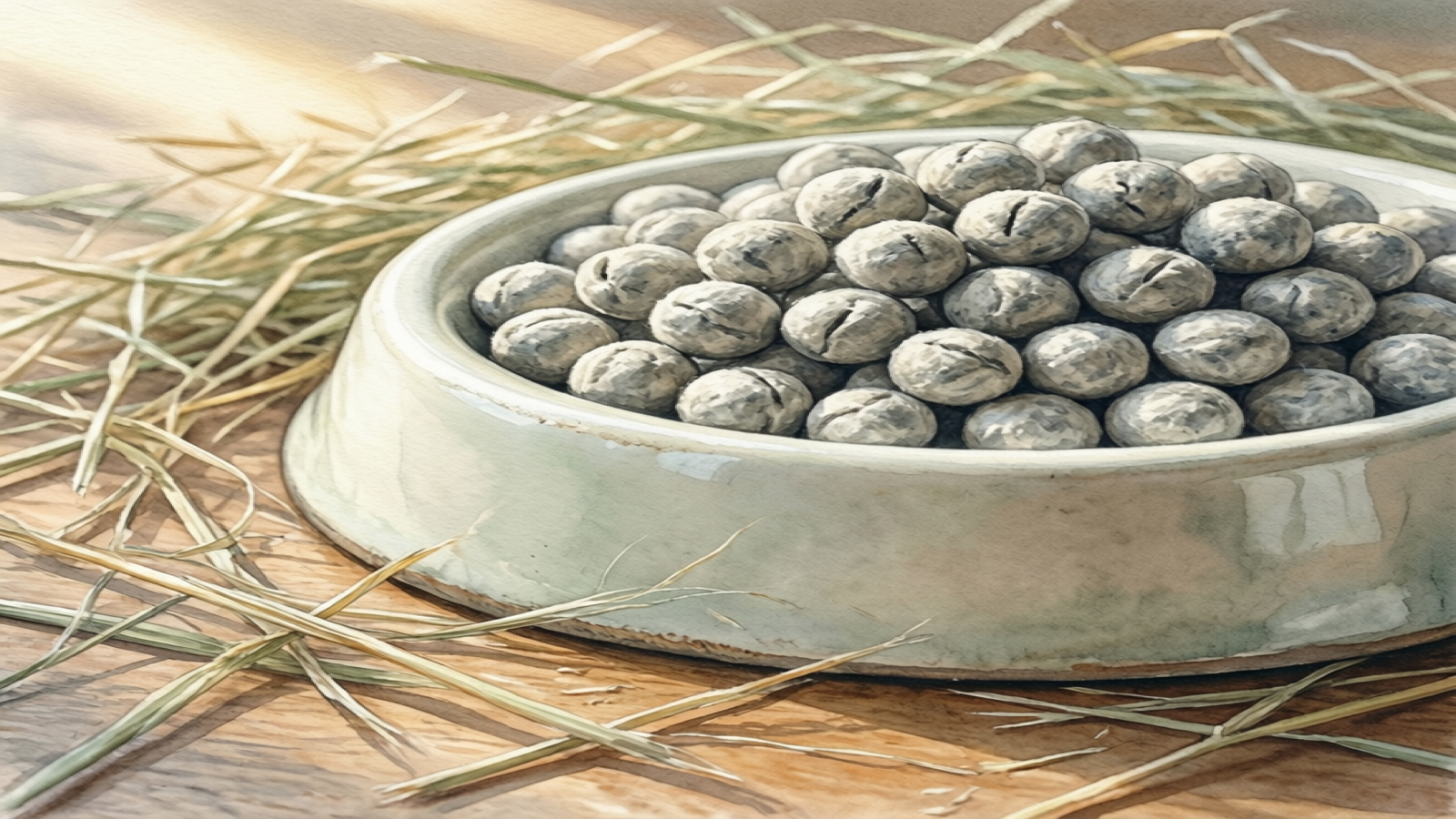
Mazuri and Oxbow are priced similarly per pound now — $5.12/lb versus $5.33/lb — with the main difference being bag size and availability. Here’s how the nutrition compares across the best chinchilla food brands:
| Product | Protein | Fat | Fiber | Calcium | Primary Ingredient |
|---|---|---|---|---|---|
| Oxbow Garden Select | 17% min | 2.5% min | 18-23% | 0.60% | Timothy + oat + orchard grass |
| Mazuri Chinchilla Diet | 20% min | 3% min | ≤18% | 0.75% | Timothy hay |
| Kaytee Fiesta | ~14%* | ~4%* | ~16%* | N/A* | Mixed (seeds, fruit, pellets) |
| Kaytee Food from the Wild | ~14%* | ~3%* | ~18%* | N/A* | Timothy hay + forage |
| Oxbow Essentials Deluxe | 16% min | 2.5% min | 20-25% | 0.50-0.80% | Timothy hay |
| Science Selective | 16% | 2.5% | 25% | 0.50% | Timothy grass + linseed |
*Unverified — Kaytee’s product pages return 404 errors and Amazon listings lack guaranteed analysis panels. These are typical Fiesta-formulation estimates, not confirmed values.
Best Overall: Oxbow Garden Select Chinchilla Food
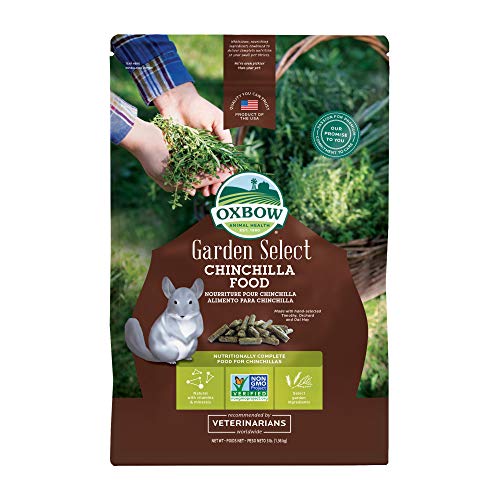
If I could recommend only one chinchilla food from what’s available on Amazon, it’s Oxbow Garden Select. At $15.99 for a 3-pound bag ($5.33/lb), it’s the premium option — but the quality justifies the price for most owners. As the best chinchilla food available on Amazon, Oxbow Garden Select sets the standard.
The nutrition profile is exactly what exotic veterinarians look for: 17% protein, 2.5% fat, 18-23% fiber, and 0.60% calcium. Every piece is a uniform pellet, so your chinchilla gets identical nutrition regardless of which piece they eat. There are no seeds to pick out, no fruit pieces to gorge on, and no artificial colors. The formula is Non-GMO Project Verified and free of both soy and wheat — two common allergens in pet food.
What sets Garden Select apart from standard Oxbow Essentials is the ingredient diversity. Instead of a basic Timothy hay pellet, it incorporates multiple grass varieties — Timothy grass, oat grass, and orchard grass — along with flaxseed for omega-3 fatty acids and whole barley for natural vitamins. The rosemary and thyme give the pellets a herbal aroma that many picky chinchillas find appealing. Diet directly impacts your chinchilla’s potential 15-20 year chinchilla lifespan — a quality food like Oxbow over two decades contributes significantly to longevity.
The drawbacks are worth noting. About 5% of owners report their chinchillas refuse Garden Select. One owner with three chinchillas said “not a single one of them will eat this” — they preferred the regular Oxbow Essentials. This appears to be a preference issue with the herbal aroma, not a quality problem. I’d recommend buying the 3-pound bag first as a trial before committing to larger quantities.
Food freshness matters: Oxbow Garden Select bags have a manufacturing date printed on the back. Look for bags manufactured within the last 3 months for peak freshness — chinchillas can taste the difference between fresh and stale pellets. For the best chinchilla food experience, check the manufacturing date on the bag.
What Makes Good Chinchilla Pellets?
Uniform pellets mean every piece has identical nutrition, preventing selective feeding where chinchillas eat only the tasty bits and leave the healthy ones. This is the single most important distinction in chinchilla food — and the reason mixed blends like Kaytee Fiesta are controversial.
Understanding chinchilla nutritional science makes it easier to evaluate any [chinchilla food pellets] brand and identify the best chinchilla food for your specific situation.
- Low calcium (<1%) is critical — chinchillas are prone to bladder stones when calcium is too high. Oxbow Garden Select at 0.60% is excellent.
- High fiber (18%+) is non-negotiable. Without adequate fiber, gut motility slows and GI stasis develops — a veterinary emergency with high mortality. Fiber also drives tooth wear since chinchilla teeth never stop growing.
- Moderate protein (14-18%) supports muscle maintenance. Mazuri’s 20% is slightly above ideal — watch for soft stool if feeding it.
- Low fat (under 3%) matters because chinchillas are susceptible to fatty liver disease. Excess dietary fat from seeds and nuts overloads the liver over time.
- Ingredient red flags: corn, molasses, artificial colors, seeds, and dried fruit pieces. The best chinchilla food pellets use Timothy grass as the primary ingredient — not alfalfa, which is much higher in calcium.
Nutrition needs differ significantly across small pet species. A guinea pig diet requires supplemental vitamin C that chinchillas don’t need. Hamster food, hedgehog food, and ferret food all have different protein-fat-fiber ratios. Never substitute species-specific pellets — the differences in calcium, protein, and fiber levels can cause real harm over time. For chinchilla health problems related to poor diet, common early signs include soft stool, weight loss, and dental issues.
Oxbow vs Essentials Chinchilla Food — Which Should You Buy?
This comparison matters because these are the two Oxbow chinchilla food options available, and they’re sold through different retailers. Here’s how they compare:
| Feature | Oxbow Garden Select | Oxbow Essentials Deluxe |
|---|---|---|
| Available on | Amazon | Amazon + Chewy |
| Price/lb | ~$5.33 | ~$1.82 (10lb) or ~$4.99 (3lb) |
| Protein | 17% min | 16% min |
| Fiber | 18-23% | 20-25% |
| Fat | 2.5% min | 2.5% min |
| Calcium | 0.60% | 0.50-0.80% |
| Primary ingredient | Timothy + oat + orchard grass | Timothy hay |
| Non-GMO | Verified | No |
| Soy/wheat free | Yes | Yes |
| Herbal aroma | (rosemary, thyme) | No |
| Flaxseed omega-3 | Yes | No |
| Vet recommendation | Common | Most common |
Oxbow Garden Select is the better Amazon option with more diverse ingredients, Non-GMO verification, and omega-3 from flaxseed. But Oxbow Essentials is what most exotic veterinarians recommend first — the simpler Timothy hay formula has a slightly higher fiber range (20-25% vs 18-23%) and decades of proven results in clinical practice.
My recommendation: If you’re looking for the best value in an Oxbow formula, Essentials 10lb bag at $18.22 is the smart choice — it’s half the per-pound cost of Garden Select with the same trusted brand. If you want the more diverse ingredient profile with Non-GMO verification and omega-3 from flaxseed, Garden Select is worth the premium. Both are excellent — the difference is ingredient diversity versus per-pound value.
Best Value: Mazuri Chinchilla Diet
Mazuri has long been a favorite among breeders and exotic animal professionals — and for good reason. The Mazuri Chinchilla Diet 2.5lb bag is a zoo-grade, uniform pellet formulation at $12.79 — one of the cheapest entry points for premium chinchilla nutrition on Amazon.
Mazuri isn’t a budget brand — it’s used by exotic animal professionals, breeders, and sanctuaries. The uniform pellets contain 20% protein, 3% fat, ≤18% fiber, and 0.75% calcium, along with live probiotics (270,000 CFU per gram) for gut health and omega-3 fatty acids from flaxseed. For multi-chinchilla households, the 25-pound bulk bag (when available) offers the best per-pound value, but the 2.5lb size is consistently in stock and perfect for trying the formula.
I need to address the protein level honestly. At 20% minimum, Mazuri is above the 14-18% range most exotic veterinarians consider ideal. This isn’t dangerous for healthy adult chinchillas — most tolerate it well — but I’d watch for soft stool, which can indicate excess protein. If you notice consistently loose droppings after switching to Mazuri, discuss it with your exotic vet.
One thing to note: the 2.5lb bag size means you’ll reorder more frequently than with bulk options. For a single chinchilla eating 1-2 tablespoons per day, a 2.5lb bag lasts roughly 2-3 months — which is actually better for freshness. Pellets lose nutritional potency over time, so smaller bags mean your chinchilla gets fresher food with each order.
For the chinchilla cage food station setup, a heavy ceramic bowl prevents tipping. If you have multiple chinchillas, check periodically for the 25lb bulk availability — the per-pound savings when it’s in stock are unmatched.
Oxbow vs Mazuri Chinchilla Food — Head-to-Head
The Oxbow vs Mazuri chinchilla food comparison is one of the most debated topics in chinchilla nutrition. Here’s the data:
| Dimension | Oxbow Garden Select | Mazuri Chinchilla Diet |
|---|---|---|
| Price/lb | $5.33 | $5.12 |
| Protein | 17% | 20% |
| Fiber | 18-23% | ≤18% |
| Fat | 2.5% | 3% |
| Calcium | 0.60% | 0.75% |
| Probiotics | No | (live, 270K CFU/g) |
| Non-GMO | Yes | No |
| Package sizes | 3 lb | 2.5 lb (bulk 25 lb when available) |
| Vet recommended | Yes | (zoo-grade) |
The protein difference (17% vs 20%) is the most significant nutritional distinction. Mazuri’s higher protein can cause soft stool in sensitive chinchillas, though most healthy adults handle it fine. Oxbow’s higher fiber range (up to 23% vs Mazuri’s 18%) provides better gut motility support.
My verdict: Both qualify as the best chinchilla food in their respective categories. For ingredient diversity and Non-GMO verification, Oxbow Garden Select is the better choice. For the same trusted Mazuri formula at a competitive price, the 2.5lb bag is a solid option — and if the 25lb bulk comes back in stock, the per-pound savings are unmatched. Both are quality uniform pellets — you can’t go wrong with either. See our chinchilla care guide for how to monitor your chinchilla’s response to any food change.
Kaytee Fiesta Chinchilla Food — Most Popular But Controversial
Kaytee Fiesta is the most popular chinchilla food on Amazon by a massive margin — thousands of reviews, compared to 323 for Oxbow and 170 for Mazuri. At $19.90 for a 5-pound pack (2-pack of 2.5lb, $3.98/lb), it’s mid-range in price, and chinchillas undeniably love it.
Here’s the problem: Fiesta is a mixed blend containing seeds, dried fruits, vegetables, and pellets all mixed together. It’s not uniform — and that’s exactly why chinchillas love it, and exactly why many veterinarians recommend against it as the best chinchilla food choice.
Selective feeding is the primary concern. When presented with a mixed bowl, chinchillas will pick out their favorite pieces (the seeds and dried fruit) and leave the nutritional pellets behind. One long-time owner reported their chinchilla “picks out the seeds and fruit pieces while leaving most of the pellets behind.” That means your chinchilla is eating a diet skewed heavily toward high-fat, high-sugar ingredients while missing the balanced nutrition the pellets provide.
The core problem: seeds and dried fruit are high in fat and sugar — two things chinchilla livers cannot handle efficiently. Over time, selective feeding on these treats contributes to fatty liver disease, a progressive and often fatal condition. Adding to the concern, Kaytee’s product page returns a 404 error, and the Amazon listing doesn’t include a guaranteed analysis. When a manufacturer won’t publish nutrition data for a species this diet-sensitive, that’s a red flag.
If your chinchilla currently eats Fiesta and seems healthy, I wouldn’t panic — but I’d transition to a uniform pellet. Use Fiesta as a transition tool: start 75% Fiesta / 25% uniform pellets and shift the ratio over 2-3 weeks. For daily enrichment outside of food, see our chinchilla toys and chinchilla dust bath guides. Once you’ve switched, try our guide on safe chinchilla treats for enrichment that won’t undermine their diet.
Natural Alternative: Kaytee Food from the Wild
Kaytee Food from the Wild is Kaytee’s premium uniform pellet line — a completely different product from Fiesta. Instead of seeds and fruit pieces, it uses natural ingredients in a uniform pellet format, eliminating the selective feeding problem entirely.
This is the smart choice if your chinchilla currently eats Fiesta and you want to switch to a uniform pellet without changing brands. The Kaytee label familiarity helps with the transition, and the natural ingredient approach avoids artificial colors and preservatives. At $25.34 for 6 pounds (2-pack of 3lb, $4.22/lb), it’s a more affordable uniform option than Oxbow per pound.
The tradeoff is limited community validation compared to Oxbow and Mazuri. With fewer reviews and less long-term owner feedback, it’s harder to gauge consistency across batches. If you’re already committed to Kaytee and want to move away from Fiesta, this is a reasonable step up. For maximum confidence in long-term health outcomes, Oxbow remains the more proven choice for the best chinchilla food long-term. Your chinchilla’s chinchilla lifespan is too long to gamble on unproven nutrition.
Vet-Recommended Chinchilla Food Brands Not on Amazon
Some of the most respected chinchilla food brands are not available on Amazon. These brands are sold through Chewy, the manufacturer’s website, or specialty pet stores. I’m mentioning them because they deserve consideration — and because the Chewy-exclusive market is where many experienced owners actually shop.
Oxbow Essentials Chinchilla is the food most exotic veterinarians recommend first. It uses a simple Timothy hay base with 16% protein, 20-25% fiber, and 0.50-0.80% calcium — a straightforward, proven formula. Unlike what you’ll often read, Essentials is available on both Amazon (10lb and 25lb bags) and Chewy. The 10lb bag at $18.22 works out to $1.82/lb — easily the best per-pound value among Oxbow formulas.
Supreme Science Selective is a UK-based brand with high fiber, zero added sugar, and a uniform pellet format. These pellets are particularly popular among European chinchilla owners and are available on Chewy in the US. If your chinchilla is a picky eater, check our guide on what to do when your chinchilla won’t eat for troubleshooting tips.
Small Pet Select produces small-batch chinchilla food with a freshness guarantee. Their subscription model ensures you always receive recently manufactured pellets, and they offer a replacement guarantee if your chinchilla won’t eat it. This is the brand for freshness-obsessed owners who don’t mind ordering outside Amazon.
Supreme Science Selective — High Fiber, Zero Added Sugar
Supreme Science Selective deserves more than the brief mention it often gets in chinchilla food comparisons. This UK-based brand has built a strong reputation among European chinchilla owners and is available on Chewy in the US — and it addresses one of the most common complaints about US-market pellets: sugar content.
The formulation is straightforward and clean: Timothy grass as the primary ingredient, 16% protein, 2.5% fat, 25% fiber, and 0.50% calcium. What sets Science Selective apart is the zero added sugar and zero molasses guarantee. While Oxbow and Mazuri are both sugar-free in practice, Science Selective makes it an explicit brand commitment. The fiber level at 25% is the highest among the brands reviewed here, which is excellent for gut motility and tooth wear.
The uniform pellets contain added linseed for a healthy coat, prebiotics for digestive health, and a balanced mineral profile. One thing I appreciate: the ingredient list is genuinely short and transparent — Timothy grass, soybean hulls, pea fiber, linseed, and a vitamin/mineral premix. No fillers, no artificial preservatives, no ambiguous “plant protein products.”
The main drawback for US buyers is availability. It’s not on Amazon — you’ll need to order from Chewy or a specialty pet store. The price runs roughly $8-12 for a 1.5 kg (3.3 lb) bag, which works out to $2.40-3.60 per pound — more affordable than Oxbow but less value than Mazuri’s bulk pricing. Some picky chinchillas take time to accept the slightly different taste and texture compared to Oxbow.
For owners who want the absolute highest fiber content and explicit zero-sugar guarantee, Supreme Science Selective on Chewy is an excellent choice that deserves consideration alongside Oxbow and Mazuri.
Safe and Unsafe Chinchilla Food List
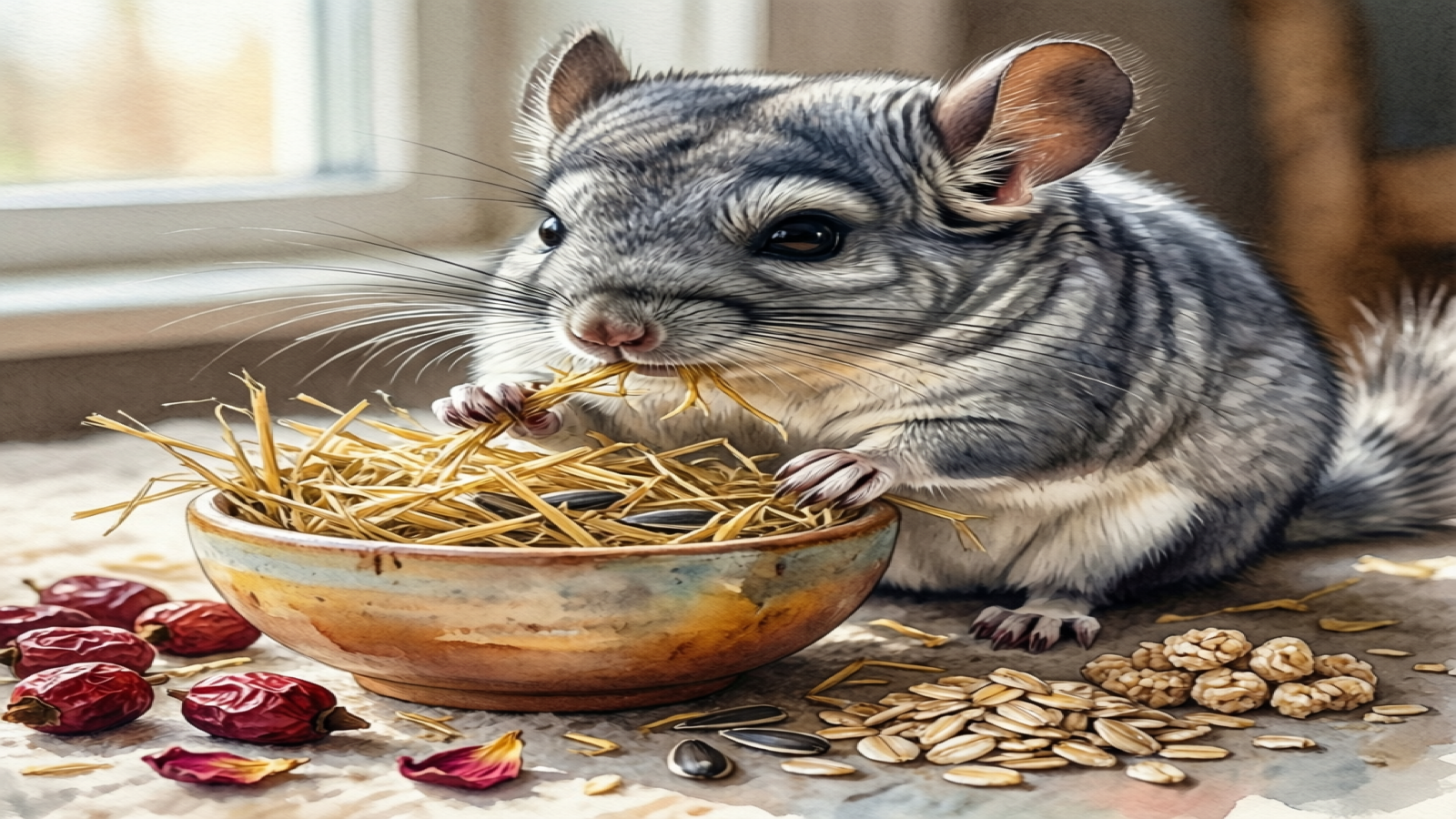
The best chinchilla food strategy is simple: 80% of a chinchilla’s diet should be Timothy hay. 1-2 tablespoons of pellets per day for an adult chinchilla. Seeds and nuts are the number one dietary danger — they cause fatty liver disease. Chinchillas cannot vomit — every food choice is permanent until digested.
Safe foods (daily): Unlimited Timothy hay (drives gut motility and tooth wear), 1-2 tablespoons uniform pellets, and clean water changed daily. Use a heavy ceramic bowl — chinchillas flip lightweight plastic bowls. A properly set up chinchilla cage with designated feeding areas makes daily feeding easier.
Safe treats (1-2x/week max): Rose hips, plain rolled oats, dried rose petals, tiny apple slice (no seeds).
Unsafe foods — never feed: Seeds and nuts (high fat, fatty liver disease), fresh vegetables (too much moisture, bloating), fruit (too much sugar), chocolate, dairy, meat, rabbit food or guinea pig food (wrong calcium ratios), iceberg lettuce, and processed human food.
| Food | Status | Reason |
|---|---|---|
| Timothy hay | Safe | Unlimited daily |
| Rose hips | Safe | Best treat option |
| Plain rolled oats | Safe | 1-2 times/week |
| Dried rose petals | Safe | 1-2 times/week |
| Apple slice (no seeds) | Warning: Limit | Tiny piece, rarely — see our apple guide for details |
| Sunflower seeds | Unsafe | High fat, liver damage |
| Carrots | Unsafe | Too much sugar/moisture |
| Raisins | Unsafe | Concentrated sugar |
| Fresh vegetables | Unsafe | Bloating and diarrhea |
| Nuts (any kind) | Unsafe | Very high fat content |
The pattern is clear: if it’s high in fat, sugar, or moisture, your chinchilla shouldn’t eat it. When in doubt, skip it — chinchillas are healthier with less variety, not more. For chinchilla health problems caused by dietary mistakes, common symptoms include soft stool, lethargy, and dental abnormalities. Check individual food safety guides like can chinchillas eat bananas and blueberries before offering any new treat. For the complete dietary framework, see our chinchilla food guide.
How to Transition Your Chinchilla to New Food
Switching chinchilla food brands or formulas requires patience. Chinchillas have sensitive digestive systems adapted to a very specific diet, and abrupt changes can cause GI stasis — a potentially fatal condition where the gut stops moving. Always transition gradually over 10-14 days.
| Day | New Food | Old Food | Notes |
|---|---|---|---|
| Days 1-3 | 25% | 75% | Mix thoroughly. Monitor droppings for changes. |
| Days 4-6 | 50% | 50% | Key transition point. Watch for soft stool. |
| Days 7-9 | 75% | 25% | Most chinchillas adjust here. |
| Days 10-14 | 100% | 0% | Full transition complete. |
During transition, watch for:
- Soft stool or diarrhea — slow down the transition. Go back to the previous ratio for 2-3 extra days.
- Refusal to eat — some chinchillas are picky and will selectively eat old pellets. Try crushing both types together so the scents mix.
- Decreased water intake — diet changes can temporarily affect drinking habits. Ensure fresh water is always available.
- Weight loss — weigh your chinchilla weekly during transition.
Special cases: If transitioning from Kaytee Fiesta (mixed blend) to a uniform pellet, the transition is harder because your chinchilla will miss the seeds and fruit pieces. Expect some food refusal during days 4-6. Don’t supplement with extra treats during transition — this reinforces the selective feeding behavior you’re trying to eliminate.
For baby chinchillas under 6 months, transition more slowly over 3-4 weeks. Growing kits need nutritional consistency, and their digestive systems are more sensitive than adults.
Chinchilla Food Storage & Freshness
Proper food storage keeps pellets fresh and prevents spoilage. Chinchilla food lacks the preservatives found in dog and cat food, so it goes stale faster — especially once the bag is opened.
Storage rules:
- Keep in the original bag, then place inside an airtight container. The original bag has the manufacturing date and nutrition info you need.
- Store in a cool, dry place — below 75°F and away from direct sunlight. Heat degrades the omega-3s in Oxbow Garden Select.
- Use within 6 weeks of opening for peak freshness. After that, the pellets lose aroma and chinchillas may refuse them.
- Freeze for 48 hours on arrival if you’ve had past pest issues. Chinchilla food can harbor warehouse moths, though reports are less common than with hamster food.
- Check the manufacturing date — don’t buy bags more than 6 months old. Older pellets lose nutritional value even if unopened.
- Never mix old and new food in the same container. Finish one bag completely before opening the next to prevent cross-contamination.
A fresh food supply is just as important as the brand you choose. Even the best chinchilla food won’t help if it’s stale or contaminated. Pair good storage habits with the right chinchilla cage setup, bedding, and dust bath routine for a complete care routine.
Conclusion: Choosing the Best Chinchilla Food
When choosing the best chinchilla food, Oxbow is our top pick — Garden Select on Amazon or Essentials on Amazon or Chewy. Mazuri is the same trusted formula in a smaller bag. Uniform pellets should always be preferred over mixed blends to prevent selective feeding.
Brands like Supreme Science Selective and Small Pet Select are worth considering if you want options beyond the standard Amazon lineup. And the 80% hay, 20% pellets ratio remains the gold standard for chinchilla nutrition. For choosing the right hay, see our best chinchilla hay guide.
For the complete care framework, see our chinchilla care guide. For dietary science beyond pellets, our chinchilla food guide covers hay selection, treat safety, and feeding schedules.
FAQ
What food brand is best for chinchillas?
Oxbow — either Garden Select (on Amazon) or Essentials (Amazon and Chewy). Both are vet-formulated uniform pellets with ideal calcium and fiber levels. For multi-chinchilla households, Mazuri offers the same trusted formula in a convenient 2.5lb bag.
What is the best thing to feed a chinchilla?
Unlimited Timothy hay — it provides 80% of their diet, drives gut motility, and wears down continuously growing teeth. On top of hay, feed 1-2 tablespoons of uniform pellets daily.
Can chinchillas eat rabbit pellets?
No — rabbit pellets have different calcium-to-phosphorus ratios and protein levels that can cause bladder stones and nutritional deficiencies. Always use chinchilla-specific food.
What not to feed chinchillas?
Seeds, nuts, dried fruit, fresh vegetables, and processed human food. Seeds and nuts cause fatty liver disease, fresh vegetables cause bloating. If unsure whether a food is safe, the default answer is no.
How much does chinchilla food cost per month?
Oxbow Garden Select runs roughly $12-15 per month for one chinchilla. Oxbow Essentials 10lb drops that to roughly $3-5 per month. Budget for hay separately at $8-12 per month.